
George Francis Davis
New Zealand born Australian industrialist
About George Francis Davis
Lived 1883 – 1947 (aged 63). George Francis Davis was a businessperson and industrialist.
Sir George Francis Davis (1883 – 1947) was a New Zealand-born industrialist. He is notable mainly for his association with Davis Gelatine, Cockatoo Island Dockyard and the Glen Davis Shale Oil Works, in Australia. Glen Davis, New South Wales is named after him.
Early life and family background Davis was born in New Lynn, Auckland, New Zealand on 22 November 1883. His parents were Charles George Davis and Lillian Edwedinah, née Ball, and he was their third and youngest son. Davis attended King's College, Auckland. He left school at 15, and went to sea for four years in the sailing ships of John Emery and Co., Boston. He was later to say that he wanted to join the navy, but was not accepted due to his poor hearing.
Both the Davis and Ball families were involved in glue manufacture in England. His parents had emigrated from England in 1879, intending to farm in New Zealand. Instead Charles Davis set up a small glue factory in New Lynn in 1881, moving to a new larger factory in Onehunga in 1888. The eldest son Charles Christopher (Chris) Davis was working in factory from 1892. By 1899 Chris was the manager of the company that his father formed in that year, New Zealand Glue Co. Ltd, in which his father held a one third share.
Davis Gelatine Between 1921 and 1926, the family interests were restructured so that the Australian company, Davis Gelatine (Australia) Pty Ltd, became the holding company, with subsidiary companies in New Zealand, South Africa and Canada, all under the name Davis Gelatine. George Davis was managing director of the company. 'Davis Gelatine' became a famous brand. The company promoted use of gelatin through recipes for ' Davis Dainty Dishes ' that it published, over many years beginning in 1922, both in booklet form and in publications, particularly the cookery pages of the Australian Women's Weekly. Davis Gelatine almost certainly took the concept of 'Dainty Dishes ' from ' Dainty Desserts for Dainty People, and similar titles using the word 'Dainty', that were published by the Knox Gelatine Company of Johnstown, New York.'
The Davis Gelatine recipe booklets were published in Australia, New Zealand, Canada, and South Africa, and from 1932 in Great Britain. There were nine editions compiled between 1922 and 1947; a complete revision was made in 1949. The booklets would eventually be printed in five languages; English, French, German, Afrikaans and Portuguese. Over the years that the booklets were published, the total number printed was well in excess of one million copies.
As the main manufacturer of gelatin in Australia, the company also benefited from the demand for gelatin generated by other manufacturers. The main ingredients of jelly crystals—such as Aeroplane Jelly—were dry granular gelatin and sugar, with flavouring, and used in the commercial production of ice cream. Dry gelatin was added when canning some products, particularly canned hams. Gelatin was also used in the production of photographic film. It was a material with many uses. Factory at Botany
Davis set out to create a model factory at Botany. It was surrounded by park-like gardens and included facilities for workers, such as a bowling green and tennis courts.
The plant was competitive, despite high wages, evidence that Australia had a competitive advantage in the production of gelatin, on a very large scale. By 1928, the Botany plant had trebled in size and was the largest in the world. The combined output of Davis Gelatine plants accounted for 10% of world production in that year.
Marriage and personal life Davis married in Sydney, on the same day that he had bought the land for the Botany factory. His wife was Elizabeth Eileen Schischka, (1889 – 1981)—known as Eileen—the Auckland-born daughter of a friend of his mother, who had come with him to Sydney.
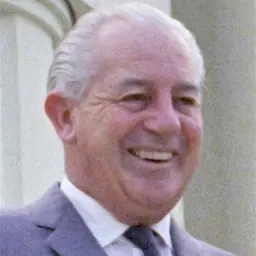
Although he was keen on travel, gardening and motoring, as recreational pursuits, his business interests were his life. Davis was hearing-impaired and that made him reticent in company. He wore an early type of hearing aid. The couple had no children. From 1917 to 1930 they lived in a house adjacent to the factory at Botany. In 1930, they moved to a house in the harbourside suburb of Vaucluse. George Davis has his cigarette lit by Harold Holt using a burning piece of Glen Davis oil shale in 1939. Note the headband securing his hearing aid.
The revival of the dockyard had brought Davis to the attention of the Commonwealth and New South Wales governments, as a person who could tackle something new and get it done, quickly and effectively. However, both the governments at the time were controlled by the United Australia Party—a political party that favoured private enterprise as opposed to government ownership of industries—and rightly or wrongly, Davis was seen as being associated with that side of politics. In the 1930s, Australia was almost entirely dependent for its petroleum supplies on imports; at best there was some local refining of imported crude oil. There had been production of oil from oil shale, but this had ceased. The oil shale of New South Wales is particularly rich in oil content. The genesis of a revival of the shale oil industry was partially due a need for a secure source of oil in wartime, and partially to provide employment for unemployed miners on the Western coalfield. These dual objectives, efficient local oil production and employment creation, would not always align in their outcomes.
A public notice in the Commonwealth of Australia Gazette, on 28 May 1936, invited offers for developing the oil industry in the Glen Davis area. Davis responded to this invitation and the result was the agreement ratified in the National Oil Proprietary Limited Agreement Ratification Act 1937, an act of the NSW Parliament.
Davis withdrew almost entirely from his other activities, and threw himself into the task of creating a modern shale oil industry. It was later said of him by Bertram Stevens that, "the Lyons Administration and my own, asked him to shoulder this further national obligation at Glen Davis. He promptly agreed, and without stint gave to it his time and boundless energy and much of his resources taking from it not one penny of reward." thumb Refinery at Glen Davis.Earlier proposals for restarting shale oil production had been based on resurrecting Newnes, by bringing shale from the Capertee Valley, through a new mine tunnel between the Wolgan and Capertee valleys and processing the shale at the site of the old works, previously operated by Commonwealth Oil Corporation. Davis chose not to re-establish operations at Newnes but instead to build an entirely new plant in the relatively remote Capertee Valley. The refined fuel would be carried via a new pipeline running over a saddle from the Capertee Valley into the Wolgan Valley, and then mainly following the route of the old Wolgan Valley Railway to new storage tanks at Newnes Junction. The old railway line was lifted, with some of the old bullhead rails being reused as supports for the pipeline. Originally, Davis's plan was to use Estonian-made tunnel kilns, but as costs rose and war seemed imminent, a decision was made to rebuild retorts at Glen Davis, using designs and reused materials from the old retorts at Newnes; that decision resulted in an expensive and protracted relocation exercise, and old retort technology. Otherwise, Davis built a very modern plant, with a highly mechanised shale mine that promised to produce at a high enough rate to make the plant economically viable.
Work on the new plant began in 1938, but the first oil was not produced at the remotely situated plant until January 1940, by which time Australia was at war. The plant had cost £1,300,000, and more capital was raised from shareholders, with the Commonwealth Government providing more funds in the form of a £225,000 loan. After December 1941, the by then Sir George Davis remained chairman of the board of National Oil but was effectively sidelined, as the board consisted largely of government appointees and he had lost his position as managing director. He resigned from the board in October 1942. He would devote most of his time thereafter to the Davis Gelatine company and the dockyard. It is probable that during this time Davis discussed the sale of Cockatoo Dockyard & Engineering with its eventual buyer, Vickers.
Davis died at home of cardiovascular disease on 13 July 1947, after being ill for some weeks. At the time of his death, he was chairman of Davis Gelatine, and its associated companies, Cockatoo Docks & Engineering Company, Mount Frome Lime and Animal Health Products; and a director of Mercantile Mutual and Alluvial Prospectors Company.
Davis did not live to see the bitter end of his vision for Glen Davis Shale Oil Works. The government's intervention at Glen Davis was not successful, despite an expansion in 1946. Never profitable, the Glen Davis Shale Oil Works was closed in May 1952, once its accumulated losses had exceeded the value of capital and loans.
There was still, in 2022, a thriving market in second-hand copies of Davis Dainty Dishes ' recipe booklets, many of which seem to have survived the changing fashions of home cooking. The recipes use relatively large amounts of gelatin and, consequently, some appear quite unappetising, at least to modern-day tastes.
Don’t just read it —
keep it.
Full-length biographies made to live with: read them, listen on the way to work, watch them tonight.
- E-book
- Audio
- Video
Instant download · yours to keep · every purchase keeps this site free
Important facts
People in George Francis Davis's life
Named in this biography and alive at the same time






Related people
Same field, nearest in time

Contemporaries
People whose lives overlapped George Francis Davis's



Frequently asked questions
Who was George Francis Davis?
New Zealand born Australian industrialist
When was George Francis Davis born?
George Francis Davis was born on 22 November 1883 in New Lynn.
When did George Francis Davis die?
George Francis Davis died on 13 July 1947 in Vaucluse, New South Wales.
What was George Francis Davis's occupation?
George Francis Davis was a businessperson and industrialist.
Sources & further reading
· Wikipedia: George Francis Davis
· DBpedia: George Francis Davis
Cite this page
APA: Biography.guide. (2026). George Francis Davis. https://biography.guide/george-francis-davis/
MLA: "George Francis Davis." Biography.guide, https://biography.guide/george-francis-davis/.
Chicago: "George Francis Davis." Biography.guide. https://biography.guide/george-francis-davis/.
Data last updated: 2026-09-20 · Spot an error? Report a correction.
Page generated 2026-09-27 05:21 UTC