
About George E. Goodfellow
Lived 1855 – 1910 (aged 54). George E. Goodfellow was an American physician and surgeon.
County Coroner Tombstone citizens lynched John Heath (also spelled Heith) on February 22, 1884. As County Coroner, Goodfellow ruled he died of "strangulation, self-inflicted or otherwise." On the morning of December 8, 1883, a group of five outlaw Cowboys robbed the Goldwater & Castaneda Mercantile in Bisbee, Arizona, which was rumored to be holding the $7,000 payroll for the Copper Queen Mine. He was arrested and tried separately from the other five, who were convicted of first-degree murder and sentenced to hang.
Authority on gunshot wounds
Goodfellow is today remembered for having pioneered the practical use of sterile techniques in treating gunshot wounds He simultaneously became America's leading authority on gunshot wounds Standard medical practice at the time called for physicians to insert their unsterilized fingers into the wound to probe and locate the path of the bullet. Neither the germ theory nor Dr. Joseph Lister's technique for "antisepsis surgery" using dilute carbolic acid, which had been first demonstrated in 1865, much less surgically opening abdominal cavities to repair gunshot wounds, Historians agree that massive infection was a significant factor in President Garfield's death two months later.
On July 4, two days after the President was shot, a miner outside Tombstone was shot in the abdomen with a .32-caliber Colt revolver. Goodfellow was able to treat the man nine days later, on July 13, 1881, when he performed the first laparotomy to treat a bullet wound. Goodfellow noted that the abdomen showed symptoms of a serious infection, including distension from gas, tumefaction, redness and tenderness. Goodfellow followed Lister's recommended procedure for sterilizing everything: his hands, instruments, sponges, and the area around the wound. He successfully repaired the miner's wounds and the miner, unlike the President, survived. He traveled to Bisbee, from Tombstone, in January 1889 During his career, he published 13 articles about abdominal bullet wounds based on treatments and techniques he developed while practicing medicine in Tombstone.
His articles were laced with colorful commentary describing his medical practice in the early west.
He included a description of the bullet wounds he most often treated: "The .44 and .45 caliber Colt revolver.45-60 and .44-40 Winchester rifles and carbines were the toys with which our festive or obstreperous citizens delight themselves."
Goodfellow learned that the caliber of the bullet determined whether a medical procedure was needed. If the bullet was .32-caliber or larger, it "inflicted enough damage to necessitate immediate operation." He noted, "Given a gunshot wound of the abdominal cavity with one of the above caliber balls .44 and .45 , if the cavity be not opened within an hour, the patient by reason of hemorrhage is beyond any chance of recovery." Short's actions were ruled self-defense.
In an autopsy of Storms, Goodfellow found that he had been shot in the heart, but was surprised to see "not a drop of blood" exiting the wound, and noted that the bullet that struck Storms would ordinarily have passed through the body. He discovered that the bullet had ripped through the man's clothes and into a folded silk handkerchief in his breast pocket. He extracted the intact bullet from the wound and found two thicknesses of silk wrapped around it and two tears where it had struck the vertebral column.
Another case that attracted his attention was an incident when Assistant City Marshal Billy Breakenridge shot Billy Grounds from with a shotgun, killing him. Goodfellow examined Billy and found that two buckshot grains had penetrated Billy's thick Mexican felt hat band, which was embroidered with silver wire. These two buckshot and two others penetrated his head and flattened against the posterior wall of the skull, and others penetrated the face and chest. He also noted that one of the grains had passed through two heavy wool shirts and a blanket-lined canvas coat and vest before coming to rest deep in his chest. But Goodfellow was fascinated to find, in the folds of a Chinese silk handkerchief around Grounds' neck, two shotgun pellets but no holes.
In a third instance, he described a man who had been shot through the right side of the neck, narrowly missing his carotid artery. A portion of the man's silk neckerchief had been carried into the wound by the bullet, preventing a more serious injury, but the scarf was undamaged. for the Southern California Practitioner. He experimented with designs for bullet-resistant clothing made of multiple layers of silk. By 1900, gangsters were wearing $800 silk vests to protect themselves. In 2018, the US military began conducting research into the feasibility of using artificial silk as body armor.
Other medical firsts
Goodfellow was an innovative physician who was forced to experiment with differing methods than those utilized by physicians in more civilized eastern practices. perineal prostatectomy, an operation he developed to treat bladder problems by removing the enlarged prostate. He traveled extensively across the United States over the next decade, training other physicians to perform the procedure. Among these was Dr. Hugh Young, a well-known and respected urology professor at Johns Hopkins University. Goodfellow completed 78 operations and only two patients died, a remarkable level of success for the time period.
1887 Sonora earthquake
Sketch by Dr. George Goodfellow of the 1887 Sonora earthquake fault zone based on several weeks of field study. The Arizona–Sonora border is shown at top. When the Bavispe earthquake struck the Mexican state of Sonora on May 3, 1887, it destroyed most of the adobe houses in Bavispe and killed 42 of the town's 700 residents. Goodfellow spoke excellent Spanish and he loaded his wagon with medical supplies and rode to aid survivors. The townspeople named him El Doctor Santo ("The Sainted Doctor"), and in recognition of his humanitarian contributions, Mexican President Porfirio Díaz presented him with a silver medal that had belonged to Emperor Maximilian and a horse named El Rosillo.
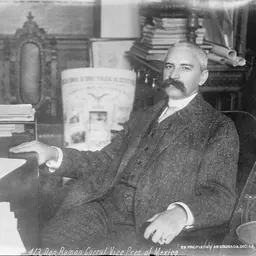
Goodfellow was fascinated by the earthquake and began a personal study of its effects. He noted that it was very difficult to pin down the time of the earthquake due to the absence of timepieces or a nearby railroad and the primitive living standards of the area's residents. Goodfellow returned twice more, the second time in July with Tombstone photographer C.S. Fly, to study and record the effects of the earthquake. He traveled over through the Sierra Madre mountains recording his observations, mostly on foot. It included the first surface rupture map of an earthquake in North America and photographs of the rupture scarp by C.S. Fly. The earthquake was at the time the "longest recorded normal-fault surface rupture in historic time." It was later described as an "outstanding study" and a "pioneering achievement". Goodfellow simultaneously developed a friendship with Mexican politician Ramón Corral and hosted him in 1904 when he visited San Francisco.
Personal reputation
Along with being an extremely talented and innovative surgeon Goodfellow developed a reputation as a hard-drinking, irascible Ladies' man. He kept company with some of the courtesans who frequented the Crystal Palace Saloon. He was also known to be a vocal supporter of the Earps, town business owners, and miners, Goodfellow also helped organize the Tombstone Scientific Society. He was active in other community affairs, and invested in the Huachuca Water Company, which in 1881 built a pipeline from the Huachuca Mountains to Tombstone, along with a community swimming pool. Parsons' upper lip and nose were pierced by a splinter of wood, severely flattening and deforming his nose. Goodfellow devised a wire framework and in a series of treatments successfully restored Parsons' nose to his pre-injury profile. White was seriously injured but Goodfellow was not arrested, as the judge ruled Goodfellow had acted in self-defense. Goodfellow's wife fell ill and died in Oakland, California, at her mother-in-law's home in August 1891. Goodfellow and their daughter Edith attended her funeral at his mother's home in Oakland on August 16.
At noon on September 24, 1891, Goodfellow's friend and colleague, Dr. John C. Handy, was shot on the streets of Tucson. Handy had divorced his wife and had recently been trying to evict her from the home the court had granted her. When she hired attorney Francis J. Heney, Handy repeatedly threatened to kill him. He assaulted the attorney on the street that afternoon and Heney shot him in self-defense. Hearing the news, Goodfellow rode by horseback to Benson, Arizona, where he caught a locomotive and caboose, set aside just for him, to Tucson. In an effort to save Handy, he apparently took over the engine from the engineer and drove the train at high speed, covering the in record time.
After Handy's death, Dr. Goodfellow was invited to take over his Tucson practice, and he and his daughter Edith relocated there. Appointed as a major, he was in charge of the general's field hospital.
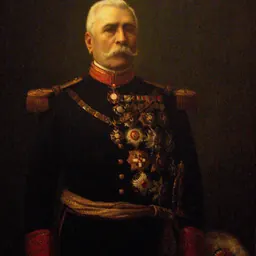
Shafter relied on Goodfellow's excellent knowledge of the Spanish language to help negotiate the final surrender after the Battle of San Juan Hill. Goodfellow attributed part of his success to a bottle of "ol' barleycorn" he kept handy in his medical kit, which he properly prescribed to himself and Spanish General José Toral, lending a more convivial atmosphere to the conference. He was an active member of the Bohemian Club and attended their summer camp on the Russian River regularly. On February 15, 1900, Wells Fargo Express Agent Jeff Milton, a friend of Goodfellow, arrived on board a train in Fairbank, near Benson, Arizona. Former lawman-turned-outlaw Burt Alvord and five other robbers attempted to rob an arriving train of its cash. Milton was seriously wounded in the left arm and the railroad dispatched a special engine and boxcar to transport Milton from Benson to Tucson for treatment. In Tucson, Dr. H.W. Fenner tied the shattered bone together with piano wire. When the wound failed to heal, he sent Milton to San Francisco, where he could be seen by experts at the Southern Pacific Hospital there. They wanted to amputate his arm at the elbow, but he refused and got a ride to Dr. Goodfellow's office. Goodfellow successfully cleaned and treated Milton's wound but told him he would never be able to use the arm again. Milton's arm healed but was of little use and noticeably shorter than his right arm.
In April 1906, at the time of the 1906 San Francisco earthquake, Goodfellow had remarried and was living at the St. Francis Hotel. He lost all of his records and personal manuscripts in the hotel and his office due to the earthquake and subsequent fires.
Goodfellow declared he did not want to live any longer and on December 7, 1910, he died. However, a local urologist and others thought alcoholism may have played a role in his death. Goodfellow was buried in the Angelus-Rosedale Cemetery in Los Angeles. His pioneering work in the treatment of abdominal wounds, specifically those caused by gunshots, as well as his recognition of the significance of sterile technique at a time when much of the medical establishment had not yet accepted it as a surgical necessity, has contributed to his modern image as a physician well ahead of his time. Decades after his death, by the late 1950s, mandatory laparotomy had become and remains the standard of care for managing patients with abdominal penetrating trauma. To recognize financial supporters, the University of Arizona School of Medicine established the George E. Goodfellow Society.
Don’t just read it —
keep it.
Full-length biographies made to live with: read them, listen on the way to work, watch them tonight.
- E-book
- Audio
- Video
Instant download · yours to keep · every purchase keeps this site free
Important facts
People in George E. Goodfellow's life
Named in this biography and alive at the same time



Related people
Same field, nearest in time




Contemporaries
People whose lives overlapped George E. Goodfellow's


Frequently asked questions
Who was George E. Goodfellow?
American physician
When was George E. Goodfellow born?
George E. Goodfellow was born on 23 December 1855 in Downieville.
When did George E. Goodfellow die?
George E. Goodfellow died on 7 December 1910 in Los Angeles.
What was George E. Goodfellow's occupation?
George E. Goodfellow was a physician and surgeon.
What nationality was George E. Goodfellow?
George E. Goodfellow was American.
Sources & further reading
· Wikipedia: George E. Goodfellow
· DBpedia: George E. Goodfellow
Cite this page
APA: Biography.guide. (2026). George E. Goodfellow. https://biography.guide/george-e-goodfellow/
MLA: "George E. Goodfellow." Biography.guide, https://biography.guide/george-e-goodfellow/.
Chicago: "George E. Goodfellow." Biography.guide. https://biography.guide/george-e-goodfellow/.
Data last updated: 2026-09-22 · Spot an error? Report a correction.
Page generated 2026-09-27 05:34 UTC