
About George Devereux
Lived 1908 – 1985 (aged 76). George Devereux was an American and French anthropologist, professeur des universités, psychiatrist, psychoanalyst, ethnologist and writer.
Georges Devereux (; born György Dobó, ; 13 September 1908 – 28 May 1985) was a Hungarian-French ethnologist and psychoanalyst, often considered the founder of ethnopsychiatry.
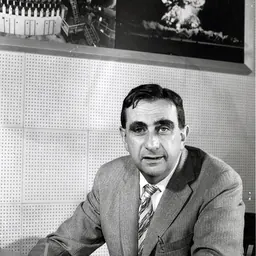
He was born into a Jewish family in Lugoj, Banat, Austria-Hungary (now Romania). His family moved to France following World War I. He studied the Malayan language in Paris, completing work at the Institut d'Ethnologie. In 1933 he converted to Catholicism and changed his name to Georges Devereux. At that time, he traveled for the first time to the United States to do fieldwork among the Mohave Indians, completing his doctorate in anthropology at University of California at Berkeley in 1936. In the postwar years, Devereux became a psychoanalyst, working with the Winter Veterans Hospital and Menninger Clinic in Topeka, Kansas. He treated Native Americans by drawing on his anthropology background. A pioneer, he is "well regarded among French and American scholars interested in psychoanalytic anthropology". were formative experiences of his childhood and youth. His cousin was Edward Teller. As a youngster growing up in that imperial and cosmopolitan world, and later in France, Dobó learned and spoke four languages: Hungarian, Romanian, German, and French.
He studied piano seriously as a youth but, after an unsuccessful operation to correct a problem with his hand, had to give up his dream of performing professionally. His older brother committed suicide.
Education and early career in France Following the breakup of Austria-Hungary after World War I, the Dobó family left Romania for France. As a youth, Georgy studied chemistry and physics with Marie Curie in Paris. He was looking for ‘objective truth’ in physics and 'subjective truth' in music. In his later writings, he often referred to notions taken from the natural sciences.
He became ill and had to interrupt his studies. After recovering, Dobó moved to Leipzig, Germany, to begin an apprenticeship in a publishing house. He returned to Paris upon completion and, taking a new direction, enrolled at the , known as INALCO, where he studied the Malay language, qualifying in 1931. He became a pupil of Marcel Mauss and Paul Rivet in anthropology, graduating from the .
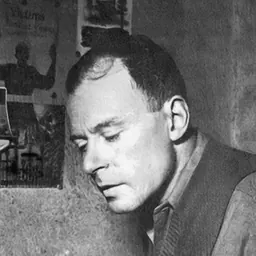
He also befriended Klaus Mann. During this period, Dobó wrote a novel, (The Faun in the Bourgeois Hell), which has not been published.
From 1931 to 1935, Dobó worked at the (National Museum of Natural History) as a junior researcher. After completing his , he received a grant/scholarship in 1932 from the Rockefeller Foundation in New York to do fieldwork in the United States.
Devereux considered his time with the Mohave to have been the happiest of his life. This was the first of five periods when he lived with and studied them.
In 1933 György Dobó converted to Catholicism, and adopted the French name of Georges Devereux. He treated and studied several Native Americans suffering from mental illness in this period, including Jimmy Picard, a Blackfoot whom he wrote about. He drew from his anthropology background to treat these men. Devereux is considered among the group of French-speaking anthropologists who established new lines of research in the postwar period.
Together with a former student, Tobie Nathan, he founded the journal, Ethnopsychiatrica in the 1970s.
Influence According to George Gaillard, Devereux has been more influential in Europe than in North America in terms of ethnopsychiatry. 1993, the Centre George Devereux was founded in his honor at the University of Paris VIII, as part of the Psychology Department. It runs a clinic for ethnopsychiatry, aiding students as well as members of the community, including immigrants. His book, Reality and Dream: Psychotherapy of a Plains Indian (1951), about his psychoanalytic work with a Blackfoot Indian in the United States, was adapted as a French film, Jimmy P: Psychotherapy of a Plains Indian (2013), written and directed by Arnaud Desplechin, and starring Benicio del Toro as Jimmy Picard, and Mathieu Amalric as Georges Devereux. It was nominated for numerous awards, including three Césars.
Writings (selection) Devereux published more than 400 texts. Among them: Reality and Dream: Psychotherapy of a Plains Indian, New York: International Univ. Press, 1951 A Study of Abortion in Primitive Societies; a typological, distributional, and dynamic analysis of the prevention of birth in 400 pre-industrial societies, New York: Julian Press, 1955 From Anxiety to Method in the Behavioral Sciences, The Hague [etc..]: Mouton, 1967 Mohave ethnopsychiatry and suicide: the psychiatric knowledge and the psychic disturbances of an Indian tribe, St. Clair Shores, Michigan: Scholarly Press, 1976 Ethnopsychoanalysis: psychoanalysis and anthropology as complementary frames of reference, Berkeley: University of California Press, 1978 Basic problems of ethnopsychiatry, Chicago: University of Chicago Press, 1980 Dreams in Greek Tragedy: An Ethno-Psycho-Analytical Study, University of California Press, 1976 Les Femmes et les psychotiques dans les sociétés traditionelles, (edited by Devereux), Paris 1981 Femme et Mythe, Paris: Flammarion, 1982 Baubo, la vulve mythique, Paris: J.-C. Godefroy, 1983 The character of the Euripidean Hippolytos: an ethno-psychoanalytical study, Chico, Calif.: Scholars Press, 1985. Cléomène le roi fou. Etude d'histoire ethnopsychanalytique, Paris: Aubier Montaigne, 1998, correspondence Henri Ellenberger-George Devereux, in: Ethno-psychiatry (Emmanuel Delille ed.), Lyon, ENS Éditions, 2017. http://books.openedition.org/enseditions/7967
Don’t just read it —
keep it.
Full-length biographies made to live with: read them, listen on the way to work, watch them tonight.
- E-book
- Audio
- Video
Instant download · yours to keep · every purchase keeps this site free
Important facts
People in George Devereux's life
Named in this biography and alive at the same time



Related people
Same field, nearest in time

Contemporaries
People whose lives overlapped George Devereux's

Frequently asked questions
Who was George Devereux?
ethnologist (1908–1985)
When was George Devereux born?
George Devereux was born on 13 September 1908 in Lugoj.
When did George Devereux die?
George Devereux died on 28 May 1985 in 7th arrondissement of Paris, Paris.
What was George Devereux's occupation?
George Devereux was an anthropologist, professeur des universités, psychiatrist, psychoanalyst, ethnologist and writer.
What nationality was George Devereux?
George Devereux was American and French.
Sources & further reading
Cite this page
APA: Biography.guide. (2026). George Devereux. https://biography.guide/george-devereux/
MLA: "George Devereux." Biography.guide, https://biography.guide/george-devereux/.
Chicago: "George Devereux." Biography.guide. https://biography.guide/george-devereux/.
Data last updated: 2026-09-20 · Spot an error? Report a correction.
Page generated 2026-09-27 05:30 UTC