
About George Cressey
Lived 1896 – 1963 (aged 66). George Cressey was an American geographer, university teacher and traveler.
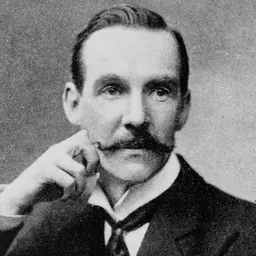
George Babcock Cressey (December 15, 1896 – October 21, 1963) was an American geographer, author, and academic. Born in Tiffin, Ohio, he attended Denison University and then the University of Chicago, where he received a PhD in geology. After receiving his degree, he taught at University of Shanghai and traveled widely in China. Upon his return to the United States in 1929, he completed a pioneering book on the country, China's Geographic Foundations.
In 1931, Cressey received a second PhD from Clark University in geography. He then joined the faculty of Syracuse University, where he remained for the rest of his professional career. At Syracuse, Cressey wrote on a variety of subjects, but focused on "population problems as related to the worldwide distribution of land and arable resources," and primarily studied Asia, though he traveled to 75 countries on six continents (all but Australia), over the course of his career. Cressey also served as chair of the department and helped to develop the geography graduate program at Syracuse into one of the best in the country.
In addition to his academic work, Cressey consulted for the US Department of State, the Board of Economic Warfare, and the Military Intelligence Corps during World War II. After the war, he was also an outspoken advocate of better relations with People's Republic of China and traveled widely in East Asia and the Middle East with a variety of fellowships. Cressey was also highly involved in a number of professional organizations, serving as President of the International Geographical Union and the Association for Asian Studies, and as Honorary President of the Association of American Geographers.
Early life Cressey was born in Tiffin, Ohio, on December 15, 1896. His father, Frank G. Cressey, was a Baptist minister and his mother, Frances Babcock, the first woman to graduate from the University of Chicago, taught Latin at Denison University. After high school, Cressey attended Denison University, graduating in 1919 with a B.S. He then entered the University of Chicago, where he studied under the noted geologist Rollin D. Salisbury, receiving a Master's degree in 1921 and a PhD in 1923, both in geology. and formed the basis of a book he began writing, China's Geographic Foundations: A Survey of the Land and its Peoples. Cressey finished the book shortly before leaving China and gave the manuscript to the Commercial Press in Shanghai to prepare for publication. In 1932, however, the press was bombed by the Japanese and the manuscript was lost in the ensuing fire.
Second PhD and academic career In 1929, Cressey left China , returning to the United States for a year of study at Harvard University. In 1931, he earned a second PhD, in geography, from Clark University, writing his dissertation on the Ordos Desert. The same year, Cressey joined the faculty of Syracuse University as a professor of geography and geology, and soon became chairman of the department. Writing in Political Science Quarterly, Grover Clark called the book "a clear, comprehensive and yet comprehensible description of the land and the people's relation to it." Although welcomed by the Kuomintang, the book was "strongly criticized" by the Chinese Communist Party because of Cressey's judgment that China lacked the resources to quickly become a great industrial power.
While teaching at Syracuse, Cressey continued his travels, and in 1937, he visited Moscow, where he was invited to consult on the production of the Great Soviet World Atlas. After his trip to Moscow, Cressey traveled widely in the Soviet Union, and after returning to the United States he spoke of the great economic potential of the country, despite anti-Soviet sentiment. As a result, he earned "the trust and gratitude of his Soviet colleagues," allowing him access to their knowledge and resources. Cressey also spent the 1930s developing the academic offerings at Syracuse, building "one of the best Master of Arts programs in geography available in the United States."
World War II After the US entry into World War II, Cressey became a consultant to several government bodies, including the US Department of State, the Board of Economic Warfare, and the Military Intelligence Corps. Cressey also taught and lectured on Asia, for the Army's training program at Syracuse University, and lectured publicly on East Asia throughout the country. In 1943 and 1944, he served as a special representative in China through the State Department's cultural exchange program. In that capacity, Cressey worked with the National Academy of Sciences to help establish Chinese universities, and promote better relations with China.
During the war, Cressey also wrote his second book: Asia's Lands and Peoples: A Geography of One-Third the Earth and Two-Thirds its People, published in 1944. The book was aimed at the ordinary American as a general overview of Asia in light of rising American interest in the region due to the war. In the book, Cressey also entered into the debate on how to divide Asia from Europe by arguing that Europe was really only one of the six regions of Eurasia, the other five being the Soviet Union, East Asia, Southeast Asia, India, and Southwest Asia. The book was well received, and Dudley Stamp wrote that it had "the sure touch of the man who has been to see for himself." That same year, he received the George Davidson Medal of the American Geographical Society and in 1958 he received a distinguished service award from the National Council for Geographic Education. and Leonard Kasdan wrote in the American Anthropologist that the book was the "most useful single compendium of the aspects covered that exists in the literature to date."
Although he broadened his regional interests in the 1950s, Cressey remained interested in China and his "enduring concern was to restore contact between China and the United States," after the break in their relations following the Communist victory. He also promoted the study of China, hoping to educate a new generation of geographers with knowledge of China and East Asia.
Cressey died of cancer on October 21, 1963, at his home in Syracuse, New York.
Don’t just read it —
keep it.
Full-length biographies made to live with: read them, listen on the way to work, watch them tonight.
- E-book
- Audio
- Video
Instant download · yours to keep · every purchase keeps this site free
Important facts
People in George Cressey's life
Named in this biography and alive at the same time

Related people
Same field, nearest in time

Contemporaries
People whose lives overlapped George Cressey's



Frequently asked questions
Who was George Cressey?
American geographer
When was George Cressey born?
George Cressey was born on 15 December 1896 in Tiffin.
When did George Cressey die?
George Cressey died on 21 October 1963 in Syracuse.
What was George Cressey's occupation?
George Cressey was a geographer, university teacher and traveler.
What nationality was George Cressey?
George Cressey was American.
Sources & further reading
Cite this page
APA: Biography.guide. (2026). George Cressey. https://biography.guide/george-cressey/
MLA: "George Cressey." Biography.guide, https://biography.guide/george-cressey/.
Chicago: "George Cressey." Biography.guide. https://biography.guide/george-cressey/.
Data last updated: 2026-09-20 · Spot an error? Report a correction.
Page generated 2026-09-27 05:30 UTC