
About George Carter-Campbell
Lived 1869 – 1921 (aged 52). George Carter-Campbell was a British military personnel.
Major-General George Tupper Campbell Carter-Campbell, (2 April 1869 – 19 December 1921) was a senior British Army officer who served in the Second Boer War and the First World War.
Early life A member of the Carter-Campbell of Possil family, Carter-Campbell was born in Kensington, the third son of Thomas Tupper Carter-Campbell of Possil and his wife, Emily Georgina Campbell, daughter of George Campbell of Inverneill. He served in the Second Boer War (1899–1902) as adjutant of the 2nd Battalion, which took part in the Ladysmith Relief Force, where he was present at the battles of Colenso (December 1899), Spion Kop (January 1900), Vaal Krantz and the Tugela Heights (February 1900). They served in Natal from March to June 1900, then in Transvaal east of Pretoria from July to November 1900. For his services he was promoted brevet major on 29 November 1900, and twice mentioned in despatches. Following the end of hostilities in South Africa, he returned to the United Kingdom in August 1902.
On the outbreak of the First World War, Carter-Campbell proceeded to France with the 8th Division as second-in-command of the 2nd Battalion, Cameronians (Scottish Rifles) and was wounded during the Battle of Neuve Chapelle on 10 March 1915, being awarded the Distinguished Service Order (DSO) and also the Order of St. Stanislaus. The citation for his DSO, which appeared in The London Gazette in April 1915, reads as follows:
Carter-Campbell subsequently commanded the battalion until 23 September 1915, when he was promoted brigadier general to command the 94th Infantry Brigade. While holding the latter command, he was gazetted brevet lieutenant colonel in June 1916 and finally brevet colonel a year later "for distinguished service in the Field".
Promoted to temporary major general, Carter-Campbell assumed command of the 51st (Highland) Division on 17 March 1918, taking over from Major General George Harper, and was its GOC until he was transferred to the Rhine to take command of a brigade there, shortly before the division preceded home for demobilization. While in command of the 51st Division, Carter-Campbell was appointed a Companion of the Order of the Bath (CB). and Commander of the French Legion of Honour.
Carter-Campbell was wounded during the First World War. After the war had ended, and he had recovered sufficiently, he was made GOC Northern Ireland in 1920.
However, he died in 1921 at Queen Alexandra Military Hospital in London, with his war service being blamed for his premature death.
Don’t just read it —
keep it.
Full-length biographies made to live with: read them, listen on the way to work, watch them tonight.
- E-book
- Audio
- Video
Instant download · yours to keep · every purchase keeps this site free
Important facts
People in George Carter-Campbell's life
Named in this biography and alive at the same time
Related people
Same field, nearest in time


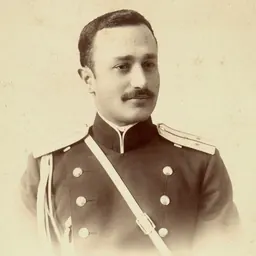



Contemporaries
People whose lives overlapped George Carter-Campbell's

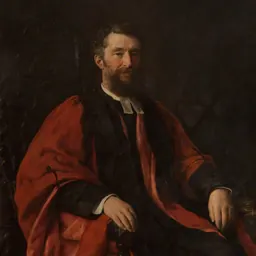

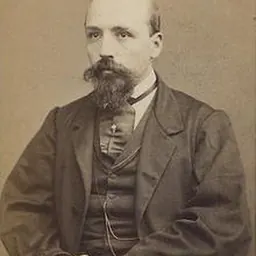
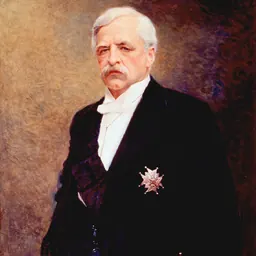
Frequently asked questions
Who was George Carter-Campbell?
British Army general
When was George Carter-Campbell born?
George Carter-Campbell was born on 2 April 1869 in Edinburgh.
When did George Carter-Campbell die?
George Carter-Campbell died on 19 December 1921 in London.
What was George Carter-Campbell's occupation?
George Carter-Campbell was a military personnel.
What nationality was George Carter-Campbell?
George Carter-Campbell was British.
Sources & further reading
· Wikipedia: George Carter-Campbell
· DBpedia: George Carter-Campbell
Cite this page
APA: Biography.guide. (2026). George Carter-Campbell. https://biography.guide/george-carter-campbell/
MLA: "George Carter-Campbell." Biography.guide, https://biography.guide/george-carter-campbell/.
Chicago: "George Carter-Campbell." Biography.guide. https://biography.guide/george-carter-campbell/.
Data last updated: 2026-09-20 · Spot an error? Report a correction.
Page generated 2026-09-27 05:19 UTC