
About George Carter Bignell
Lived 1826 – 1910 (aged 84). George Carter Bignell was an entomologist.
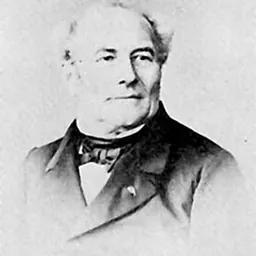
George Carter Bignell (1 March 1826 – 1 March 1910) was an English amateur entomologist. He worked as a clerk, followed by service in the Royal Navy and then as in a public office in Devon, and in his spare time collected insects and was a Fellow of the Entomological Society. He devised methods to capture insects by beating foliage and discovered several new species, particularly of parasitic wasps.
Life and work
Bignell was born in Exeter and left school at the age of 12 to become a bookings clerk but joined the Royal Marines when he was 16. He joined HMS Superb, one of the last all-wooden, all-sailing, ships-of-the-line to serve in the Royal Navy. He saw action in the Portuguese "Little Civil War" in 1847, as part of a British squadron sent to support Queen Maria II. During his time in the Marines he developed a passion for natural history, especially insects, which he studied whenever he had the chance. He retired after 22 years' service with the rank of Barrack Sergeant.
Bignell was then appointed Registrar of Births and Deaths, and Poor Law Officer for Stonehouse in Plymouth, Devon. His spare time was devoted to entomology; he scoured the countryside of Devon and Cornwall looking for specimens and studying them in their habitat. Although he studied and collected a wide range of insects, it was his work with the Ichneumonidae or parasitic wasps that was outstanding; discovering nineteen species that were entirely new to science, two of which are named after him. These include Mesoleius bignellii, Apanteles bignellii (now Cotesia), and Iphiaulax (now Atanycolus) bignelli. He devised the Bignell Beating Tray, a folding screen for collecting insects falling from a beaten branch. Bignell knew other collectors of the period including James Higman Keys (1855-1941) and exchanged specimens with Claude Morley. In addition to insects, he later researched and collected marine algae.
His first two wives predeceased him and he married for a third time in 1874. In 1898, he moved from Stonehouse to Saltash in Cornwall. Bignell died on his 84th birthday in 1910. He was survived by three daughters and his widow, while a son had died at sea before him.
Don’t just read it —
keep it.
Full-length biographies made to live with: read them, listen on the way to work, watch them tonight.
- E-book
- Audio
- Video
Instant download · yours to keep · every purchase keeps this site free
Important facts
People in George Carter Bignell's life
Named in this biography and alive at the same time
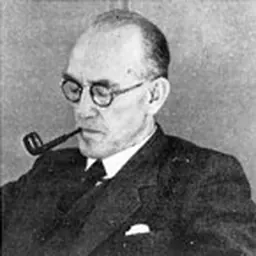

Related people
Same field, nearest in time
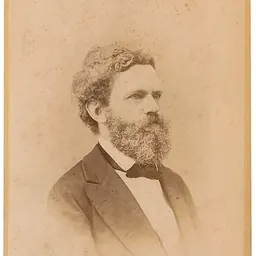
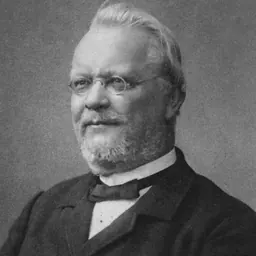
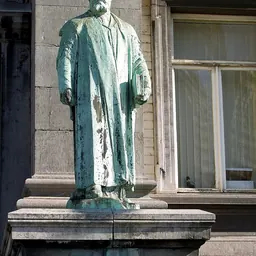


Contemporaries
People whose lives overlapped George Carter Bignell's




Frequently asked questions
Who was George Carter Bignell?
British entomologist
When was George Carter Bignell born?
George Carter Bignell was born on 1 March 1826.
When did George Carter Bignell die?
George Carter Bignell died on 1 March 1910.
What was George Carter Bignell's occupation?
George Carter Bignell was an entomologist.
Sources & further reading
· Wikipedia: George Carter Bignell
· DBpedia: George Carter Bignell
Cite this page
APA: Biography.guide. (2026). George Carter Bignell. https://biography.guide/george-carter-bignell/
MLA: "George Carter Bignell." Biography.guide, https://biography.guide/george-carter-bignell/.
Chicago: "George Carter Bignell." Biography.guide. https://biography.guide/george-carter-bignell/.
Data last updated: 2026-09-26 · Spot an error? Report a correction.
Page generated 2026-09-27 05:13 UTC