
About Georg von Békésy
Lived 1899 – 1972 (aged 73). Georg von Békésy was a Hungarian and American physicist, neuroscientist, chemist, autobiographer, university teacher and physiologist, known for Cochlea.
Georg von Békésy (, ; 3 June 1899 – 13 June 1972) was a Hungarian-American biophysicist.
By using strobe photography and silver flakes as a marker, he was able to observe that the basilar membrane moves like a surface wave when stimulated by sound. Because of the structure of the cochlea and the basilar membrane, different frequencies of sound cause the maximum amplitudes of the waves to occur at different places on the basilar membrane along the coil of the cochlea.
In his last publication A. James Hudspeth and his research team – based on "a groundbreaking technological advancement" – ultimately established that also in mammals frequency analysis in the inner ear is accomplished by tuned hairs cells. This process occurs without a traveling wave (surface wave) on the basilar membrane, and the inner ear theory of Békésy was thus disproved.
Biography
Békésy was born on 3 June 1899 in Budapest, Hungary, as the first of three children (György 1899, Lola 1901 and Miklós 1903) to Sándor Békésy (1860–1923), an economic diplomat, and to his mother Paula Mazaly.
The Békésy family was originally Reformed but converted to Catholicism. His mother, Paula Mazaly (1877–1974) was born in Szagolyca (now Čađavica, Croatia). His maternal grandfather was from Pécs. His father was born in Kolozsvár (now Cluj-Napoca, Romania).
Békésy went to school in Budapest, Munich, and Zürich. He studied chemistry in Bern and received his PhD in physics on the subject: "Fast way of determining molecular weight" from the University of Budapest in 1926.
He then spent one year working in an engineering firm. He published his first paper on the pattern of vibrations of the inner ear in 1928. He was offered a position at Uppsala University by Róbert Bárány, which he declined because of the hard Swedish winters.
Before and during World War II, Békésy worked for the Hungarian Post Office (1923 to 1946), where he did research on telecommunications signal quality. This research led him to become interested in the workings of the ear. In 1946, he left Hungary to follow this line of research at the Karolinska Institute in Sweden.
In 1947, he moved to the United States, working at Harvard University until 1966. In 1962 he was elected a Member of the German Academy of Sciences Leopoldina. After his lab was destroyed by fire in 1965, he was invited to lead a research laboratory of sense organs in Honolulu, Hawaii. He became a professor at the University of Hawaiʻi in 1966 and died in 1972, in Honolulu.
He became a well-known expert in Asian art. He had a large collection which he donated to the Nobel Foundation in Sweden. His brother, Dr. Miklós Békésy (1903-1980), stayed in Hungary and became a famous agrobiologist who was awarded the Kossuth Prize.
Research Békésy developed a method for dissecting the inner ear of human cadavers while leaving the cochlea partly intact. By using strobe photography and silver flakes as a marker, he was able to observe that the basilar membrane moves like a surface wave when stimulated by sound. Because of the structure of the cochlea and the basilar membrane, different frequencies of sound cause the maximum amplitudes of the waves to occur at different places on the basilar membrane along the coil of the cochlea. High frequencies cause more vibration at the base of the cochlea while low frequencies create more vibration at the apex.
Békésy concluded from these observations that by exciting different locations on the basilar membrane different sound wave frequencies excite different nerve fibers that lead from the cochlea to the brain. He theorized that, due to its placement along the cochlea, each sensory cell (hair cell) responds maximally to a specific frequency of sound (the so-called tonotopy). Békésy later developed a mechanical model of the cochlea, which confirmed the concept of frequency dispersion by the basilar membrane in the mammalian cochlea.
Békésy's theory purported to explain every feature of the auditory sensation owing to passive mechanical phenomena. Later David Kemp, showed that that is unrealistic and that active feedback is necessary. Finally, in 2025 A. James Hudspeth and his research team – based on "a groundbreaking technological advancement" – established that also in mammals frequency analysis in the inner ear occurs without a traveling wave on the basilar membrane, and the inner ear theory of Békésy was thus disproved.
Awards Békésy's honours include: The Denker Prize in Otology (1931), The Leibniz Medal of the Berlin Academy of Sciences (1937), The Guyot Prize for Speech and Otology of Groningen University (1939), The Academy Award of the Budapest Academy of Science (1946), Shambough Prize in Otology (1950). Honorary doctorates (M.D.) were conferred on him by the University of Munster (1955), Bern (1959), Padua (1962), Buenos Aires (1968), Cordoba (1968), Hawaii (1969) and Semmelweiss University, Budapest (1969).
Don’t just read it —
keep it.
Full-length biographies made to live with: read them, listen on the way to work, watch them tonight.
- E-book
- Audio
- Video
Instant download · yours to keep · every purchase keeps this site free
Important facts
People in Georg von Békésy's life
Named in this biography and alive at the same time
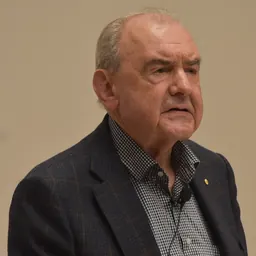
Related people
Same field, nearest in time
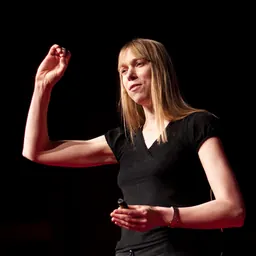

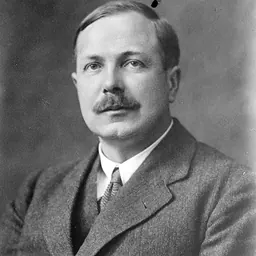
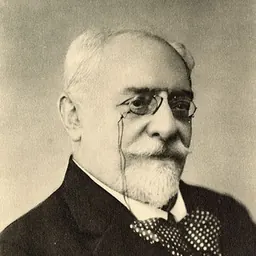
Contemporaries
People whose lives overlapped Georg von Békésy's




Frequently asked questions
Who was Georg von Békésy?
Hungarian physicist (1899–1972)
When was Georg von Békésy born?
Georg von Békésy was born on 3 June 1899 in Budapest.
When did Georg von Békésy die?
Georg von Békésy died on 13 June 1972 in Honolulu.
What was Georg von Békésy's occupation?
Georg von Békésy was a physicist, neuroscientist, chemist, autobiographer, university teacher and physiologist.
What was Georg von Békésy known for?
Georg von Békésy was known for Cochlea.
What nationality was Georg von Békésy?
Georg von Békésy was Hungarian and American.
Sources & further reading
Cite this page
APA: Biography.guide. (2026). Georg von Békésy. https://biography.guide/georg-von-bekesy/
MLA: "Georg von Békésy." Biography.guide, https://biography.guide/georg-von-bekesy/.
Chicago: "Georg von Békésy." Biography.guide. https://biography.guide/georg-von-bekesy/.
Data last updated: 2026-09-25 · Spot an error? Report a correction.
Page generated 2026-09-27 05:12 UTC