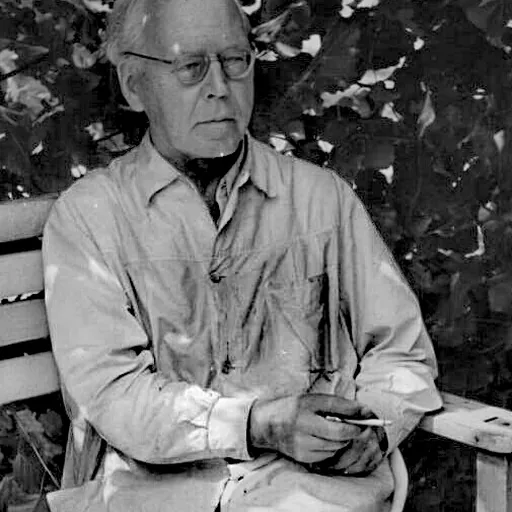
About Georg Kolbe
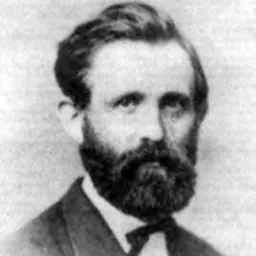
Lived 1877 – 1947 (aged 70). Georg Kolbe was a German sculptor, painter, draftsperson, etcher, graphic artist and visual artist.
Georg Kolbe (15 April 1877 – 20 November 1947) was a German sculptor. He was the leading German figure sculptor of his generation, in a vigorous, modern, simplified classical style similar to Aristide Maillol of France.
Early life and education
Kolbe was born in Waldheim, Saxony. Originally trained as a painter in Dresden, Munich, and Paris, he began sculpting during a stay in Rome at the turn of the century under the technical guidance of sculptor Louis Tuaillon.
Career In 1905, Kolbe joined the 'Berliner Sezession', which in 1913, he left to join the 'Freie Sezession'. His artistic breakthrough came in 1912 with his sculpture masterpiece "Die Tänzerin", his most famous work. As he was very interested in Asian faces, D. N. Mazumdar, father of Indian novelist Anita Desai, sat for him, resulting in a bust and a torso. In 1929, he also collaborated with Lilly Reich and Mies van der Rohe for his sculpture in the Barcelona Pavilion; Mies placed Kolbe's Alba (Dawn) in a small water basin. As the last president of the Deutscher Künstlerbund, he devoted himself to the promotion of fellow artists who were classified as "degenerate".
Kolbe also made ninety-nine prints, beginning with lithographs around 1900, primarily literary illustrations. In 1919–1920, Kolbe practically did not work as a sculptor. During this time small-size sculptures and drawings became central in his works. In the 1920s, encouraged by Cassirer, he made drypoints of dancers and nudes in motion, subjects he favored in his sculpture. His work was part of the sculpture event in the art competition at the 1928 Summer Olympics.
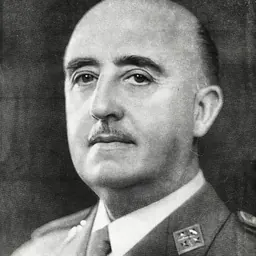
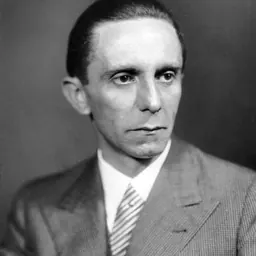
Kolbe executed important commissions throughout his long career, including many for the National Socialists during the last 15 years of his life, even requesting to make a bust of Hitler though this request was denied. The Nazis appropriated his late style of monumental, idealized athletic nudes. From 1937 to 1944, Kolbe participated regularly at the Große Deutsche Kunstausstellung, organized by the Haus der Kunst, Munich. His uncharacteristically bombastic Verkündigung (Proclamation) (1924) was a focal point of the 1937 German Pavilion. Commissioned by the German-Spanish economic organization Hisma in 1939, Kolbe created a portrait bust of the Spanish dictator Francisco Franco, which was given to Hitler as a birthday present the same year. In 1944, in the final stages of World War II, Hitler and Joseph Goebbels included Kolbe in the Gottbegnadeten list of the twelve most important visual artists. Only after Kolbe's death, a Beethoven monument (1926−47) and the Ring der Statuen were installed in Frankfurt am Main. The realization of a Friedrich Nietzsche memorial in Weimar failed because of Hitler's appeal.
Kolbe died of bladder cancer in St. Hedwig-Krankenhaus in Berlin on 20 November 1947.
Exhibitions In 2009, an exhibition of Kolbe's Blue Ink Drawings was presented by the State Hermitage Museum, in St Petersburg.
Among others, the museum has in the past mounted solo exhibitions of Ernesto de Fiori (1992), Aristide Maillol (1996), Bernhard Hoetger (1998), Henry Moore (1998), Karl Hartung (1998), August Gaul (1999), A.R. Penck (2000), Wilhelm Lehmbruck (2000), Gerson Fehrenbach (2000), Bernhard Heiliger (2000–2001), Wilhelm Loth (2002), Michael Croissant (2003), David Nash (2004), Wieland Förster (2005), Hermann Blumenthal (2006), Max Klinger (2007), Antony Gormley (2007), Johannes Grützke (2007–2008), Otto Herbert Hajek (2008), Ah Xian (2008), Anton Henning (2009), Renée Sintenis (2013/2014), Ruprecht von Kaufmann (2014), Vanitas (with Alicja Kwade, Lucca Trevisani, Dieter Roth, Tomas Saraceno, Thomas Schütte and Pawel Althamer) 2014, Jean Arp - The Navel of the Avant-Garde (2015), Auguste Rodin and Madame Hanako (2016).
Awards 1905 Villa Romana prize
Gallery
Don’t just read it —
keep it.
Full-length biographies made to live with: read them, listen on the way to work, watch them tonight.
- E-book
- Audio
- Video
Instant download · yours to keep · every purchase keeps this site free
Important facts
People in Georg Kolbe's life
Named in this biography and alive at the same time
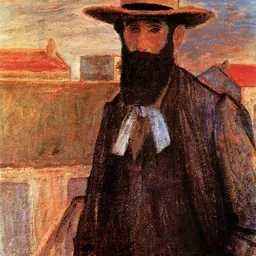




Related people
Same field, nearest in time


Contemporaries
People whose lives overlapped Georg Kolbe's



Frequently asked questions
Who was Georg Kolbe?
German sculptor (1877-1947)
When was Georg Kolbe born?
Georg Kolbe was born on 15 April 1877 in Waldheim.
When did Georg Kolbe die?
Georg Kolbe died on 20 November 1947 in Berlin.
What was Georg Kolbe's occupation?
Georg Kolbe was a sculptor, painter, draftsperson, etcher, graphic artist and visual artist.
What nationality was Georg Kolbe?
Georg Kolbe was German.
Sources & further reading
Cite this page
APA: Biography.guide. (2026). Georg Kolbe. https://biography.guide/georg-kolbe/
MLA: "Georg Kolbe." Biography.guide, https://biography.guide/georg-kolbe/.
Chicago: "Georg Kolbe." Biography.guide. https://biography.guide/georg-kolbe/.
Data last updated: 2026-09-20 · Spot an error? Report a correction.
Portrait: Wikimedia Commons · author & licence
Page generated 2026-09-27 04:58 UTC