
Georg Karl Tänzler
(1877-1952) German-born American radiology technologist and erotomaniac
About Georg Karl Tänzler
Lived 1877 – 1952 (aged 75). Georg Karl Tänzler was a German and American physician, radiologist and radiology technologist.
Early life
He was born as Karl Tänzler or Georg Karl Tänzler on February 8, 1877 in Dresden, Germany.
Tänzler grew up in the German Empire but, at some point, travelled to India and later to Australia just before the outbreak of World War I. During his stay in Australia, over the course of World War I, Tänzler was kept with other Germans in Australia in internment camps and prisons, supposedly for his own protection and safety because of his German ethnicity. He attempted and failed to escape by constructing a ship vessel. He was released shortly after the end of World War I, but since he was not allowed to move back to his native Germany, he instead left for the Netherlands. In "The Trial Bay Organ: A Product of Wit and Ingenuity" by "Carl von Cosel", an autobiographical account in the Rosicrucian Digest of March and April 1939, he gives details about his stay in Australia before his internment during the Great War, as well as his subsequent return to Germany after the War:
Tanzler's account of Trial Bay Gaol, his secret building of a sailboat, etc., is confirmed by Nyanatiloka Mahathera, who mentions that he planned to escape from the Gaol with "Count Carl von Cosel" in a sailboat, and provides other information about the internment of Germans in Australia during World War I.
Around 1920, following his return to Germany, Tanzler married Doris Schäfer (1889–1977). Together they had two children: Ayesha Tanzler (1922–1998), and Clarista Tanzler (1924–1934), who died of diphtheria.
Tanzler emigrated to the United States from Germany in 1926, sailing from Rotterdam on February 6, 1926 to Havana, Cuba. From Cuba, he settled in Zephyrhills, Florida, where his sister had already emigrated, and was later joined by his wife and daughters. Leaving his family behind in Zephyrhills in 1927, he took a job as a radiology technician at the U.S. Marine Hospital in Key West, Florida under the name Carl von Cosel.
During his childhood in Germany, and later while traveling briefly in Genoa, Italy, Tanzler claimed to have been visited by visions of a dead, purported ancestor, Countess Anna Constantia von Cosel (1680–1765), who revealed the face of his true love, an exotic dark-haired woman, to him. By all accounts, Elena was viewed as a local beauty in Key West.
Elena was the daughter of local cigar maker Francisco "Pancho" Hoyos (1883–1934) and Aurora Milagro (1881–1940). She had two sisters, Florinda "Nana" Milagro Hoyos (1906–1944), who married Mario Medina (–1944) and also succumbed to tuberculosis; and Celia Milagro Hoyos (1913–1934).
On February 18, 1926, Elena married Luis Mesa (1908–1974), the son of Caridad and Isaac Mesa. Mesa left Elena shortly after she suffered a miscarriage, and moved to Miami. Elena was legally married to Mesa at the time of her death.
Elena was subsequently diagnosed with tuberculosis, a disease typically fatal at the time and which eventually would claim the lives of almost all of her immediate family. Tanzler attempted to cure Elena with a variety of treatments, remedies, X-rays, and other medical equipment that were brought to the Hoyos' home. and transported it to his home. He reportedly said that Elena's spirit would come to him when he would sit by her grave and serenade her corpse with a favorite Spanish song. He also said that she would often tell him to take her from the grave. After a preliminary hearing on October 9, 1940, at the Monroe County Courthouse in Key West, Tanzler was held to answer on the charge, but the case was eventually dropped. He was released, as the statute of limitations for the crime had expired.
The facts underlying the case and the preliminary hearing drew much interest from the media at the time (most notably, from the Key West Citizen and Miami Herald) and created a sensation among the public, both regionally and nationwide. The public mood was generally sympathetic to Tanzler, whom many viewed as an eccentric "romantic."
Later life and death
In 1944, Tanzler moved to Pasco County, Florida, close to Zephyrhills, where he wrote an autobiography that appeared in the pulp publication, Fantastic Adventures, in 1947. His home was near his wife Doris, who helped to support Tanzler in his later years. An article written by Michelfelder in 1982 tells of how renovation workers found a note allegedly written by Tanzler, confessing to have killed Elena by poisoning her:
Don’t just read it —
keep it.
Full-length biographies made to live with: read them, listen on the way to work, watch them tonight.
- E-book
- Audio
- Video
Instant download · yours to keep · every purchase keeps this site free
Important facts
Related people
Same field, nearest in time

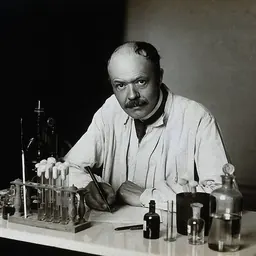


Contemporaries
People whose lives overlapped Georg Karl Tänzler's


Frequently asked questions
Who was Georg Karl Tänzler?
(1877-1952) German-born American radiology technologist and erotomaniac
When was Georg Karl Tänzler born?
Georg Karl Tänzler was born on 8 February 1877 in Dresden.
When did Georg Karl Tänzler die?
Georg Karl Tänzler died on 3 July 1952 in Pasco County, Florida.
What was Georg Karl Tänzler's occupation?
Georg Karl Tänzler was a physician, radiologist and radiology technologist.
What nationality was Georg Karl Tänzler?
Georg Karl Tänzler was German and American.
Sources & further reading
· Wikipedia: Georg Karl Tänzler
Cite this page
APA: Biography.guide. (2026). Georg Karl Tänzler. https://biography.guide/georg-karl-tanzler/
MLA: "Georg Karl Tänzler." Biography.guide, https://biography.guide/georg-karl-tanzler/.
Chicago: "Georg Karl Tänzler." Biography.guide. https://biography.guide/georg-karl-tanzler/.
Data last updated: 2026-09-26 · Spot an error? Report a correction.
Page generated 2026-09-27 05:16 UTC