
About Georg Herold
Born 1947. Georg Herold is a German sculptor, university teacher, painter, printmaker, installation artist and photographer.
Work
Between the 80s and 90s, Herold's work was influenced by Albrecht Dürer's, whose Hare (1502) was created using roofing slats. Herold was also influenced by the Dada movement, whose specifics are found in his bizarre and subversive and "quirky and provocative as "Dada"". An example is Herold's Herrenperspektive (Men's Perspective), (2002). The ironic tendency of Herold's works which leave room for interpretation, juxtaposed to the fact that he uses commonly found objects to create his artwork, influenced his style towards Marcel Duchamp's approach. including There is nothing left—There is no right (1992)
Herold uses non-traditional mediums, lower grade everyday materials that are not commonly used in art. nails, socks, buttons, paper scraps and copper thus, transforming the role of canvas by changing it into a support that outspreads "from the frame into the picture".
One of the examples of the nontraditional art materials that Herold uses may be his caviar paintings. As Herold smears caviar across the surface of the canvas, he transmutes the value and connotation into something invested rather than wasted. Herold, through his frequently ironic critical works, makes an allusion to figures of authority, the art market, their artistic predecessors, and the prevailing culture questioning the whole purpose of art and even its context in the world at large.
A sculpture composed of metal wire and wood, Genetischer Eingriff in die Erbmasse bei Frau Herold (n.n. tr. The Genetic Alteration of Mrs. Herolds DNA) (1985) depicts a DNA double-helix constructed from wire that descends from thin air to a wooden base. As it approaches the base, chunks of board wood of various lengths seem to interact with, interrupt, and distort the DNA strand at random.
Herold's large canvas Untitled (1991) displays four dark, spiraling patterns made of Beluga caviar. The spirals resemble DNA molecules, and each caviar egg is painstakingly numbered.
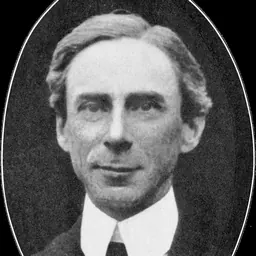
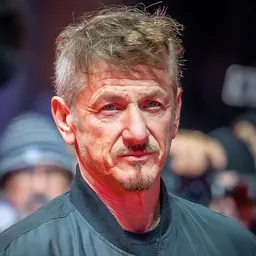
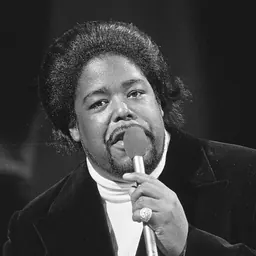
In Künstlerische Medizin, Patho-Ontologie (Cabinet patho-psychologique) (1995), Herold presents a collection of glass bottles and jars, each one labeled in a way that at a glance seems scientific and legitimate. Closer inspection reveals the label texts to be pseudoscientific and satirical. Bertrand Russell, Lionel Richie, William Burroughs, Sean Penn, Barry White, Charles de Gaulle, Mark Lombardi and, he even has counted the number of fish eggs used for creating some of his caviar paintings.
Herold's sculpturing style is accepted as minimalism or Neo-Dada minimalism by art critiques, Herold's sculpted figures often are slightly distorted, filiforms, stretched to the point of breaking, often reaching towards something, pushing their body postures, while trapped in an unbearable state. Some of Herold's works include: G.O.E.L.R.O (1988), Hospitalismus (1989), The Bow (1989), Untitled (1990), Resteuropa (Rest of Europe) (1998), Rumsfeld (2004), Red Square (2005), Platz des himmlischen Friedens (2005), Lost in Tolerance (2006), Flamingo (2007). All these artworks are sculptures or installations made of bricks, canvas, laths, color lacquer and screws.
In 1989 The New York Times reviewer found the figurative paintings of Herold, Martin Kippenberger and Rosemarie Trockel exhibited at the Solomon R. Guggenheim Museum making "little sense in a pictorial context" while in 1990, on the occasion of a group exhibition held at the Tony Shafrazi Gallery, another The New York Times reviewer found Herold's caviar paintings "seminal and astral". In 2012 took place a New Art Dealers Alliance fair in Chelsea where Herold exhibited a 1989 caviar painting and an artwork made of bricks.
Film Herold played in Martin Kippenberger und Co – Ein Dokument. "Ich kann mir nicht jeden Tag ein Ohr abschneiden." (Martin Kippenberger and Co – A Document. "I can not cut my ears every day".), a 25-minute documentary, along with Albert Oehlen, Markus Oehlen, Werner Büttner, Hans Peter Adamski, Peter Bommels and Volker Tannert. The documentary was produced and directed by Jacqueline Kaess-Farquet. The Frankfurter Allgemeine Zeitung (Frankfurt General Newspaper) reviewer found that the artists had "ironic or even a bit of a bourgeois appearance".
Teaching Besides his artistic career, Georg Herold is also a professor at the Kunstakademie Düsseldorf in Düsseldorf. Between 1993–1999 Herold was a professor at the College of Fine Arts in Frankfurt.
Gallery
Don’t just read it —
keep it.
Full-length biographies made to live with: read them, listen on the way to work, watch them tonight.
- E-book
- Audio
- Video
Instant download · yours to keep · every purchase keeps this site free
Important facts
People in Georg Herold's life
Named in this biography and alive at the same time



Related people
Same field, nearest in time

Contemporaries
People whose lives overlapped Georg Herold's




Frequently asked questions
Who is Georg Herold?
German sculptor (born 1947)
When was Georg Herold born?
Georg Herold was born on 26 July 1947 in Jena.
What is Georg Herold's occupation?
Georg Herold is a sculptor, university teacher, painter, printmaker, installation artist and photographer.
What nationality is Georg Herold?
Georg Herold is German.
Sources & further reading
Cite this page
APA: Biography.guide. (2026). Georg Herold. https://biography.guide/georg-herold/
MLA: "Georg Herold." Biography.guide, https://biography.guide/georg-herold/.
Chicago: "Georg Herold." Biography.guide. https://biography.guide/georg-herold/.
Data last updated: 2026-09-20 · Spot an error? Report a correction.
Page generated 2026-09-27 05:31 UTC