
General Nelson A. Miles
United States Army Medal of Honor recipient and Commanding General of the United States Army
About General Nelson A. Miles
Lived 1839 – 1925 (aged 85). General Nelson A. Miles was an American military officer, politician and lieutenant general.
Nelson Appleton Miles (August 8, 1839 – May 15, 1925) was a United States Army officer who served in the American Civil War (1861–1865), the last stages of the American Indian Wars (1840–1890), and the Spanish–American War. From 1895 to 1903, Miles served as the last Commanding General of the United States Army, before the office was transformed into the current Chief of Staff of the U.S. Army in 1903.
Early life Nelson A. Miles was born on his family's farm in Westminster, Massachusetts on August 8, 1839, the son of Daniel Miles and Mary (Curtis) Miles. He was raised and educated in Westminster, and attended the academy run by educator John R. Galt. Having decided on a business career, as a teenager, he moved to Boston, where he worked as a clerk in the John Collamore & Company crockery store.
While living in Boston, he also attended Comer's Commercial College, a business school that offered night courses. With the outbreak of the American Civil War likely, Miles was among several young men in Boston who began to study drill and ceremony, tactics, and strategy under the tutelage of Eugene Salignac, who used the title "colonel" and claimed to be a French army veteran.
Civil War
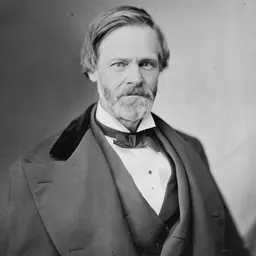
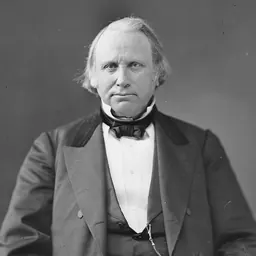
The war started in April 1861; on September 9, 1861, Miles enlisted in the Union Army and was commissioned as a first lieutenant in the 22nd Regiment Massachusetts Volunteer Infantry, which was organized and commanded by Henry Wilson. The next year, in April 1867, he was appointed assistant commissioner of the North Carolina branch of the United States War Department's Bureau of Refugees, Freedmen, and Abandoned Lands, (Freedmen's Bureau), serving under Bureau Commissioner, Brigadier General Oliver O. Howard (1830–1909). On June 30, 1868, he married Mary Hoyt Sherman (daughter of Charles Taylor Sherman, niece of fellow Union Army General William T. Sherman and U.S. Senator John Sherman, and granddaughter of Charles R. Sherman).
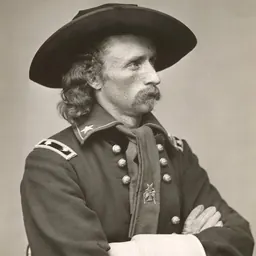
Miles played a leading role in nearly all of the U.S. Army's campaigns of the later American Indian Wars against the native American Indian tribes of the Great Plains, of the Mid-West, among whom he was known as "Bearcoat" (for his characteristic bearskin fur coat). In 1874–1875, he was a field commander in the force that defeated the Kiowa, Comanche, and the Southern Cheyenne along the upper Red River of the South. Between 1876 and 1877, he participated in the campaign that scoured the Northern Plains after 5 companies of the 7th U.S. Cavalry Regiment under the command of Lt. Col. George Armstrong Custer were killed at the Battle of the Little Big Horn in June 1876, and forced most the Lakota Sioux tribe and their native allies onto designated federal Indian reservations. In the winter of 1877, he drove his bluecoat mounted troops on a forced march across the eastern Montana Territory to intercept and stop the Nez Perce tribal band led by Chief Joseph (1840–1904), after the Nez Perce War, heading north to cross the border into British Canada. For the rest of his career, General Miles would quarrel with General Oliver O. Howard (1830–1909), who also led the pursuing expedition over taking credit for Chief Joseph's capture. Later while on the Yellowstone River, he developed expertise with the use of the heliograph for sending long-distance communications signals using sunlight and mirrors, establishing a line of stations with heliographs connecting far-flung military posts of Fort Keogh and Fort Custer, in the Montana Territory in 1878. a post he held during the Spanish–American War. Miles commanded forces at Cuban sites such as Siboney.
After the surrender of Santiago de Cuba by the Spaniards, he led the invasion of Puerto Rico,
To show that he was still physically able to command, on July 14, 1903, less than a month before his 64th birthday, General Miles rode the 90 miles from Fort Sill to Fort Reno, Oklahoma, in eight hours' riding time (10 hrs 20 mins total), in temperatures between . The distance was covered on a relay of horses stationed at 10-mile intervals. This was the longest horseback ride ever made by a commanding general of the army. Nelson was one of the last surviving general officers who served during the Civil War on either side.
Don’t just read it —
keep it.
Full-length biographies made to live with: read them, listen on the way to work, watch them tonight.
- E-book
- Audio
- Video
Instant download · yours to keep · every purchase keeps this site free
Important facts
People in General Nelson A. Miles's life
Named in this biography and alive at the same time


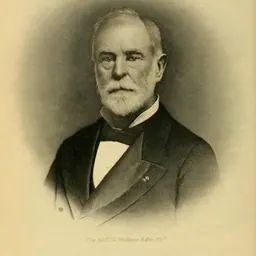
Related people
Same field, nearest in time

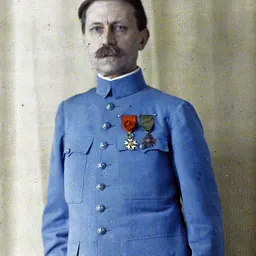


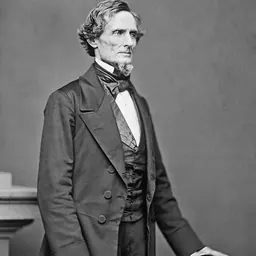

Contemporaries
People whose lives overlapped General Nelson A. Miles's
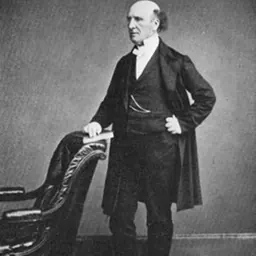

Frequently asked questions
Who was General Nelson A. Miles?
United States Army Medal of Honor recipient and Commanding General of the United States Army (1839-1925)
When was General Nelson A. Miles born?
General Nelson A. Miles was born on 8 August 1839 in Westminster.
When did General Nelson A. Miles die?
General Nelson A. Miles died on 15 May 1925 in Washington, D.C..
What was General Nelson A. Miles's occupation?
General Nelson A. Miles was a military officer, politician and lieutenant general.
What nationality was General Nelson A. Miles?
General Nelson A. Miles was American.
Sources & further reading
· Wikipedia: General Nelson A. Miles
Cite this page
APA: Biography.guide. (2026). General Nelson A. Miles. https://biography.guide/general-nelson-a-miles/
MLA: "General Nelson A. Miles." Biography.guide, https://biography.guide/general-nelson-a-miles/.
Chicago: "General Nelson A. Miles." Biography.guide. https://biography.guide/general-nelson-a-miles/.
Data last updated: 2026-09-20 · Spot an error? Report a correction.
Page generated 2026-09-27 05:19 UTC