
About Gene Bearden
Lived 1920 – 2004 (aged 83). Gene Bearden was an American baseball player.
Henry Eugene Bearden (September 5, 1920 – March 18, 2004) was an American professional baseball player. A left-handed pitcher, he played in Major League Baseball (MLB) from 1947 to 1953 for the Cleveland Indians, Washington Senators, Detroit Tigers, St. Louis Browns and Chicago White Sox. In 193 career games, Bearden pitched 788 innings and posted a win–loss record of 45–38, with 29 complete games, seven shutouts, 259 strikeouts, and a 3.96 earned run average (ERA).
Born in Lexa, Arkansas, Bearden was signed to a contract by the Philadelphia Phillies out of high school, and spent four seasons in the minor leagues. He then served in the United States Navy during World War II aboard the . He was wounded during the Battle of Kula Gulf and was hospitalized until 1945 when he made a return to baseball. After two years in the New York Yankees organization, Bearden was traded to the Cleveland Indians and made his MLB debut in 1947, making one appearance that year.
The following year, he won 20 games as a rookie, finishing second in Rookie of the Year voting, and led the Indians to the American League pennant and World Series championship. His success did not last, and within two years he was released. He then spent time with the Washington Senators, Detroit Tigers, St. Louis Browns, and Chicago White Sox between 1950 and 1953, appearing as both a starting pitcher and relief pitcher. After his last MLB appearance, he spent four more years in the minor leagues before retiring. He lived in Helena, Arkansas, after retiring, working for KFFA and engaging in a number of business ventures until his death in 2004.
Early life and military service Bearden was born in Lexa, Arkansas. His father worked for the Missouri Pacific Railroad, and moved the family to Tennessee, where he graduated from Memphis Technical High School. He was signed by the Philadelphia Phillies in 1939, and began his professional career with the Class D Moultrie Packers, winning five games and losing 11. In 1940 and 1941, Bearden played for the Miami Beach Flamingos of the Florida East Coast League. He won 18 games with a 1.71 ERA in 1940 and won 17 games with a 2.40 ERA in 1941. Copies of his Naval service records do not support the Helena story.
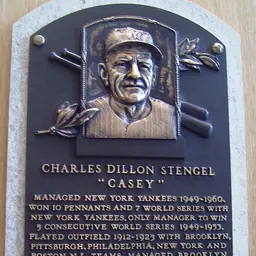
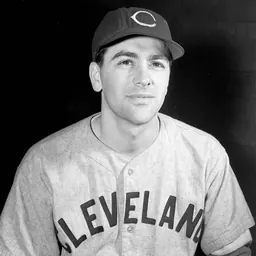
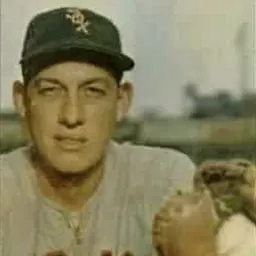
Bearden returned to baseball in 1945 as a part of the New York Yankees organization and won 15 games in the Class A Binghamton Triplets of the Eastern League. Promoted to the Triple-A Oakland Oaks in 1946, he finished the season with a 15–4 record and a 3.13 ERA. While in Oakland, he learned to throw the knuckleball under manager Casey Stengel. He would become primarily a knuckleball pitcher in the major leagues as a result, with that encompassing 80% of his pitches. On December 6, 1946, the New York Yankees, traded him to the Cleveland Indians along with Hal Peck and Al Gettel for Sherm Lollar and Ray Mack. Indians owner Bill Veeck had originally wanted Spec Shea in the trade and was turned down by the Yankees, but after talking with Stengel about Oakland's pitchers, he requested Bearden instead at Stengel's suggestion, and the trade was accepted. He spent the rest of 1947 with the Oaks. Reunited with Casey Stengel, he finished the season with a 16–7 record, and a 2.86 ERA in 198 innings pitched.
Bearden earned a place on the roster out of spring training, and remained on the team throughout the 1948 Cleveland Indians season. His first appearance was on May 8 against the Washington Senators. He won six of his first seven starting assignments, with four complete games and two shutouts on May 22 and June 8, both against the Boston Red Sox. By September 1, Bearden had a 13–6 won-loss record with an earned run average of 2.74, and manager Lou Boudreau had shifted to a four-man rotation into the final month, which would given Bearden more starts. Bearden lost his first September start on the sixth against the Chicago White Sox, then won his next seven starts. With Bearden pitching complete game shutouts against the White Sox on September 28 and Detroit Tigers on October 2, the Indians and Red Sox finished the season on Sunday, October 3, in a tie for the league championship.
For the one-game playoff, set for Fenway Park on Monday, October 4, Indians player-manager Lou Boudreau went with Bearden as his starting pitcher, after having the team vote on who should start. On only one day of rest, Bearden pitched another complete game, shutting down the Red Sox on five hits and one earned run. Cleveland won, 8–3, behind Boudreau's four hits and two home runs. The win gave Bearden 20 victories against seven defeats and a 2.47 ERA, which led the American League. On October 8, in Game 3 of the 1948 World Series against the National League's Boston Braves, he threw a complete game, five-hit shutout, defeating the Braves 2–0; he also hit a double and scored a run. Then, in Game 6 on October 11, he preserved the Indians' Series-clinching win for starter Bob Lemon. He allowed two inherited runners to score in the eighth inning, but allowed no runs to score in the ninth, earning the save and giving the Indians the 4–3 victory to become world champions. Bearden finished the season, in addition to his ERA title, in second place for wins with 20, second in shutouts with six, and an eighth-place finish in the American League Most Valuable Player Award balloting. He also finished second in Rookie of the Year voting to Alvin Dark, shortstop of the Braves.
During the offseason, Bearden went to Hollywood and appeared as himself in two movies, The Stratton Story and The Kid From Cleveland. Bearden remained in the starting rotation for 1949 and pitched in the home opener against the Detroit Tigers, but his knuckleball was figured out by opposing managers. Casey Stengel, now manager of the Yankees, had told his players to avoid swinging at it, as his knuckleball rarely landed in the strike zone. By July, after failing to throw a complete game in June, he was moved to the bullpen, where he spent the rest of the season. Bearden finished 1949 with an 8–8 record and a 5.10 ERA, and he led the AL in wild pitches with 11. Bearden pitched in 12 games for the Senators, finishing the season with a 3–5 record and a 4.21 ERA. This included an August 22 matchup against the Indians, a 5–1 loss, where he requested to start to "personally knock the Indians out of the pennant race." Bearden had a poor performance in spring training, and after pitching one game for the Senators in April, the team released him. He was picked up on waivers by the Detroit Tigers, who were looking to add a left-handed relief pitcher. He spent the season with the Tigers, finishing the year with a 3–4 record, a 4.33 ERA, in 37 appearances with the team. On February 14, 1952, the Tigers traded Bob Cain, Dick Kryhoski, and Bearden to the St. Louis Browns for Matt Batts, Dick Littlefield, Cliff Mapes and Ben Taylor. During the offseason, Bearden led a barnstorming tour, where he and other major league players faced the Memphis Red Sox of the Negro American League in a series of exhibition matches. In March 1953, the Browns released Bearden, and the Chicago White Sox acquired him off waivers. In 25 games for the White Sox, he had a 3–3 record and a 2.95 ERA. After the season ended, the White Sox traded Bearden to the Seattle Rainiers of the Pacific Coast League for Art Del Duca and Alex Garbowski. In the first half of the season, he had ten wins and one loss, which led the Pacific Coast League at the time. He finished the season with a record of 18–12 and a 3.52 ERA in 43 games. In 1956, he played for the Sacramento Solons, and finished the year with a 15–14 win–loss record and a 3.48 ERA in 34 games. After starting the 1957 season with Sacramento and pitching in four games, Bearden was sent to the Minneapolis Millers of the American Association, where he finished the year with a 5–6 record and a 5.30 ERA in 34 games. After the season, Bearden requested to rejoin Sacramento as a player-coach, after originally requesting a trade from Sacramento one year prior. Shortly afterward, Bearden was named radio station manager of KFFA in Helena, Arkansas, formally ending his baseball career.
While he was active, for off-season employment he worked in the motion picture industry as both an extra and backstage crew member. After retiring from baseball, Bearden lived in Helena with his wife, Lois, and his children. He was involved in a number of business ventures in Helena, including owning a restaurant and working as general manager for Plaza Auto Sales, and was also a youth baseball coach. Bearden died in 2004 in Alexander City, Alabama, at 83 years of age.
Don’t just read it —
keep it.
Full-length biographies made to live with: read them, listen on the way to work, watch them tonight.
- E-book
- Audio
- Video
Instant download · yours to keep · every purchase keeps this site free
Important facts
People in Gene Bearden's life
Named in this biography and alive at the same time

Related people
Same field, nearest in time

Contemporaries
People whose lives overlapped Gene Bearden's



Frequently asked questions
Who was Gene Bearden?
American baseball player
When was Gene Bearden born?
Gene Bearden was born on 5 September 1920 in Lexa.
When did Gene Bearden die?
Gene Bearden died on 18 March 2004 in Alexander City.
What was Gene Bearden's occupation?
Gene Bearden was a baseball player.
What nationality was Gene Bearden?
Gene Bearden was American.
Sources & further reading
Cite this page
APA: Biography.guide. (2026). Gene Bearden. https://biography.guide/gene-bearden/
MLA: "Gene Bearden." Biography.guide, https://biography.guide/gene-bearden/.
Chicago: "Gene Bearden." Biography.guide. https://biography.guide/gene-bearden/.
Data last updated: 2026-09-20 · Spot an error? Report a correction.
Page generated 2026-09-27 05:33 UTC