
About Gearóid O'Sullivan
Lived 1891 – 1948 (aged 57). Gearóid O'Sullivan was an Irish politician and lawyer.
Lieutenant-General Gearóid O'Sullivan (28 January 1891 – 25 March 1948) was an Irish teacher, Irish language scholar, army general, barrister and Sinn Féin, Cumann na nGaedheal and Fine Gael politician.
Early life and education Jeremiah O'Sullivan was born in Coolnagurrane near Skibbereen, County Cork, he was the fourth son of Michael and Margaret O'Sullivan and given the name of Jeremiah - but known throughout his lifetime as Gearóid. His father, a native of Lough Ine, and his mother, née McCarthy, a Coolnagurrane native, were members of West Cork farming families. Gearóid's father, Michael O'Sullivan, chose to complete the family's 1911 Census form in Irish.
In 1909, O'Sullivan started at St Patrick's College of Education, in Drumcondra, Dublin, to train for a career in teaching. While not quite 19, he had already completed the second arts examination of the Royal University of Ireland. He took up teaching in 1911. A first posting was to Kildorrey, Cork in 1912, but soon transferred back to Dublin to teach at St Peter's National School, Phibsborough. He joined the Keating branch of the Gaelic League, quickly assuming a leadership role within the organisation and tirelessly travelling to teach Irish to League members while also studying for H Dip Ed at the National University and drilling with the Irish Volunteers. At 25 Parnell Square, the drill hall, he established the "faine" proficiency test for recruiting. It was also here that he became re-acquainted with Michael Collins, who joined the League in 1916 upon his return to Ireland from London, where he'd held a Postal Service position. In addition to patrolling with the Irish Volunteers, O'Sullivan had the distinction shared by a small proportion of later "original IRA" members of being a member of the Irish Republican Brotherhood (IRB), which traces its roots to earlier revolutionary movements of the mid-Nineteenth Century. He also notably raised the Irish Flag over the General Post Office (GPO) in Dublin He had been personally chosen by rebellion leader Seán Mac Diarmada to serve as his aide-de-camp. The additional honour of raising the Irish flag was given to him by another of the rebellion's leaders, Patrick Pearse. He married Maud Kiernan, sister of Kitty Kiernan,
Upon release from Frongoch, Collins and O'Sullivan resumed their involvement with the Republican movement. Released in December 1916, he intensified his Volunteer activity with the Carlow Brigade, for which cover he retained work as a teacher at Knockbeg College. He was re-elected at the 1922 general election as a Pro-Treaty Sinn Féin TD.
Civil war During the Irish Civil War he served as adjutant general of the National Army. He did not contest the 1923 general election. On 28 August 1922, he was appointed to the newly created Army Council for the National Army. He was among the leadership who survived, Richard Mulcahy, Sean MacMahon, and Seán O'Murthuile. Other officers, led by Major-General Liam Tobin resented their favoured status, their perceived dilution of Collins republican ideals, and the employment of British officers as state advisers. O'Sullivan's appointment in 1923 as Adjutant-General had been sanctified by law in the Defence Forces (Temporary Provisions) Act.
Free State Period After the war, he left the military to qualify as a barrister and build a career while spending time with his family with Maud Kiernan, which grew to include children Fr. Gearoid Jr., Sibeal, Ann and Sr. Trina. O'Sullivan had married Ms. Kiernan in November 1922; it was reportedly set to have been a double wedding of the Kiernan sisters Maud and Kitty Kiernan to O'Sullivan and Collins, respectively.
O'Sullivan unsuccessfully contested the 1937 general election for Fine Gael. In April 1938 he was re-elected to Seanad Éireann but was unsuccessful at the July 1938 Seanad election. Following the death of his wife in 1940, when she was just 40 years of age, O'Sullivan commenced a government service career, followed by a private legal career.
Death O'Sullivan died on 25 March 1948, aged 56, and received a state funeral on the following Easter Monday – exactly 32 years after the Easter Rising. Thousands of people lined the streets of Dublin to watch as a horse-drawn carriage carried his coffin – draped in the same Tricolor that had covered Collins' coffin a quarter-century earlier – past the GPO and other landmarks to his final resting place at Glasnevin Cemetery. He died leaving a second wife, Mary Brennan of Belfast, and his four children.
Don’t just read it —
keep it.
Full-length biographies made to live with: read them, listen on the way to work, watch them tonight.
- E-book
- Audio
- Video
Instant download · yours to keep · every purchase keeps this site free
Important facts
People in Gearóid O'Sullivan's life
Named in this biography and alive at the same time

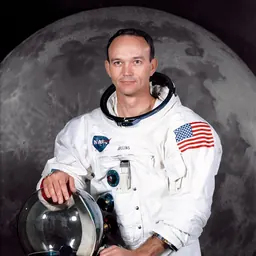
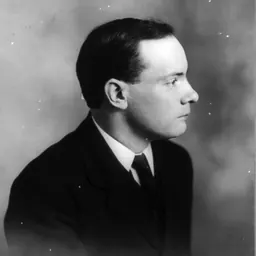
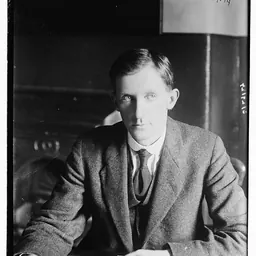




Related people
Same field, nearest in time





Contemporaries
People whose lives overlapped Gearóid O'Sullivan's
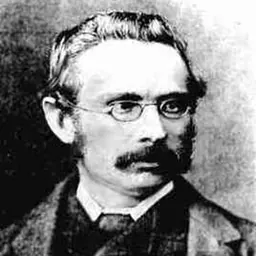


Frequently asked questions
Who was Gearóid O'Sullivan?
Irish politician (1891-1948)
When was Gearóid O'Sullivan born?
Gearóid O'Sullivan was born on 28 January 1891 in Skibbereen.
When did Gearóid O'Sullivan die?
Gearóid O'Sullivan died on 25 March 1948 in Dublin.
What was Gearóid O'Sullivan's occupation?
Gearóid O'Sullivan was a politician and lawyer.
What nationality was Gearóid O'Sullivan?
Gearóid O'Sullivan was Irish.
Sources & further reading
· Wikipedia: Gearóid O'Sullivan
Cite this page
APA: Biography.guide. (2026). Gearóid O'Sullivan. https://biography.guide/gearoid-o-sullivan/
MLA: "Gearóid O'Sullivan." Biography.guide, https://biography.guide/gearoid-o-sullivan/.
Chicago: "Gearóid O'Sullivan." Biography.guide. https://biography.guide/gearoid-o-sullivan/.
Data last updated: 2026-09-26 · Spot an error? Report a correction.
Page generated 2026-09-27 05:15 UTC