
About Gavin de Beer
Lived 1899 – 1972 (aged 72). Gavin de Beer was a British paleontologist, zoologist, embryologist, university teacher and physician, known for Heterochrony.
Work De Beer's early work at Oxford was influenced by J. B. S. Haldane and by Julian Huxley and E. S. Goodrich (two of his teachers). His early work was in experimental embryology; some of it was done in collaboration with Huxley, who would go on to be one of the leading figures of the modern synthesis. The Elements of experimental embryology, written with Huxley, was the best summary of the field at that time (1934).
In Embryos and Ancestors (1930) de Beer stressed the importance of heterochrony, and especially paedomorphosis in evolution. According to his theories, paedomorphosis (the retention of juvenile features in the adult form) is more important in evolution than gerontomorphosis, since juvenile tissues are relatively undifferentiated and capable of further evolution, whereas highly specialised tissues are less able to change. He also conceived the idea of clandestine evolution, which helped to explain the sudden changes in the fossil record which were apparently at odds with Darwin's gradualist theory of evolution. If a novelty were to evolve gradually in an animal's juvenile form, then its development would not appear in the fossil record at all, but if the species were then to undergo neoteny (a form of paedomorphosis in which sexual maturity is reached while in an otherwise juvenile form), then the feature would appear suddenly in the fossil record, despite having evolved gradually.
De Beer worked on paleornithology and general evolutionary theory, and was largely responsible for elucidating the concept of mosaic evolution, as illustrated by his review of Archaeopteryx in 1954. De Beer's also reviewed Haeckel's concept of heterochrony, with particular emphasis on its role in avian evolution, especially that of the ratites, in 1956. Dedicated to the popularisation of science, he received the Kalinga Prize from UNESCO.
De Beer was the first to propose the Col de la Traversette as the likely site where Hannibal had crossed the Alps with his elephants.
De Beer and the modern synthesis The conventional view had been that developmental biology had little influence on the modern synthesis, but the following assessment suggests otherwise, at least as far as de Beer is concerned:
Collections In 1973 the executors of de Beer's widow donated de Beer's papers to University College London. The archive includes notes and drafts for publications and lectures, correspondence, and financial and legal papers.
Publications Comparative, Embryology And Evolution Of Chordate Animals (1922) Growth – 1924 An introduction to experimental embryology – 1926 The comparative anatomy, histology and development of the pituitary body – 1926 Vertebrate Zoology – 1928 Early travellers in the Alps – 1930 Embryology and evolution – 1930 (later editions bore the title Embryos and ancestors) Alps and men. London, 1932 The Elements of Experimental Embryology – 1934 (co-written with Julian Huxley) The development of the vertebrate skull – 1937 Gavin de Beer (editor:) Evolution: Essays on aspects of evolutionary biology. Oxford 1938. Escape to Switzerland – 1945 Sir Hans Sloane and the British Museum - 1953 Archaeopteryx lithographica – 1954 Alps and elephants. Hannibal's march – 1955 The first ascent of Mont Blanc – 1957 Part II; The sciences were never at war – 1960 Reflections of a Darwinian – 1962 Charles Darwin: evolution by natural selection – 1963 Atlas of Evolution – 1964 Charles Scott Sherrington: an appreciation – 1966 Early travellers in the Alps – 1967 Edward Gibbon and his world – 1968 Hannibal: Challenging Rome's Supremacy – 1969
Homology, an unsolved problem – 1971 Jean-Jacques Rousseau and his world – 1972
Don’t just read it —
keep it.
Full-length biographies made to live with: read them, listen on the way to work, watch them tonight.
- E-book
- Audio
- Video
Instant download · yours to keep · every purchase keeps this site free
Important facts
People in Gavin de Beer's life
Named in this biography and alive at the same time

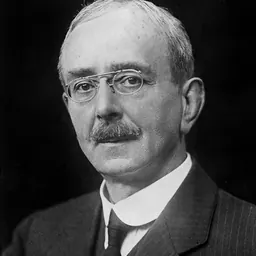

Related people
Same field, nearest in time
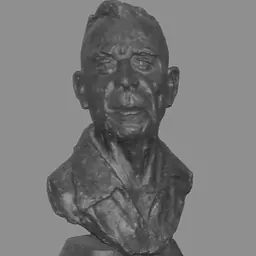



Contemporaries
People whose lives overlapped Gavin de Beer's

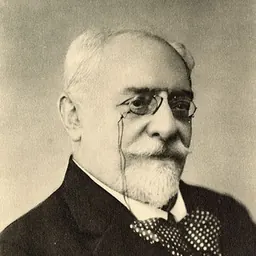


Frequently asked questions
Who was Gavin de Beer?
British evolutionary embryologist (1899-1972)
When was Gavin de Beer born?
Gavin de Beer was born on 1 November 1899 in United Kingdom.
When did Gavin de Beer die?
Gavin de Beer died on 21 June 1972 in Alfriston.
What was Gavin de Beer's occupation?
Gavin de Beer was a paleontologist, zoologist, embryologist, university teacher and physician.
What was Gavin de Beer known for?
Gavin de Beer was known for Heterochrony.
What nationality was Gavin de Beer?
Gavin de Beer was British.
Sources & further reading
Cite this page
APA: Biography.guide. (2026). Gavin de Beer. https://biography.guide/gavin-de-beer/
MLA: "Gavin de Beer." Biography.guide, https://biography.guide/gavin-de-beer/.
Chicago: "Gavin de Beer." Biography.guide. https://biography.guide/gavin-de-beer/.
Data last updated: 2026-09-20 · Spot an error? Report a correction.
Page generated 2026-09-27 05:22 UTC