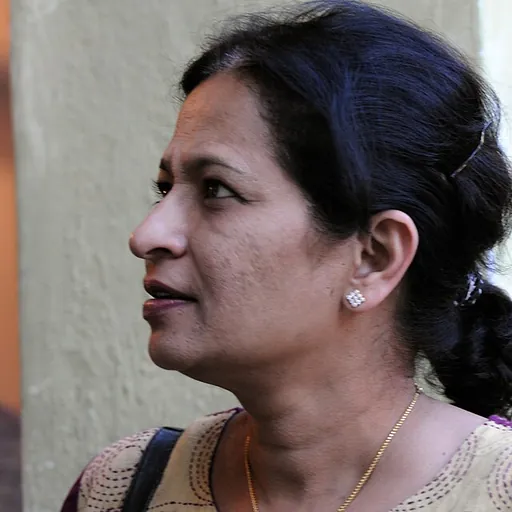
About Gauri Lankesh
Lived 1962 – 2017 (aged 55). Gauri Lankesh was an Indian journalist, activist and editor.
Gauri Lankesh (29 January 1962 – 5 September 2017) was an Indian activist and journalist from Bangalore, Karnataka. She worked as an editor in Lankesh Patrike, a Kannada weekly started by her father P. Lankesh, and ran her own weekly called Gauri Lankesh Patrike. She was murdered outside her home in Rajarajeshwari Nagar on 5 September 2017. At the time of her death, Gauri was known for being a critic of right-wing Hindu extremism. She was honoured with the Anna Politkovskaya Award for speaking against right-wing Hindu extremism, campaigning for women's rights and opposing caste-based discrimination.
Early life and career
Gauri Lankesh was born into a Kannada Lingayat family She had two siblings, Kavitha and Indrajit.
Gauri started her career as a journalist with The Times of India in Bangalore. Later, she moved to Delhi with her husband, Chidanand Rajghatta. Shortly after, she returned to Bangalore, where she worked as a correspondent for the Sunday magazine for nine years. At the time of her father's death in 2000, she was working for Eenadus Telugu television channel in Delhi. By this time, she had been a journalist for 16 years.
Lankesh Patrike
When their father P. Lankesh died, Gauri and her younger brother Indrajit visited Mani, the publisher of Lankesh Patrike, and told him that they wanted to discontinue the publication. Mani convinced them against the idea. Gauri then became the editor of Lankesh Patrike, while Indrajit handled the publication's business affairs. Gauri subsequently started her own Kannada weekly called Gauri Lankesh Patrike.
Political views and ideology
Gauri was a staunch critic of right-wing Hindutva politics. In 2003, she opposed Sangh Parivar's alleged attempts to Hinduise the Sufi shrine Guru Dattatreya Baba Budan Dargah located at Baba Budan giri. In 2012, while participating in a protest demanding a ban on communal groups in Mangalore, she stated that Hinduism was not a religion but a "system of hierarchy in society" in which "women are treated as second-class creatures". She endorsed a minority religion tag for the Lingayat community and headed the Komu Souharda Vedike, a communal harmony platform for the oppressed communities. She was also of the view that the followers of philosopher Basavanna were not Hindus. She was opposed to the Bharatiya Janata Party (BJP) and ended her 35-year friendship with Prakash Belawadi when the latter became a media advisor to the BJP during the 2014 Indian general election. In November 2014, the Congress-led Karnataka government appointed Gauri as a member of a committee aimed at convincing Naxalites to give up violence and surrender. However, a delegation of BJP leaders accused her of being a Naxalite sympathiser and demanded her removal from the committee. The chief minister Siddaramaiah rejected the demand.
Gauri was openly critical of the caste system. On 19 February 2015, protesters from the Hassan Zilla Brahmin Sabha ("Hassan district Brahmin Association") organised a rally against her, urging the police to register a First Information Report against her.
Legal controversies Gauri faced several legal cases during her career as a journalist and activist. She had three cases filed against her in Dakshina Kannada district, including two defamation cases filed by Raghaveshwara Bharati for writing about his alleged rapes and sexual assaults.
Defamation conviction in 2016 On 23 January 2008, Gauri published an article titled "Darodegilada BJP galu" in her newspaper. The article criticised the BJP leaders Pralhad Joshi, Umesh Dushi, Shivanand Bhat, and Venkatesh Mestry. The article stated that the three BJP workers had cheated a jeweller of .
Joshi and Dushi filed separate defamation suits against Gauri.
Gauri stated that she was being targeted for her left-leaning political views, as the BJP leaders did not sue other local dailies who had published the same allegations.
In October 2016, the second Judicial Magistrate First Class (JMFC) Court at Hubli issued an arrest warrant for Gauri after she failed to appear before the court and did not respond to earlier warrants. The police detained her and produced her before the court on 1 October 2016. She was released on bail after furnishing a personal bond of . The same court granted her anticipatory bail, however, which allowed her to avoid prison time. she remained single after the separation. Although she lived alone
Death
On 5 September 2017, Gauri died after being shot by three unidentified men at her house in Rajarajeshwari Nagar, Bangalore. The men fired at least seven bullets at her at around 8 p.m. as she was unlocking the main door of her house after returning from her office.
Reactions The murder was condemned by several people and organisations, including the Indian National Congress and the Rashtriya Swayamsevak Sangh. The Congress leader and Karnataka Home Minister Ramalinga Reddy compared the murder to that of Narendra Dabholkar and M. M. Kalburgi. Controversial statements by BJP MLA D. N. Jeevaraj and Sri Ram Sena chief Pramod Muthalik were widely criticized. The state police chief, R. K. Dutta, refused to suggest any possible suspects without investigation. BJP leaders criticised the Congress-led state government for allegedly failing to protect the lives of Gauri and other writers like Kalburgi. Protests over her death took place all across India, including a rally in Bangalore a week after the funeral attended by more than 25,000 people.
Gauri was given a state funeral with a gun salute on 6 September, after her body was kept for a few hours at Ravindra Kalakshetra for the public to pay tribute. She was buried in accordance with Lingayat customs. Her family did not follow any religious customs for her as she identified as a rationalist. The BBC described it as the most high-profile journalist murdered in recent years.
The New York Times reported that several accounts followed by prime minister Narendra Modi had posted "hateful" tweets in response to Lankesh's assassination, prompting a debate in India.
Her close friend and actor Prakash Raj commented that "When I was burying Gowri, I said I'm not burying Gowri but burying a seed," at the Wayanad Literature Festival. For many across the nation, her death was a wake up call to take action and highlight the precarious state of press freedom in the country. "Before Gowri's death, I was an angry man, yes, but not to this extent," he added.
Investigation
During their investigation, the police accessed CCTV footage from her residence and the route leading from Basavanagudi to her house. The city was kept on high alert the day after her death, with police deployed at toll gates in Nelamangala, Hosur Road and NICE Road in search of the killers. Vehicles entering or exiting the city underwent stringent checks, while police in the neighbouring states of Andhra Pradesh, Maharashtra and Tamil Nadu were also alerted. On September 8, 2017, the Karnataka government announced a reward of for providing information about the killers.
In 2018, the Special Investigation Team (SIT) probing the murder case detained two suspects, whom they also suspected of being involved in the murders of Dabholkar and Kalburgi. In June 2018, the SIT stated that Parashuram Waghmore had confessed to the murder: he claimed that he was told to kill someone to save his religion, and that he did not know who the victim was. In September 2018, Maharashtra ATS detained 2 suspects related to Gauri's murder and also recovered a cache of weapons from them. A March 2019 New York Times article on Gauri Lankesh includes a discussion of the police investigation and murder charges. in January 2022.
On 11 August 2022, the special court for Karnataka Control of Organised Crime examined three more witnesses, including two policemen, in the murder trial.
In popular culture
The assassination of Gauri Lankesh is featured along with assassinations of other rationalists such as Narendra Dabholkar, M. M. Kalburgi and Govind Pansare in the documentary mini-series Vivek-Reason by Anand Patwardhan. The Malayalam film 19(1)(A) is loosely based on Gauri Lankesh.
Legacy Gauri Lankesh is seen as an important figure for people protesting against rightward shift in the Indian governance. On her third death anniversary, several journalists and activists participated in #IfWeDoNotRise campaign in her memory and in wake of arrests of dissidents across the nation.
In 2021, the Canadian city of Burnaby decided to celebrate September 5, her death anniversary, as Gauri Lankesh Day.
In 2023, "Forbidden Stories pursued Lankesh’s work on fake news and explored new leads in her murder case" as part of the case series Story Killers.
In 2024, American journalist Rollo Romig published the book I Am on the Hit List: A Journalist's Murder and the Myth-Making in South India, which examines Lankesh's murder, the subsequent investigation linking it to right-wing groups such as the Sanatan Sanstha, and the ideological conflicts in South India at the time.
Don’t just read it —
keep it.
Full-length biographies made to live with: read them, listen on the way to work, watch them tonight.
- E-book
- Audio
- Video
Instant download · yours to keep · every purchase keeps this site free
Important facts
Family & relationships
People in Gauri Lankesh's life
Named in this biography and alive at the same time



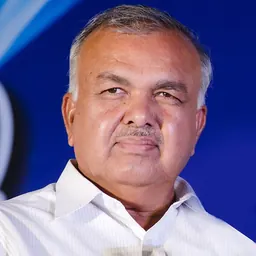

Related people
Same field, nearest in time



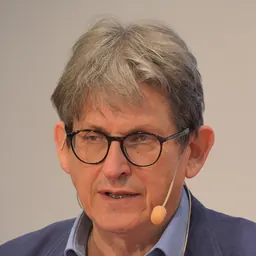
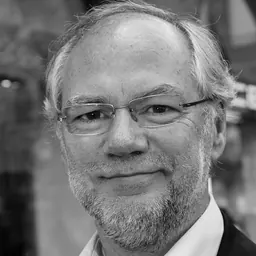

Contemporaries
People whose lives overlapped Gauri Lankesh's




Frequently asked questions
Who was Gauri Lankesh?
Indian Kannada-language journalist-activist (1962-2017)
When was Gauri Lankesh born?
Gauri Lankesh was born on 29 January 1962 in Bengaluru.
When did Gauri Lankesh die?
Gauri Lankesh died on 5 September 2017 in Rajarajeshwari Nagar.
What was Gauri Lankesh's occupation?
Gauri Lankesh was a journalist, activist and editor.
What nationality was Gauri Lankesh?
Gauri Lankesh was Indian.
Sources & further reading
Cite this page
APA: Biography.guide. (2026). Gauri Lankesh. https://biography.guide/gauri-lankesh/
MLA: "Gauri Lankesh." Biography.guide, https://biography.guide/gauri-lankesh/.
Chicago: "Gauri Lankesh." Biography.guide. https://biography.guide/gauri-lankesh/.
Data last updated: 2026-09-23 · Spot an error? Report a correction.
Portrait: Wikimedia Commons · author & licence
Page generated 2026-09-27 05:06 UTC