
About Gaspar Sanz Celma
Lived 1640 – 1710 (aged 69–70). Gaspar Sanz Celma was a Spanish presbyter, composer, music educator, guitarist, classical guitarist and musician.
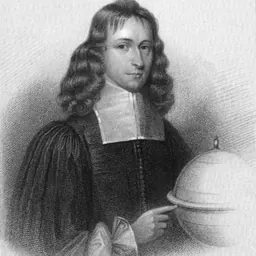
Francisco Bartolomé Sanz Celma (April 4, 1640 (baptized) – 1710), better known as Gaspar Sanz, was a Spanish composer, guitarist, and priest born to a wealthy family in Calanda in the comarca of Bajo Aragón, Spain. He studied music, theology and philosophy at the University of Salamanca, where he was later appointed Professor of Music. He wrote three volumes of pedagogical works for the baroque guitar that form an important part of today's classical guitar repertory and have informed modern scholars in the techniques of baroque guitar playing.
Biography His birth date is unknown but he was baptized as Francisco Bartolomé Sanz Celma in the church of Calanda de Ebro, Aragon on 4 April 1640, later adopting the first name "Gaspar".
After gaining his Bachelor of Theology at the University of Salamanca, Gaspar Sanz traveled to Naples, Rome and perhaps Venice to further his music education. He is thought to have studied under Orazio Benevoli, choirmaster at the Vatican and Cristofaro Caresana, organist at the Royal Chapel of Naples.
Sanz learned to play guitar while studying under Lelio Colista and was influenced by the music of the Italian guitarists Foscarini, Granata, and Corbetta. When Sanz returned to Spain he was appointed instructor of guitar to Don Juan (John of Austria), the only recognized natural-born son of King Philip IV and María Calderón, a noted actress of the day.
In 1674 he wrote his now famous Instrucción de Música sobre la Guitarra Española, published in Saragossa and dedicated to Don Juan. A second book entitled Libro Segundo de cifras sobre la guitarra española was printed in Saragossa in 1675. A third book, Libro tercero de mùsica de cifras sobre la guitarra española, was added to the first and second books, and all three were published together under the title of the first book in 1697, eventually being published in eight editions. The ninety works in this masterpiece are his only known contribution to the repertory of the guitar and include compositions in both punteado ("plucked") style and rasqueado ("strummed") style.
In addition to his musical skills, Gaspar Sanz was noted in his day for his literary works as a poet and writer, and was the author of some poems and two books now largely forgotten. His excellent translation of the celebrated L'huomo di lettere by Jesuit Daniello Bartoli first appeared in 1678, with further editions in 1744 and 1787.
He died in Madrid in 1710.
Influence His compositions provide some of the most important examples of popular Spanish baroque music for the guitar and now form part of classical guitar pedagogy. Sanz's manuscripts are written as tablature for the baroque guitar and have been transcribed into modern notation by numerous guitarists and editors; Emilio Pujol's edition of Sanz's Canarios being a notable example. Sanz's tablature is remarkable in that it is topologically correct, representing the first string in the lower line and the fifth string in the highest printed line. In this epoch, guitars only had five strings. It also features the "italian alphabet", a shorthand system that assigns a chord to each letter, so that melodic chord progressions can be written and read very neatly (with rhythm information) as a simple sequence of letters, a concept related to the recent Nashville system. For example, there is a "Zarabanda francesa" (french sarabande) which includes the sequence CIFI+H2+G2K2IFCM2N2CAIC, which means: CIFI: D major chord, A major, E major, A major +H2+G2K2: E minor, B major, E minor, F# major, B minor IFCM2N2: A major, E major, A major, E major (variation), A major (variation) CAIC: D major, G major, A major, D major
Gaspar Sanz strongly influenced some twentieth-century composers. The composer Manuel de Falla utilised some of his themes in his work El retablo de maese Pedro composed in 1923. In 1954, at the request of guitarist Andrés Segovia, Joaquín Rodrigo composed his Fantasía para un gentilhombre on themes from Instrucción de música sobre la Guitarra Española. Passages of Peter Warlock's Capriol Suite for String Orchestra composed in 1926 appear to be inspired by Sanz's composition Dance De Las Hachas. Paco Peña and John Williams have performed works of Sanz together, and performed Sanz's Canarios (1674) in 1975.
Works
Volume 1: Instrucción de música sobre la guitarra española (Zaragoza, 1674) Abecedario italiano ; Gallarda; Mariona ; Villano Danza de las hachas Españoleta Pavana Torneo Batalla ; Passacalle sobre la D ; Jácaras I ; Canarios ; Preludio y Fantasia; Sesquiáltera 1; Alemanda, la Serenissima ; Giga, al aire inglés ; Zarabanda francesa I Preludio, o Capricho, arpeado por la cruz ; Sesquiáltera 2; Alemanda, la Preciosa ; Corriente por la Cruz ; Zarabanda francesa II; Fuga I por primer tono, al ayre español El que gustare de falsas ponga cuido en estos cromáticos; Fuga II, al ayre de jiga; Zarabanda francesa III; Passacalles por la E; Passacalles por la cruz.
Volume 2: Libro segundo, de cifras sobre la guitarra española (Zaragoza, 1675) Gallardas; Las hachas ; La Buelta Lavolta; Folias; Paradetas Matachín Zarabanda; Jácaras II ; Chacona; Españoletas Pasacalles; Canarios II ; Canarios III; Villanos ; Marionas II ; Marizápalos ; Granduque I; Otro Granduque; Passacalles; Pavanas por la D ; Giga Inglesa; Bailete Frances; Passacalles por la D; Clarines y Trompetas con canciones muy curiosas españolas, y de estranjeras naciones: La Cavalleria de Nápoles con dos clarines; Canciones: La Garzona, La Coquina Francesa, Lantururú, La Esfachata de Napoles, La Miñona de Cataluña, La Minina de Portugal, Dos Trompetas de la Reyna de Suecia, Clarín de los Mosqueteros del Rey de Francia. ; La Cavallería de Nápoles ; La Garzona; La Coquina Francesa; Lantururú; La Esfacheta de Nápoles; La Miñona de Cataluña ; La Minina de Portugal; Dos trompetas de la reyna de Suecia; Clarín de los mosqueteros del rey de Francia .
Volume 3: Libro tercero de musica de cifras sobre la guitarra española (Zaragoza, 1697) Pasacalles por la C ; Prosiguen más sobre los antecedentes Passacalles; Passacalles por la I; Passacalles por la E y la D; Passacalles por la Cruz y K; Passacalles por la H; Passacalles por la G y B; Passacalles por la D por el Uno bemolado y por segundo Tono; Passacalles por la L; Passacalles por la K.
Don’t just read it —
keep it.
Full-length biographies made to live with: read them, listen on the way to work, watch them tonight.
- E-book
- Audio
- Video
Instant download · yours to keep · every purchase keeps this site free
Important facts
People in Gaspar Sanz Celma's life
Named in this biography and alive at the same time





Related people
Same field, nearest in time



Contemporaries
People whose lives overlapped Gaspar Sanz Celma's





Frequently asked questions
Who was Gaspar Sanz Celma?
Spanish guitarist and composer
When was Gaspar Sanz Celma born?
Gaspar Sanz Celma was born on 4 April 1640 in Calanda.
When did Gaspar Sanz Celma die?
Gaspar Sanz Celma died in 1710 in Madrid.
What was Gaspar Sanz Celma's occupation?
Gaspar Sanz Celma was a presbyter, composer, music educator, guitarist, classical guitarist and musician.
What nationality was Gaspar Sanz Celma?
Gaspar Sanz Celma was Spanish.
Sources & further reading
· Wikipedia: Gaspar Sanz Celma
Cite this page
APA: Biography.guide. (2026). Gaspar Sanz Celma. https://biography.guide/gaspar-sanz-celma/
MLA: "Gaspar Sanz Celma." Biography.guide, https://biography.guide/gaspar-sanz-celma/.
Chicago: "Gaspar Sanz Celma." Biography.guide. https://biography.guide/gaspar-sanz-celma/.
Data last updated: 2026-09-20 · Spot an error? Report a correction.
Page generated 2026-09-27 05:26 UTC