
About Garnet Baltimore
Lived 1859 – 1946 (aged 87). Garnet Baltimore was an American engineer, scientist and landscape architect.
Garnet Douglass Baltimore (April 15, 1859 – June 12, 1946) was the first African-American engineer and graduate of Rensselaer Polytechnic Institute in Troy, New York, Class of 1881.
He was named for two prominent abolitionists, Henry Highland Garnet and Frederick Douglass. Baltimore's father, Peter, was a pupil of Garnet and associated with Douglass.
He was known for his architectural, engineering, and landscaping work, including Prospect Park in Troy, and Forest Park Cemetery in Brunswick, New York. During his work on the extension of a lock on the Oswego Canal, Baltimore developed a system to test cement that was adopted as standard by New York State.
Early life Garnet Baltimore was born in Troy, New York on April 15, 1859. His parents were Peter F. Baltimore and Caroline Newcomb Baltimore. Peter owned a well-known barbershop in Troy known as the Veranda. Peter and his brother William were active in the Underground Railroad and were prominent figures in the escape of Charles Nalle during his attempted arrest in 1860. Baltimore's grandfather was Samuel Baltimore, a slave who fought in the Revolutionary War. and graduated in 1877. He was a graduate of Rensselaer Polytechnic Institute in 1881 with a degree in Civil Engineering. At his new job, Baltimore was tasked with several assignments including: the Sandy Hill, Granville & Rutland, and Greenwich & Johnsonville railroads. Baltimore would remain in this position for the next eight years.
In 1884, Baltimore was tasked with supervising the extension of the Oswego Canal lock which was known back then as the “mud lock.” During this project, there was a very interesting situation in which the engineers had to deal with the issue of constructing with quicksand as a major obstacle. Baltimore devised a method of creating cement to overcome this challenge, and it became the new standard for New York state when making cement. In 1891, Baltimore returned to Troy and was hired as assistant engineer for the city’s Public Improvement Commission. This would eventually be followed up with a promotion three years later when he became assistant city engineer.
Work on waterways Baltimore was well known for his work on waterways. He was involved in many Hudson River improvements and Troy waterworks. While employed by the New York State Department of Public Works, he worked on the Shinnecock and Peconic Canal. The 80-acre park is still in use by Troy residents today. Unfortunately, much of the original work Baltimore designed no longer exists due to poor management. In 1943, Baltimore published an opinion piece in The Times Record of Troy, New York. Baltimore describes his frustration with the mismanagement of the park. He states, “Is the civic pride of Trojans so deadened that no murmur of regret is heart at this willful neglect?” By the 1940s, several of the original features had already been lost, including the Warren Mansion, Band Stand, and Bascom fountain. The Friends of Prospect Park formed in 1998 and has attempted to increase popularity and restore its beauty lost over years of neglect. Baltimore also created the Report of the Municipal Improvements Commission, where he reported: “the primary object of the park is a place where natural beauty can be enjoyed free from the turmoil of the city.” He also noted: “It is the calling and duty of the landscape engineer to devise ways of arranging land and its accompanying landscape so that whatever the particular purpose in view may be, the result shall be as thoroughly beautiful as possible.” Baltimore was inducted as a life-member of the Rensselaer Society of Engineers in 1946. He was active in the Rensselaer Alumni Association and the 50 Year Club.
Beginning in 1991, RPI established the Garnet D. Baltimore Lecture Series in his honor. RPI has also established the Garnet D. Baltimore Endowed Scholarship in Baltimore's honor to address the need for scholarships for students from underrepresented groups. In August 2019, former Troy mayor Patrick Madden unveiled a new trail marker to dedicate a recently restored walking trail located in the southwest corner of Troy’s historic Prospect Park as the Garnet Douglass Baltimore Trail.
Don’t just read it —
keep it.
Full-length biographies made to live with: read them, listen on the way to work, watch them tonight.
- E-book
- Audio
- Video
Instant download · yours to keep · every purchase keeps this site free
Important facts
People in Garnet Baltimore's life
Named in this biography and alive at the same time

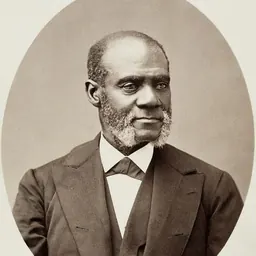

Related people
Same field, nearest in time

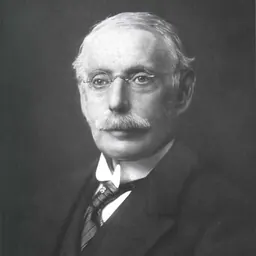
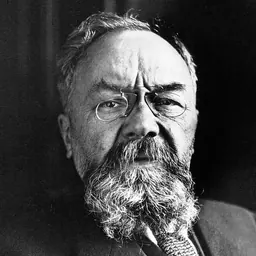
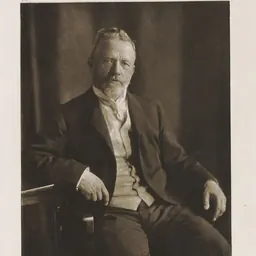
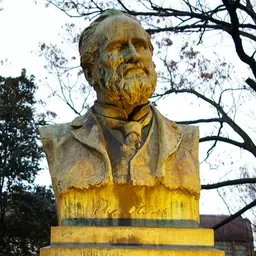
Contemporaries
People whose lives overlapped Garnet Baltimore's

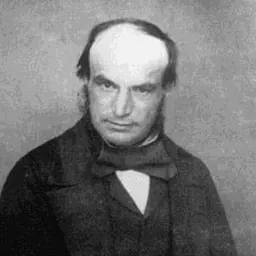
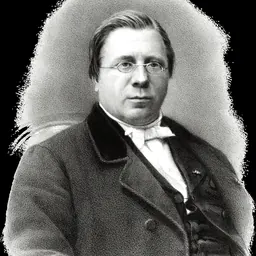
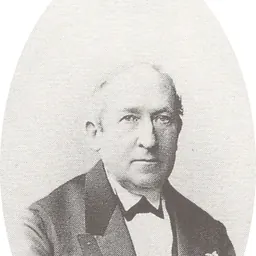


Frequently asked questions
Who was Garnet Baltimore?
American landscape architect (1859-1946)
When was Garnet Baltimore born?
Garnet Baltimore was born on 15 April 1859.
When did Garnet Baltimore die?
Garnet Baltimore died on 12 June 1946.
What was Garnet Baltimore's occupation?
Garnet Baltimore was an engineer, scientist and landscape architect.
What nationality was Garnet Baltimore?
Garnet Baltimore was American.
Sources & further reading
Cite this page
APA: Biography.guide. (2026). Garnet Baltimore. https://biography.guide/garnet-baltimore/
MLA: "Garnet Baltimore." Biography.guide, https://biography.guide/garnet-baltimore/.
Chicago: "Garnet Baltimore." Biography.guide. https://biography.guide/garnet-baltimore/.
Data last updated: 2026-09-20 · Spot an error? Report a correction.
Page generated 2026-09-27 05:07 UTC