
About Galway Kinnell
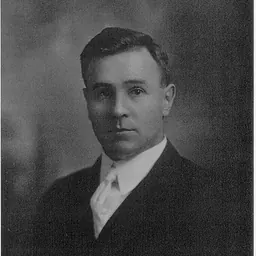
Lived 1927 – 2014 (aged 87). Galway Kinnell was an American poet, writer, translator and university teacher.
Galway Mills Kinnell (February 1, 1927 – October 28, 2014) was an American poet. His dark poetry emphasized scenes and experiences in threatening, ego-less natural environments. He won the Pulitzer Prize for Poetry
Biography Galway Mills Kinnell was born in Providence, Rhode Island on February 1, 1927. He said that as a youth he became interested in the poetry of American dark Romantics such as Edgar Allan Poe and Emily Dickinson, drawn to both the musical appeal of their poetry and the allure of their use of language which spoke to what he later described as the homogeneous feel of his hometown, Pawtucket, Rhode Island. He also described himself as being an introvert in his adolescence, which scholars have compared to the aforementioned authors' histories of leading solitary lives.
Kinnell attended Wilbraham & Monson Academy in Wilbraham, Massachusetts and graduated in 1944. After graduating from the academy, he studied at Princeton University, graduating in 1948 alongside friend and fellow poet W.S. Merwin. He received his Master of Arts degree from the University of Rochester. He traveled extensively in Europe and the Middle East, and went to Paris on a Fulbright Fellowship. During the 1960s, the Civil Rights Movement in the United States caught his attention. Upon returning to the US, he joined CORE (Congress of Racial Equality) and worked on voter registration and workplace integration in Hammond, Louisiana. This effort got him arrested. In 1968, he signed the "Writers and Editors War Tax Protest" pledge, vowing to refuse tax payments in protest against the Vietnam War. Alongside other personal themes and anxieties, Kinnell drew upon both his involvement with the civil rights movement and his experiences protesting against the Vietnam War in his 1971 poem cycle The Book of Nightmares.
From 1989 to 1993 he was poet laureate for the state of Vermont. Kinnell was the Erich Maria Remarque Professor of Creative Writing at New York University and a Chancellor of the Academy of American Poets. As of 2011 he was retired and resided at his home in Vermont
Work While much of Kinnell's work has been regarded as dealing with social issues, it is by no means confined to one subject. Some critics have pointed to the spiritual dimensions of his poetry, as well as the natural imagery present throughout his work. For instance, "The Fundamental Project of Technology" deals with all three of those elements, creating an eerie, chant-like and surreal exploration of the horrors atomic weapons inflict on humanity and nature. Kinnell occasionally used simple and brutal images ("Lieutenant! / This corpse will not stop burning!" from "The Dead Shall be Raised Incorruptible" in The Book of Nightmares) to convey his anger at the destructiveness of humanity, informed by his activism and love of nature. Scholars have also identified, on the contrary, themes of optimism and beauty in his use of language, especially in the large role animals and children have in his later work, evident in poems such as "Daybreak" and "After Making Love We Hear Footsteps".
In addition to his works of poetry and his translations, Kinnell published one novel (Black Light, 1966) and one children's book (How the Alligator Missed Breakfast, 1982).
Kinnell wrote two elegies for his close friend, the poet James Wright, upon the latter's death in 1980. They appear in From the Other World: Poems in Memory of James Wright.
Kinnell's poem The Correspondence-School Instructor Says Goodbye to His Poetry Students was excerpted in Delia Owens’ novel Where the Crawdads Sing, as a goodbye note left by the protagonist's mother who left her at a young age.
Personal Kinnell married Inés Delgado de Torres, a Spanish translator, in 1965 – naming their two children, Fergus and Maud, after figures in Yeats. They divorced after 20 years of marriage. He married Barbara Kammer Bristol in 1997. He had two grandchildren. and Pulitzer Prize, and included in Harold Bloom's The Western Canon.
—finalist for the National Book Award
Translated collections
Poems
Novels
Don’t just read it —
keep it.
Full-length biographies made to live with: read them, listen on the way to work, watch them tonight.
- E-book
- Audio
- Video
Instant download · yours to keep · every purchase keeps this site free
Important facts
People in Galway Kinnell's life
Named in this biography and alive at the same time






Related people
Same field, nearest in time


Contemporaries
People whose lives overlapped Galway Kinnell's

Frequently asked questions
Who was Galway Kinnell?
American poet (1927–2014)
When was Galway Kinnell born?
Galway Kinnell was born on 1 February 1927 in Providence.
When did Galway Kinnell die?
Galway Kinnell died on 28 October 2014 in Sheffield.
What was Galway Kinnell's occupation?
Galway Kinnell was a poet, writer, translator and university teacher.
What nationality was Galway Kinnell?
Galway Kinnell was American.
Sources & further reading
Cite this page
APA: Biography.guide. (2026). Galway Kinnell. https://biography.guide/galway-kinnell/
MLA: "Galway Kinnell." Biography.guide, https://biography.guide/galway-kinnell/.
Chicago: "Galway Kinnell." Biography.guide. https://biography.guide/galway-kinnell/.
Data last updated: 2026-09-20 · Spot an error? Report a correction.
Page generated 2026-09-27 05:27 UTC