
About Gajendra Narayan Singh
Lived 1925 – 2002 (aged 76–77). Gajendra Narayan Singh was a Nepali politician.
Gajendra Narayan Singh was a Nepali politician and a Madhesi activist. He founded the Nepal Sadbhawana Party (NSP) in 1985. He took the Madhesi cause to National and International Level to raise awareness about the discrimination. Gajendra Narayan Singh, president of the Nepal Sadhbahavana Party, died on January 23, 2002. His body was taken to Saptari Sewa Ashram at Koiladi in Saptari District in Nepal and cremated with full state honours on January 25.
History Singh led a very simple and austere life and spent most of his time in the Ashram he created in 1991. In July 2001, he created the "Gajendra Narayan Public Welfare trust" and donated all his property and belongings to the trust. The trust was to look after the poor, helpless and the backward communities in the southern districts of Nepal. Singh entered politics in 1947 and joined the Nepali National Congress, (presently the Nepali Congress) but left the party in 1980s to form a cultural forum known as Nepal Sadbhavana Parishad, which was turned later into a political party, the Nepal Sadhbhavana Party (NSP). Singh went into exile to Darbhanga in 1960, when King Mahendra seized control of the country after putting into prison the leaders of the ruling Nepali Congress in the brief period when Nepal experienced multi-party democracy between 1959 and 1960. Unable to visit his home, he lived a life in penury until he returned to Nepal in 1977. Singh continued to champion the cause of Terains throughout his political career.
He left the Nepali Congress only when he felt that B.P. Koirala and his party continued to discriminate against the Terains. He continued to wear the traditional Dhoti and Kurta in the parliament while the official dress was the "Daura Suruwal". Despite opposition from the Pahadi parliamentarians, Singh was not ashamed to speak in Hindi in parliamentary debates. Singh’s pet objective was to get full citizenship rights to a majority of Terains who were born and brought up in Terai. From the configuration of electoral districts, regions to recruitment in the army and Police, the Terains were and continue to be discriminated against in every field.
G.N. Singh despite being abused by the media, other political leaders and the bureaucracy continued to fight for the Terain cause. Singh on his return from exile believed that the interests of the Terains would best be served by working within the Panchayat system and accordingly stood for elections in 1980 in Saptari district. When the counting was going in favour of G.N. Singh, the workers in the counting hall chased away Singh’s supporters and the results were declared in favour of another candidate. Undaunted, he continued to stand for elections and won in all but one. Soon after the bomb blasts by the Janawadi Morcha of Ram Raja Prasad Singh near the Palace in the eighties, G.N.Singh was arrested and kept in chains for many months.
In spite of his incarceration G.N. Singh held no grudge against Late King Birendra or the monarchy itself. It was his view that the monarchy was the unifying factor and it was only the King who could help the Terain cause. In the initial stages G.N.Singh had many youngsters who flocked round him and worked genuinely for the cause. They were never given due encouragement and G.N.Singh like a banyan tree held everyone together but never allowed any leader to come up to take his place. In spite of his incarceration G.N. Singh held no grudge against Late King Birendra or the monarchy itself. It was his view that the monarchy was the unifying factor and it was only the King who could help the Terain cause. In the initial stages G.N.Singh had many youngsters who flocked round him and worked genuinely for the cause. They were never given due encouragement and G.N.Singh like a banyan tree held everyone together but never allowed any leader to come up to take his place.
Legacy Gajendra Narayan Singh Sagarmatha Zonal Hospital Gajendra Narayan Singh Industrial Estate Gajendra Chauk in the center of the city Rajbiraj named after renowned madheshi democratic revolutionary leader Gajendra Narayan Singh which was previously named by King Tribhuvan. Sometimes also referred as the 'Gol Chauk'.
Don’t just read it —
keep it.
Full-length biographies made to live with: read them, listen on the way to work, watch them tonight.
- E-book
- Audio
- Video
Instant download · yours to keep · every purchase keeps this site free
Important facts
People in Gajendra Narayan Singh's life
Named in this biography and alive at the same time
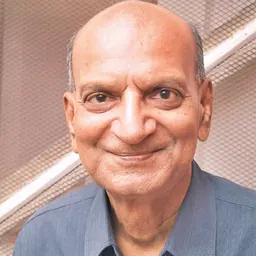
Related people
Same field, nearest in time






Contemporaries
People whose lives overlapped Gajendra Narayan Singh's



Frequently asked questions
Who was Gajendra Narayan Singh?
Nepalese politician
When was Gajendra Narayan Singh born?
Gajendra Narayan Singh was born in 1925 in Koiladi.
When did Gajendra Narayan Singh die?
Gajendra Narayan Singh died on 23 January 2002.
What was Gajendra Narayan Singh's occupation?
Gajendra Narayan Singh was a politician.
What nationality was Gajendra Narayan Singh?
Gajendra Narayan Singh was Nepali.
Sources & further reading
· Wikipedia: Gajendra Narayan Singh
· DBpedia: Gajendra Narayan Singh (politician)
Cite this page
APA: Biography.guide. (2026). Gajendra Narayan Singh. https://biography.guide/gajendra-narayan-singh/
MLA: "Gajendra Narayan Singh." Biography.guide, https://biography.guide/gajendra-narayan-singh/.
Chicago: "Gajendra Narayan Singh." Biography.guide. https://biography.guide/gajendra-narayan-singh/.
Data last updated: 2026-09-20 · Spot an error? Report a correction.
Page generated 2026-09-27 05:16 UTC