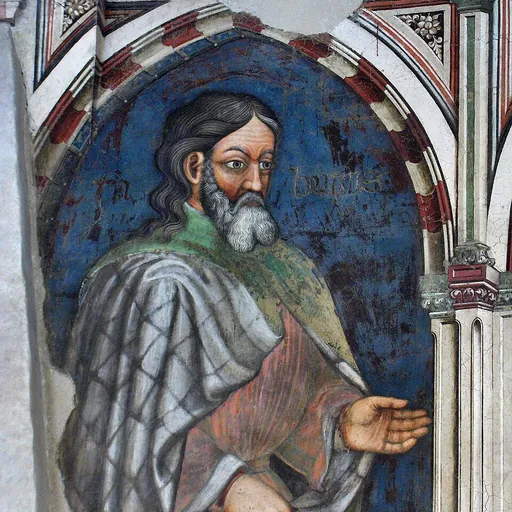
About Gaius Fabricius Luscinus
Gaius Fabricius Luscinus was a Roman diplomat, politician and military personnel.
Gaius Fabricius Luscinus, son of Gaius, was said to have been the first of the Fabricii to move to ancient Rome, his family originating from Aletrium.
In 284 BC he was one of the ambassadors to Tarentum, successfully keeping peace, and was elected consul in 282 BC where he raised the siege of the Greek city Thurii from the Lucanians and Bruttians. Fabricius was consul a second time in 278 BC, and once again successful against the Samnites, Lucanians and Bruttians. He also defeated Tarentum's army after Pyrrhus' departure from Italy to Sicily.
Fabricius was elected censor in 275 BC.
The people of Thurii honored Fabricius with a statue for helping them.
According to the Byzantine encyclopedia Suda, Pyrrhus admired and respected Fabricius for his unwavering moral integrity, praising him as a man whose virtue could not be swayed.
The tales of Fabricius are the standard ones of austerity and incorruptibility, similar to those told of Curius Dentatus, and Cicero often cites them together; it is difficult to make out a true personality behind the virtues. On the other hand, Valerius Maximus says that he and his co-consul/co-censor Quintus Aemilius Papus kept "silver in the[ir] homes... Each of them had a dish for the gods and a salt cellar, but Fabricius was more elegant because he chose to put a little pedestal of horn under his dish." [Valerius Maximus, Chapter Four "Poverty" 4.3]
In Boethius' Consolation of Philosophy, Fabricius is used in the poem of Bk. II, Ch. 7 as an example of a great man whose fame brought him no advantage, being either in heaven (and thus above earthly ambitions) or dead "body and soul", with the personified Philosophy asking, "Where now are the bones of staunch Fabricius?"
In the Purgatorio of Dante's Divine Comedy, Canto XX depicted Fabricius as an example of virtue opposing Avarice, as the Pilgrim and Virgil trek through the realm of Purgatory, also galvanizing the connection between poverty and asceticism. They say his principles were so deeply embedded within his character that he suffered intense impoverishment, and that he died a pauper and had to be buried by the state. A quote wailed by a mysterious voice in Canto XX 24-27 reveals this: "O Good Fabricius, you who chose to live with virtue in your poverty, rather than live in luxury with vice."
Don’t just read it —
keep it.
Full-length biographies made to live with: read them, listen on the way to work, watch them tonight.
- E-book
- Audio
- Video
Instant download · yours to keep · every purchase keeps this site free
Important facts
Related people
Same field, nearest in time



Frequently asked questions
Who was Gaius Fabricius Luscinus?
Roman censor 275 BC
When was Gaius Fabricius Luscinus born?
Gaius Fabricius Luscinus was born in Ancient Rome.
What was Gaius Fabricius Luscinus's occupation?
Gaius Fabricius Luscinus was a diplomat, politician and military personnel.
What nationality was Gaius Fabricius Luscinus?
Gaius Fabricius Luscinus was Roman.
Sources & further reading
· Wikipedia: Gaius Fabricius Luscinus
· DBpedia: Gaius Fabricius Luscinus
Cite this page
APA: Biography.guide. (2026). Gaius Fabricius Luscinus. https://biography.guide/gaius-fabricius-luscinus/
MLA: "Gaius Fabricius Luscinus." Biography.guide, https://biography.guide/gaius-fabricius-luscinus/.
Chicago: "Gaius Fabricius Luscinus." Biography.guide. https://biography.guide/gaius-fabricius-luscinus/.
Data last updated: 2026-09-21 · Spot an error? Report a correction.
Portrait: Wikimedia Commons · author & licence
Page generated 2026-09-27 05:00 UTC