
About Gabriel Figueroa
Lived 1907 – 1997 (aged 90). Gabriel Figueroa was a Mexican photographer, cinematographer, film director, director and camera operator.
Gabriel Figueroa Mateos (April 24, 1907 – April 27, 1997) was a Mexican cinematographer, regarded as one of the greatest cinematographers of the Golden Age of Mexican cinema. He worked on over 200 films, which cover a broad range of genres, and is best known for his technical dominance, his careful handling of framing and chiaroscuro, and affinity for the aesthetics of artists. He was the grandson of the famous lawyer, journalist and liberal writer Juan A. Mateos and first cousin to Mexican president Adolfo Lopez Mateos. His mother died after giving birth to him and his father, unable to cope with the loss of his wife, left Gabriel and his brother Roberto to be cared for by their aunts. He then fled to Paris, where he eventually succumbed to alcohol and despair. When the family fortune ran dry, Figueroa "had to leave the Academy and go into the darkroom to make a living". Upon arrival, Figueroa checked-in to the famous Roosevelt Hotel from where he called the only person he knew in the city, Charlie Kimball, editor of the movie Maria Elena, of which Figueroa had worked as an illuminator and stillman in February 1935. The call was answered by Gerardo Hanson, producer of Maria Elena, who later took him out to a villa on Vine Street. Figueroa always considered Toland as his teacher. The following year, in 1936, Gabriel returned to Mexico and it was here that he began to produce his distinctive images. His first feature, Allá en el Rancho Grande (1936), which would become one of the most popular films in Mexico and Latin America, and is considered to be the one that started the Golden Age of Mexican cinema, gained international recognition when it won a prize at the Venice Film Festival and broke box-office records.
He filmed 235 movies over 50 years. One of his main collaborators was Emilio Fernández, with whom he shot twenty films, some of which won prizes at the Venice Film Festival, the Cannes Film Festival, and the Berlin Film Festival. After collaborating with Fernández and Luis Buñuel on their films with such actors as Dolores del Río, Pedro Armendáriz, María Félix, Jorge Negrete, Columba Domínguez, and Silvia Pinal. Figueroa has come to be regarded as one of the most influential cinematographers of Mexico.
His Hollywood film credits included John Ford's The Fugitive (1947), John Huston's The Night of the Iguana (1964) and Under the Volcano (1984), Two Mules for Sister Sara (1970), and Kelly's Heroes (also 1970). His work on The Night of the Iguana earned him an Best Cinematography Oscar nomination at the 37th Academy Awards, the first Mexican-born cinematographer to do so.
Exhibition 2011: Rencontres d'Arles Festival, France. 2013-2014: Los Angeles County Museum of Art, Los Angeles. Detailed retrospective of Figueroa's photography, cinematography, and progressive politics. The Los Angeles County Museum of Art (LACMA) organized the retrospective exhibition titled "Under the Mexican Sky: Gabriel Figueroa—Art and Film." The exhibit, featuring Figueroa's work from the early 1930s to the early 1980s, included film clips, paintings, photographs, posters and documents both from Figueroa's archive and the Televisa Foundation collections. "Under the Mexican Sky" recognizes Figueroa's contribution to Mexico's Golden Age of Film, both technically, and stylistically. LACMA curators highlight the artist's works across genres that "…helped forge an evocative and enduring image of Mexico." The exhibit ran from September 22, 2013, through February 2, 2014 in the Art of the Americas Building, Level 1.
Tributes
On 24 April 2013, Google celebrated Gabriel Figueroa's 106th Birthday with a doodle.
Filmography Cinematographer
Camera operator
Still photographer Year Title Director1933RevolutionMiguel Contreras TorresAntonio MorenoProfanaciónChano Urueta1934Almas encontradasRaphael J. SevillaEnemigosChano UruetaJuarez and MaximilianMiguel Contreras TorresRaphael J. SevillaThe Woman of the PortArcady BoytlerRaphael J. SevillaThe Call of the BloodJosé BohrRaphael J. SevillaChucho el RotoGabriel Soria
Awards and nominations Academy Awards Year Nominated work Category Result 1965 The Night of the Iguana Best Cinematography
Golden Globe Awards Year Nominated work Category Result1949 The Pearl Best Cinematography
Ariel Awards
Film festivals
Don’t just read it —
keep it.
Full-length biographies made to live with: read them, listen on the way to work, watch them tonight.
- E-book
- Audio
- Video
Instant download · yours to keep · every purchase keeps this site free
Important facts
People in Gabriel Figueroa's life
Named in this biography and alive at the same time


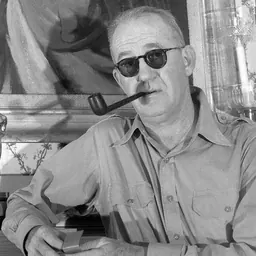
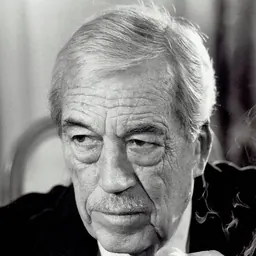


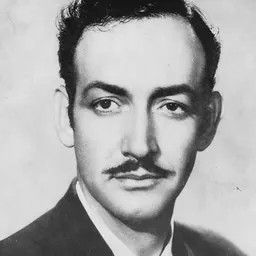
Related people
Same field, nearest in time



Contemporaries
People whose lives overlapped Gabriel Figueroa's



Frequently asked questions
Who was Gabriel Figueroa?
Mexican cinematographer (1907-1997)
When was Gabriel Figueroa born?
Gabriel Figueroa was born on 24 April 1907 in Mexico City.
When did Gabriel Figueroa die?
Gabriel Figueroa died on 27 April 1997 in Mexico City.
What was Gabriel Figueroa's occupation?
Gabriel Figueroa was a photographer, cinematographer, film director, director and camera operator.
What nationality was Gabriel Figueroa?
Gabriel Figueroa was Mexican.
Sources & further reading
Cite this page
APA: Biography.guide. (2026). Gabriel Figueroa. https://biography.guide/gabriel-figueroa/
MLA: "Gabriel Figueroa." Biography.guide, https://biography.guide/gabriel-figueroa/.
Chicago: "Gabriel Figueroa." Biography.guide. https://biography.guide/gabriel-figueroa/.
Data last updated: 2026-09-20 · Spot an error? Report a correction.
Page generated 2026-09-27 05:00 UTC