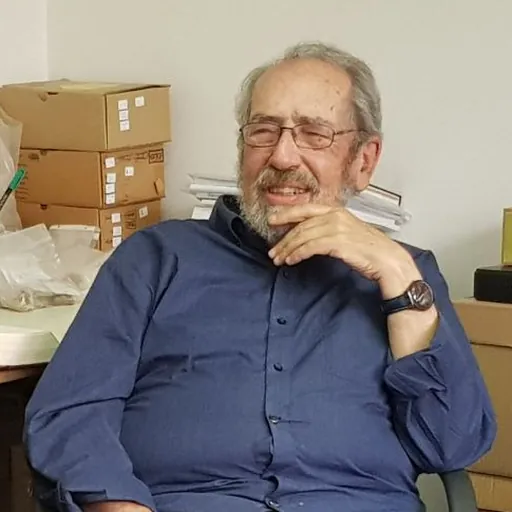
About Gabriel Barkay
Lived 1944 – 2026 (aged 81). Gabriel Barkay was a Hungarian and Israeli archaeologist, anthropologist and pedagogue.
Gabriel Barkay (né Breslauer Gábor; ; sometimes transcribed from the Hebrew Gavriel Barkai; 20 June 1944 – 11 January 2026) was an Israeli archaeologist whose research and fieldwork focused on the archaeology of Jerusalem. He was a professor and lecturer at several academic institutions, and a prominent public figure in the archaeology of Israel.
Barkay is perhaps best known for his discovery of the Ketef Hinnom amulets, two inscribed silver scrolls dating to the 7th century BCE that preserve a version of the priestly benediction from the Book of Numbers. These amulets, found in rock-cut tombs from the kingdom of Judah, are among the earliest known extra-biblical examples of biblical passages. Additionally, Barkay was a co-founder of the Temple Mount Sifting Project, which sought to recover and document archaeological material from soil removed from the Temple Mount.
Over the course of his career, he received multiple honors for his contributions to the archaeology of Jerusalem, including the Jerusalem Prize for Archaeological Research, the Moskowitz Prize for Zionism, and the Yakir Yerushalaim Award. His work was cited in both academic scholarship and popular media. The New York Times described him as "a leading figure in biblical archaeology" and "one of Israel's leading archaeologists."
At ten years of age, he joined the Israel Exploration Society and attended the organization's conference in Ramat Rachel in 1956, when four Jordanian soldiers shot across the border and killed four attendees. From 1964 to 1967 he was an undergraduate at Hebrew University of Jerusalem, where he studied archaeology, comparative religion and geography under Yigael Yadin, Benjamin Mazar, Michael Avi-Yonah, Yohanan Aharoni, Ruth Amiran, David Flusser Nahman Avigad and Moshe Stekelis, among others. There he received his bachelor's degree summa cum laude and began his master's degree. He was a public figure who delivered lectures to the wider public and trained tour guides in Jerusalem. Barkay also excavated the Iron Age tombs on the grounds of the École Biblique in the early 1970s.
Priestly Blessing scrolls
Barkay's most famous discoveries were two small silver scroll amulets containing the priestly benediction from the Book of Numbers , which he discovered in 1979 in a First Temple Period tomb at Ketef Hinnom. These amulets contain the oldest surviving biblically related inscription discovered to date, dating back to the seventh century BCE and are to date the only archaeological proof that passages from the Hebrew Bible as we know them were in circulation during the First Temple Period.
Temple Mount excavations
In 2000, Barkay, Eilat Mazar, and other prominent individuals in Israel founded the Committee for the Prevention of Destruction of Antiquities on the Temple Mount in response to a protruding bulge discovered in 2000 in the Temple Mount's southwest corner.
In 2005, together with archaeologist Zachi Zweig, Barkay established the Temple Mount Sifting Project, a project funded by the Ir David Foundation and dedicated to recovering archaeological artifacts from 400 truckloads of earth removed from the Temple Mount by the Waqf and Israeli Islamic movement during 1996–2001. The construction included the establishment of the underground El-Marwani Mosque at an ancient structure known since medieval times as Solomon's Stables, including the excavation of a huge pit as an entrance to the structure, and reducing the platform level at the area north to the entrance.
One of the findings of this project is a 7th-century BCE bulla (round clay seal affixed to documents), which became known as the "Bethlehem Seal". Dr. Barkay offered the first translation of the Hebrew three-line inscription: "In the 7th year, Bethlehem, for the king".
Media career
Barkay frequently appeared on the History Channel show The Naked Archaeologist, hosted by Simcha Jacobovici. According to his daughter, the cause as "complications of an autoimmune disease."
In 2014 he received the Moskowitz Prize for Zionism.
In 2018, he received the Yakir Yerushalayim award.
Don’t just read it —
keep it.
Full-length biographies made to live with: read them, listen on the way to work, watch them tonight.
- E-book
- Audio
- Video
Instant download · yours to keep · every purchase keeps this site free
Important facts
People in Gabriel Barkay's life
Named in this biography and alive at the same time

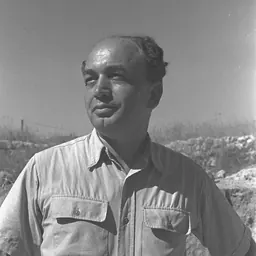


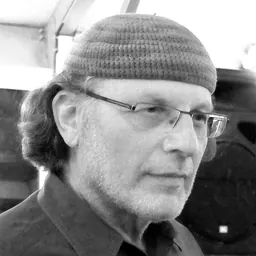
Related people
Same field, nearest in time
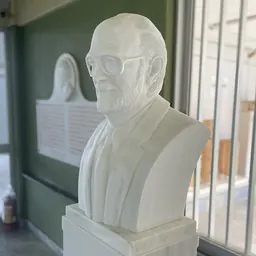
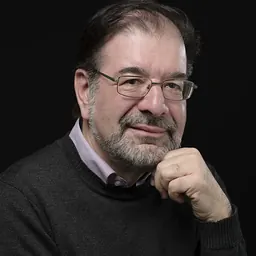
Contemporaries
People whose lives overlapped Gabriel Barkay's



Frequently asked questions
Who was Gabriel Barkay?
Israeli archaeologist (1944–2026)
When was Gabriel Barkay born?
Gabriel Barkay was born on 20 June 1944 in Budapest Ghetto.
When did Gabriel Barkay die?
Gabriel Barkay died on 11 January 2026 in Jerusalem.
What was Gabriel Barkay's occupation?
Gabriel Barkay was an archaeologist, anthropologist and pedagogue.
What nationality was Gabriel Barkay?
Gabriel Barkay was Hungarian and Israeli.
Sources & further reading
Cite this page
APA: Biography.guide. (2026). Gabriel Barkay. https://biography.guide/gabriel-barkay/
MLA: "Gabriel Barkay." Biography.guide, https://biography.guide/gabriel-barkay/.
Chicago: "Gabriel Barkay." Biography.guide. https://biography.guide/gabriel-barkay/.
Data last updated: 2026-09-22 · Spot an error? Report a correction.
Portrait: Wikimedia Commons · author & licence
Page generated 2026-09-27 05:03 UTC