
About Gabino Ezeiza
Lived 1858 – 1916 (aged 58). Gabino Ezeiza was an Argentine composer, songwriter, guitarist and singer.
Biography Gabino Ezeiza was an Afro-Argentine born in the San Telmo barrio (a former slave neighborhood), and lived at a time when there were a considerable number of black Afro-descendants in the area of present-day Greater Buenos Aires. His teacher in the initiation of the payada, Pancho Luna, was also Afro-Argentine.
Ezeiza was one of the most famous payadores, both in his homeland and in Uruguay. His counterpoints became famous and the one held on July 23, 1884, at the Artigas Theater in Montevideo with the oriental singer Juan de Nava was particularly memorable, witnessed as it was by a large auditorium.
Ezeiza had memorable payadas with other rioplatense singers such as Nemesio Trejo (1880), Puanes e Hidalgo (unknown date), Pablo Vázquez (at Teatro Florida in Pergamino, 1894), Arturo de Nava (at Circo Anselmi), Cazón (both in 1896), Luis García (1900 in San Antonio de Areco). in particular, for his work in the committees of the Radical Civic Union adhering to the movement led at the time by Hipólito Yrigoyen, He made friends at the popular Café de los Angelitos in Buenos Aires. Upon his death, the duo sang Heroico Paysandú in his tribute, which years later led to the Gardel album. Ezeiza toured on the south of Argentina. In 1905, he married Petrona del Carmen Peñaloza, whom he had met during his shows in San Nicolás de los Arroyos.
Contribution to Argentine folklore
There are those who consider that Ezeiza was the one who introduced the milonga rhythm to payada, and its popularity caused other payadores to spread it to other areas of Argentina, Uruguay, and Brazil (on all in the south of this country).
Ezeiza affirmed that the milonga (campera) came from the candombe, a style of music and dance that originated in Uruguay among the descendants of liberated African slaves.
In an interview to Argentine payador and journalist Nemesio Trejo, published in the newspaper La Opinión of Avellaneda on April 15, 1916, he recounts:
Ezeiza considered that the milonga rhythm would have been an evolution, in classical guitar (named "creole guitar" in Argentina), of Afro-Argentine candombe carried out by Afro-Argentines in the Argentine Pampas.
Don’t just read it —
keep it.
Full-length biographies made to live with: read them, listen on the way to work, watch them tonight.
- E-book
- Audio
- Video
Instant download · yours to keep · every purchase keeps this site free
Important facts
People in Gabino Ezeiza's life
Named in this biography and alive at the same time
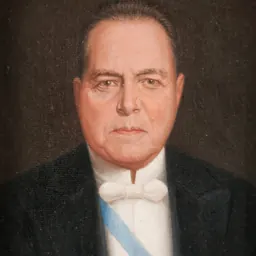
Related people
Same field, nearest in time
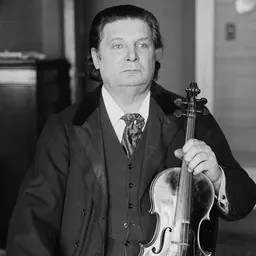

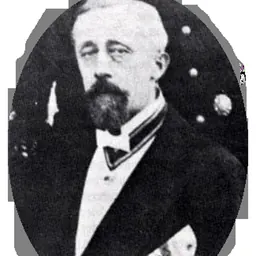


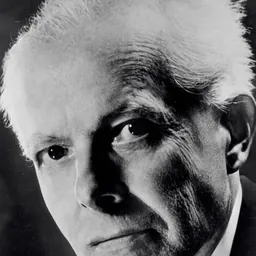
Contemporaries
People whose lives overlapped Gabino Ezeiza's

Frequently asked questions
Who was Gabino Ezeiza?
Argentine musician (1858–1916)
When was Gabino Ezeiza born?
Gabino Ezeiza was born on 3 February 1858 in San Telmo.
When did Gabino Ezeiza die?
Gabino Ezeiza died on 12 October 1916 in Flores.
What was Gabino Ezeiza's occupation?
Gabino Ezeiza was a composer, songwriter, guitarist and singer.
What nationality was Gabino Ezeiza?
Gabino Ezeiza was Argentine.
Sources & further reading
Cite this page
APA: Biography.guide. (2026). Gabino Ezeiza. https://biography.guide/gabino-ezeiza/
MLA: "Gabino Ezeiza." Biography.guide, https://biography.guide/gabino-ezeiza/.
Chicago: "Gabino Ezeiza." Biography.guide. https://biography.guide/gabino-ezeiza/.
Data last updated: 2026-09-20 · Spot an error? Report a correction.
Page generated 2026-09-27 05:22 UTC