
G. O. Smith
English amateur footballer and first-class cricketer
About G. O. Smith
Lived 1872 – 1943 (aged 71). G. O. Smith was a British association football player and cricketer.
Gilbert Oswald Smith (25 November 1872 – 6 December 1943 ), familiarly known as G. O. Smith or simply as G. O. or Jo, was an English amateur footballer often referred to as "the first great centre forward". In addition, Smith played first-class cricket for Oxford University and Surrey.
Smith was by profession a schoolmaster, becoming headmaster of Ludgrove School, jointly with footballing colleague William Oakley from 1901 until 1934. He was unmarried.
Early life Born in Croydon but the son of a Scottish merchant who settled in India, in his early life Smith lived in Godalming at a house called Killcott which later became St Hilary's School.
He was educated, from 1886 to 1892, at Charterhouse School, one of the principal nurseries of the Association Football game, where he learned many of the skills that subsequently brought him fame. He went on to study at Keble College, Oxford, His record for the Casuals was even more impressive, with 42 goals in 29 appearances.
In the course of his club career, Smith captained Corinthians in the first Sheriff of London Charity Shield fixture, a competition created to match the best professional and amateur teams in Britain. The match, played in 1898 against Sheffield United, proved controversial and with the score standing at 1–1 after 90 minutes, the professional side declined to play extra time because they had disagreed with several of the referee's decisions. Smith also scored the winning goal in Corinthians' memorable 2–1 Charity Shield win against the professionals of Aston Villa played at Crystal Palace in November 1900.
International career Smith captained the England team on at least 13, and possibly as many as 16, occasions (early records are inexact) between 1896 and 1901, winning at least eight games, possibly as many as ten, and drawing two.
His most productive game in an England shirt came in February 1899, when he netted three times in only five minutes and four times in all during the 13–2 demolition of Ireland.
"Fine fellows they were," the great Welsh player Billy Meredith wrote of the Smith-led, all-amateur England forward line of 1895,
He made a total of 20 appearances for England (scoring 11 goals), between 1893 and 1901. Some authorities, including the author of the article on Smith published in the Dictionary of National Biography, credit him with 21 caps, one of which was won in the unofficial 12–0 victory over Germany in 1901.
Playing style G.O. Smith was known for his balance and timing, and for his close control of the ball.
Unlike the majority of centre-forwards of the day, Smith also excelled at passing. His obituary in The Times said he was "a maker rather than a scorer of goals", and football writer Jonathan Wilson described him as "what we would now term a false nine".
Steve Bloomer, Smith's professional colleague in several international matches, remarked that it was for this reason that he would rather play alongside Smith than any other centre-forward. The Dictionary of National Biography says that he "transformed the role of the centre-forward from that of an individual striker into a unifier of the forward line, indeed the whole team."
Though Smith was tall for the era, at nearly , he suffered from asthma and lacked the brawn that had characterised predecessors in the England team such as W.N. "Nuts" Cobbold in a period in which body-checking and other rough tactics were considered fair play. He was noted for his reluctance to head the ball, stating that he would be happy to see the practice banned. Smith made up for these deficiencies by positioning himself intelligently and by shooting accurately, and – so his obituary observed – "invariably low".
Cricket career
In his youth, G.O. Smith was also a noted cricketer, representing Oxford University and scoring a match-winning 132 runs in the fourth innings of the 1896 Varsity Match to win the game against Cambridge. He batted right-handed. showing excellent timing with his drives and cutting beautifully, bowled reasonably well, and fielded at cover point. In the field he moved – his obituary in Wisden noted – "gracefully with quickness in all he did."
Don’t just read it —
keep it.
Full-length biographies made to live with: read them, listen on the way to work, watch them tonight.
- E-book
- Audio
- Video
Instant download · yours to keep · every purchase keeps this site free
Important facts
People in G. O. Smith's life
Named in this biography and alive at the same time


Related people
Same field, nearest in time




Contemporaries
People whose lives overlapped G. O. Smith's
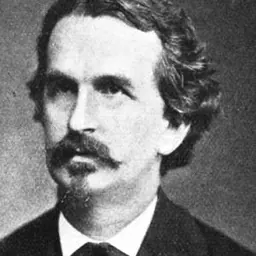
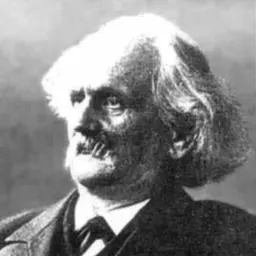
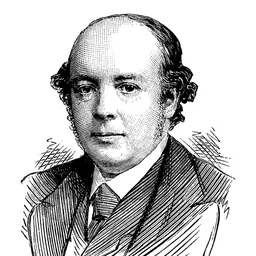
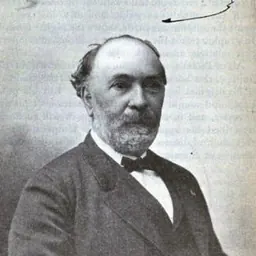

Frequently asked questions
Who was G. O. Smith?
English amateur footballer and first-class cricketer (1872-1943)
When was G. O. Smith born?
G. O. Smith was born on 25 November 1872 in Surrey.
When did G. O. Smith die?
G. O. Smith died on 6 December 1943 in Lymington.
What was G. O. Smith's occupation?
G. O. Smith was an association football player and cricketer.
What nationality was G. O. Smith?
G. O. Smith was British.
Sources & further reading
Cite this page
APA: Biography.guide. (2026). G. O. Smith. https://biography.guide/g-o-smith/
MLA: "G. O. Smith." Biography.guide, https://biography.guide/g-o-smith/.
Chicago: "G. O. Smith." Biography.guide. https://biography.guide/g-o-smith/.
Data last updated: 2026-09-25 · Spot an error? Report a correction.
Page generated 2026-09-27 05:11 UTC