
G. Bradford Cook
Former chairman, U.S. Securities and Exchange Commission
About G. Bradford Cook
Lived 1937 – 2014 (aged 77). G. Bradford Cook was an American lawyer, university teacher and electrical engineer.
George Bradford Cook (May 10, 1937 – August 28, 2014), also known as G. Bradford Cook and Brad Cook, was an American lawyer who served as chairman of the U.S. Securities and Exchange Commission in 1972. He resigned after being caught up in the Robert Vesco securities fraud scandal and received temporary disbarments in two states for lying to a grand jury in the case.
Education Cook was born on May 10, 1937, in Lincoln, Nebraska, to George Brash Cook, an insurance executive, and Margaret Colman Cook. He attended public elementary and junior high school in Lincoln, and then Phillips Exeter Academy in Exeter, New Hampshire, where he graduated from high school in 1955.
Cook applied to Stanford Law School and was accepted. However, wanting a career in politics, he thought it would be easier to build that career in Nebraska than California.
He wed Laura Shedd Armour, a descendant of meatpacking robber baron Philip Danforth Armour, on January 22, 1966. The couple had a daughter, Jennifer, in 1975.
Career Cook was very active in Republican Party politics (as was his father).
He was invited to interview for the general counsel position at the United States Department of Health, Education and Welfare, but again declined because he felt the agency was too big and it was outside his specialty. Cook was appointed to the position on September 1, and sworn in on September 7. Cook's opportunity to vault to the chairmanship of the SEC came just a year later.
Richard Helms resigned as Director of the Central Intelligence Agency in early 1973. Casey, once an intelligence officer himself, resigned from the SEC to seek the CIA position. Through friends, Cook made it known that he wanted to be chairman of the SEC. He won the backing of both White House Chief of Staff H. R. Haldeman and Assistant to the President for Domestic Affairs John Ehrlichman. Cook was nominated by President Richard Nixon, approved by the United States Senate, and sworn in as SEC chairman on March 3, 1973. He was the youngest person ever to lead a federal agency.
Vesco scandal Development of the case against Vesco In 1972, SEC Chairman William Casey met with Cook and assigned him an enforcement case then pending against Robert Vesco. In doing so, Casey took the case away from the SEC's Enforcement Division, a move Cook claims he did not question. A mutual fund company, Investors Overseas Service (IOS), which was registered in Panama, was attempting to come into the United States, a complicated process that involved changing the company's articles of incorporation, bylaws, operating procedures, finances, and governance to conform with American securities law. Vesco was battling Bernard Cornfeld, chief executive officer of IOS, for control of the company, and the SEC was investigating Vesco for having covered up the transfer of $224 million in corporate funds to a personal account. Another $50,000 in cash was given in violation of federal elections laws. Harry L. Sears, a prominent Republican fund-raiser in New Jersey and Vesco associate, delivered the cash donations to Maurice Stans, Nixon's former Secretary of Commerce and head of finance for Nixon's presidential re-election campaign. Stans arranged for Sears to meet with United States Attorney General John N. Mitchell, and Mitchell set up a meeting with Sears, Casey, and Cook in May 1972.
Improper discussions with Maurice Stans Cook became aware of the Vesco cash donations and the intent with which they were made.
Shortly after his conversation with Casey, Cook went on a hunting trip in Texas with Stans. On November 13, 1972, while he and Stans crouched in a rice field, Cook mentioned that he wished to be SEC chairman and that he was prosecuting a number of cases, including the Vesco lawsuit. Cook mentioned that the SEC had testimony that Vesco had given Stans $250,000 in cash donations. Two days later, back in Washington, Stans called Cook and asked that the information about the $250,000 be deleted from the legal filings in the case. Cook agreed to do so, and told SEC Associate Director of Enforcement Stanley Sporkin to remove the information. On November 17, Cook called Stans to confirm that the change had occurred. Stans invited Cook to the White House for lunch. Stans informed Cook that the Nixon campaign was going to return the money to Vesco, and asked that discussion of the donation be edited out of testimony the SEC would file with the court. After speaking with Sporkin, Cook advised Stans that the testimony had to be submitted in full and he could not do as Stans had asked.
On Thursday, May 10, a grand jury indicted Vesco, Sears, Mitchell, and Stans with conspiracy to defraud the United States and conspiracy to obstruct justice, and Mitchell and Stans with perjury. The following day, Cook said he had done nothing wrong and would not resign.
But on Wednesday, May 16, Cook resigned effective immediately as chairman of the Securities and Exchange Commission. He had served as chairman for just 74 days.
Fallout from perjury admissions The trial of Mitchell and Stans on the grand jury charges began on February 19, 1974.
In his initial testimony, Cook testified that Stans said he (Stans) had lied to the grand jury investigating the Vesco donation. Cook admitted that he lied to the grand jury on April 19 and to the Senate committee on May 1. Cook also said that Stans called him on the morning of May 7, 1973, to discuss Cook's upcoming grand jury testimony. Cook informed Stans that he was changing his testimony to the grand jury and would tell the truth. When called before the Senate again on May 14, Cook said he changed his testimony again and told the truth.
The fallout from Cook's witness stand admissions was significant. The Senate Appropriations Committee asked the United States Department of Justice on May 1 to file charges of contempt of Congress against Cook for lying. On September 27, 1974, the Nebraska State Bar Association filed a six-count disciplinary complaint with the State Supreme Court against Cook. Although Cook's attorney argued that he should be censured, the State Supreme Court disbarred Cook for three years from the practice of law in Nebraska.
The United States Supreme Court permanently barred Cook from practicing law before it on May 31, 1977, and the Illinois Bar Association followed suit with a three-year disbarment on June 1.
Post-SEC career After leaving the SEC, Cook became chairman of the board and chief executive officer of Farragut Investments.
Don’t just read it —
keep it.
Full-length biographies made to live with: read them, listen on the way to work, watch them tonight.
- E-book
- Audio
- Video
Instant download · yours to keep · every purchase keeps this site free
Important facts
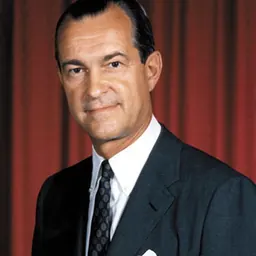
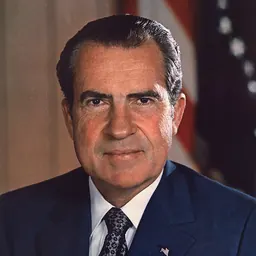
People in G. Bradford Cook's life
Named in this biography and alive at the same time






Related people
Same field, nearest in time


Contemporaries
People whose lives overlapped G. Bradford Cook's


Frequently asked questions
Who was G. Bradford Cook?
former chairman, U.S. Securities and Exchange Commission
When was G. Bradford Cook born?
G. Bradford Cook was born on 10 May 1937 in Lincoln.
When did G. Bradford Cook die?
G. Bradford Cook died on 28 August 2014.
What was G. Bradford Cook's occupation?
G. Bradford Cook was a lawyer, university teacher and electrical engineer.
What nationality was G. Bradford Cook?
G. Bradford Cook was American.
Sources & further reading
Cite this page
APA: Biography.guide. (2026). G. Bradford Cook. https://biography.guide/g-bradford-cook/
MLA: "G. Bradford Cook." Biography.guide, https://biography.guide/g-bradford-cook/.
Chicago: "G. Bradford Cook." Biography.guide. https://biography.guide/g-bradford-cook/.
Data last updated: 2026-09-22 · Spot an error? Report a correction.
Page generated 2026-09-27 05:32 UTC