
About Fyodor Vasilyev
Lived 1850 – 1873 (aged 23). Fyodor Vasilyev was a Russian painter.
Fyodor Alexandrovich Vasilyev (; 1850 in Gatchina – 1873 in Yalta) was a Russian Imperial landscape painter who introduced the lyrical landscape style in Russian art.
Biography
Fyodor Vasilyev was born in Gatchina to a low-level government official, Alexander Vasilyevich Vasilyev, and Olga Emelyanova Polyntseva on 22 February N.S. 1850. His parents married four years later, so he was always considered an illegitimate child. Feodor had to earn his living from the age of 12 – he worked as a mailman, scribe, and assistant to a restorer of pictures. After his father's death, he became the sole supporter of the family.
In 1863, he managed to enter the evening classes of the School of Painting at the Society for Promotion of Artists . While at school, Vasilyev got acquainted with many painters, who took care of him.
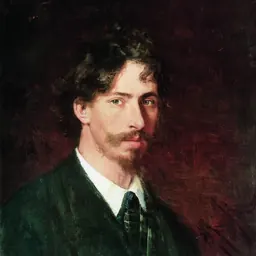
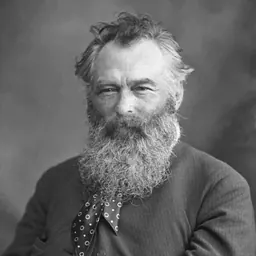
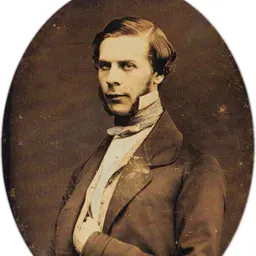
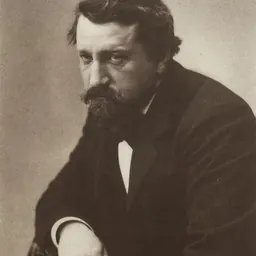
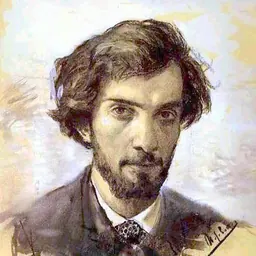
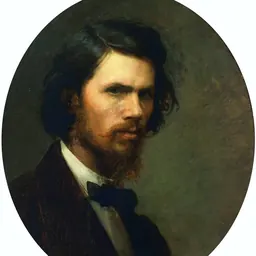
In 1866 famous landscape painter Ivan Shishkin fell in love with Feodor's sister Evgenia Vassilyev. Shishkin became acquainted with Feodor and started to teach him landscape painting. From July to November 1867 Shishkin and Vassilyev worked together on the island of Valaam. Some places on Valaam were subjects of both artists' paintings. Later Shishkin introduced Feodor to Ivan Kramskoi, Ilya Repin, and to the art collectors Pavel Mikhailovich Tretyakov and Pavel Sergeyevich Stroganov. Later Vasilyev became a major competitor to Ivan Shishkin and the latter was often accused of using intrigues and administrative influence trying to win over Vasilyev on different art competitions.
In Vasilyev’s early works, such as After a Thunderstorm (1868), Near a Watering Place (1868) and others, one can feel the influence of the Barbizon school; it affected his art but never resulted in a non-creative borrowing of the motifs. Though, at first, Vasilyev was somewhat inferior technically to the Barbizon painters, most critics agree that he eventually found his own way of handling the subject. After a Rain (1869) and After a Rain. Country Road exceed in many respects the Barbizon stormy scenes in their expressiveness and deeply national sound.
In 1870, Vasilyev traveled on the Volga with Ilya Repin, the picture Volga View. Barges(1870) was a great success. In 1870 he became a member of the Peredvizhniki movement (one of the original twenty members).
In 1871, Vasilyev painted Thaw (1871), which made him famous immediately. The tzar's family (Prince Alexander, future Alexander III of Russia), ordered a copy, and the Society for Promotion of Artists awarded him first prize. Later Prince Alexander's copy was exhibited in the 1872 London World Fair and won a medal. Vasilyev was admitted, as an intern, to the Imperial Academy of Arts (which, among other things, gave him an exemption from conscription to the Army).
The "boy genius", as he was called in the artistic circles of Russia, had no time to enjoy his popularity – he was diagnosed with tuberculosis and had to leave St. Petersburg forever. He moved to Crimea. The Society for Promotion of Artists sponsored his stay there, but he was obliged to pay with his paintings.
Vasilyev could not get used to the new scenery. He went on to paint the Russian plains; his works, such as his masterpiece Wet Meadow (1872), were done from memory, old sketches and his imagination. After some time Vasilyev started to draw the Crimea, gradually beginning to feel an attraction to its mountain views. Mountains of Crimea (1873) was an outstanding work and the last work of the artist.
He died in Yalta on 6 October N.S. 1873 at the age of 23. His posthumous exhibition in Saint Petersburg was a great success, and all his works were sold prior to the exhibition. His works had a strong influence on the next generation of Russian landscape painters. Nikolai Ge said, He discovered for us the Sky. Many art historians emphasize Fedor Vasilyev's influence on Isaac Levitan, Valentin Serov, Viktor Borisov-Musatov.
Works
In philately In 1975, the USSR Post issued in honor of Vasiliev a series of six stamps and a block.
Don’t just read it —
keep it.
Full-length biographies made to live with: read them, listen on the way to work, watch them tonight.
- E-book
- Audio
- Video
Instant download · yours to keep · every purchase keeps this site free
Important facts
more
Fedor Aleksandrovich Vasilev, Fedor Alexandrovich Vasiliev, Fyodor Alexandrovich VasilyevPeople in Fyodor Vasilyev's life
Named in this biography and alive at the same time

Related people
Same field, nearest in time
Contemporaries
People whose lives overlapped Fyodor Vasilyev's





Frequently asked questions
Who was Fyodor Vasilyev?
Russian painter (1850-1873)
When was Fyodor Vasilyev born?
Fyodor Vasilyev was born on 10 February 1850 in Gatchina.
When did Fyodor Vasilyev die?
Fyodor Vasilyev died on 24 September 1873 in Yalta.
What was Fyodor Vasilyev's occupation?
Fyodor Vasilyev was a painter.
What nationality was Fyodor Vasilyev?
Fyodor Vasilyev was Russian.
Sources & further reading
Cite this page
APA: Biography.guide. (2026). Fyodor Vasilyev. https://biography.guide/fyodor-vasilyev-painter/
MLA: "Fyodor Vasilyev." Biography.guide, https://biography.guide/fyodor-vasilyev-painter/.
Chicago: "Fyodor Vasilyev." Biography.guide. https://biography.guide/fyodor-vasilyev-painter/.
Data last updated: 2026-09-20 · Spot an error? Report a correction.
Page generated 2026-09-27 05:25 UTC