
About Fuller Albright
Lived 1900 – 1969 (aged 69). Fuller Albright was an American physician and endocrinology, known for Calcium metabolism.
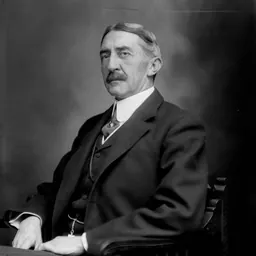
Fuller Albright (January 12, 1900 – December 8, 1969) was an American endocrinologist who made numerous contributions to his field, especially to the area of calcium metabolism. Albright made great strides and contributions to the understanding of disorders associated with calcium and phosphate abnormalities in the body. He also was a published author and in his books he detailed his findings.
Early life Albright was born on January 12, 1900, in Buffalo, New York. He was the third child of John J. Albright, a prominent businessman and philanthropist who constructed the Albright Art Gallery in Buffalo, and Susan Fuller, a Smith College graduate who was Albright's second wife. Albright had three children from his first marriage and six from his marriage to Fuller. His maternal grandparents were Eben and Nancy Fuller, of Lancaster, Massachusetts. His paternal grandparents were Joseph Jacob and Elizabeth S. Albright, both from Pennsylvania.
The family was descended from Andrew Albright, a gunsmith who supplied arms to the troops of the Continental Army during the Revolutionary War, who had come to America in 1750. Joseph was a coal agent for Delaware and Hudson Canal Company and the Delaware, Lackawanna and Western Railroad and eventually, President of the First National Bank.
Albright is credited with numerous discoveries in medicine. He described polyostotic fibrous dysplasia (a version of this disease with an endocrine component was later eponymically called McCune–Albright syndrome), the clinical and pathological features and different types of hyperparathyroidism (excessive production of parathyroid hormone by the parathyroid glands), the mechanism of Cushing's syndrome, and renal tubular acidosis (inability of the kidneys to regulate the acid-base balance in the body), and recognized the importance of menopause on osteoporosis. Known for Lightwood–Albright syndrome, a neonatal form of renal tubular acidosis.
Appointments and honors In 1941 Albright was elected a Fellow of the American Academy of Arts and Sciences. He was the president of the American Society for Clinical Investigation (1943–1944), the Association for the Study of Internal Secretions (1945–1946) and the Endocrine Society (1946–1947). In 1955 he was elected to the National Academy of the Sciences.
Roche-Organnon Award in Endocrinology (1947) American College of Physicians Award for Achievement in Internal Medicine (1947) Borden Award, Association of American Medical Colleges, for "extraordinarily original and monumental contributions to the understanding of metabolism of bone and other tissues." (1949) The Joseph Goldberger Award of the American Medical Association's Council on Foods and Nutrition (1951) Doctorate of Science, Harvard University (1955) Citation, Massachusetts General Hospital, for being one of the 15 outstanding physicians who had received early training at the hospital (1961)
Personal life In 1930, he met Claire Birge (1906-1990) of Greenwich, Connecticut, daughter of Walter William Birge and Mabelle Clair Brown, and by 1933, they were married. As a wedding present, Albright's father bought them a house in Brookline, Massachusetts next door to conductor Serge Koussevitzky. Birge Albright, (1935-2023) who married Carol Bonomo (b. 1938), an author
Albright developed Parkinson's disease in 1937. By 1956 his symptoms were so intractable that he underwent experimental brain surgery, chemical pallidotomy (obliteration of the globus pallidus by injection of alcohol). The intervention on the right was a success, but the left-sided procedure was complicated by haemorrhage, which left him aphasic and comatose for the remaining 13 years of his life, during which he was nursed at Massachusetts General Hospital. )
Death and legacy Albright died on 8 December 1969.
Don’t just read it —
keep it.
Full-length biographies made to live with: read them, listen on the way to work, watch them tonight.
- E-book
- Audio
- Video
Instant download · yours to keep · every purchase keeps this site free
Important facts
Family & relationships
People in Fuller Albright's life
Named in this biography and alive at the same time





Related people
Same field, nearest in time


Contemporaries
People whose lives overlapped Fuller Albright's




Frequently asked questions
Who was Fuller Albright?
endocrinologist (1900-1969)
When was Fuller Albright born?
Fuller Albright was born on 12 January 1900 in Buffalo.
When did Fuller Albright die?
Fuller Albright died on 8 December 1969 in Boston.
What was Fuller Albright's occupation?
Fuller Albright was a physician and endocrinology.
What was Fuller Albright known for?
Fuller Albright was known for Calcium metabolism.
What nationality was Fuller Albright?
Fuller Albright was American.
Sources & further reading
Cite this page
APA: Biography.guide. (2026). Fuller Albright. https://biography.guide/fuller-albright/
MLA: "Fuller Albright." Biography.guide, https://biography.guide/fuller-albright/.
Chicago: "Fuller Albright." Biography.guide. https://biography.guide/fuller-albright/.
Data last updated: 2026-09-22 · Spot an error? Report a correction.
Page generated 2026-09-27 05:21 UTC