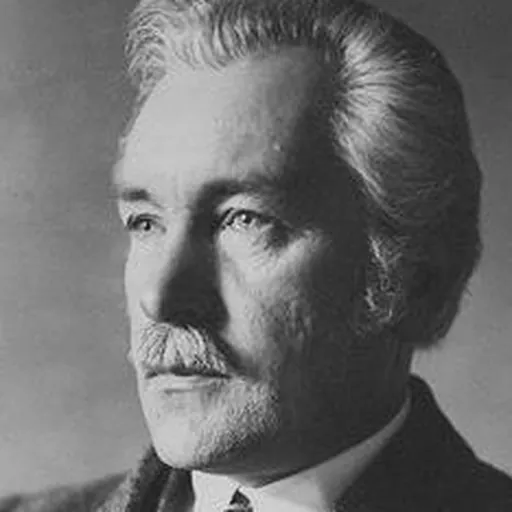
About Fryderyk Pautsch
Lived 1877 – 1950 (aged 72). Fryderyk Pautsch was a Polish painter and university teacher.
Fryderyk Pautsch (22 September 1877, Deliatyn - 1 July 1950, Kraków) was a Polish painter; associated with the Young Poland movement.
Life and work In 1898, he began his studies in jurisprudence at the Franciscan College of the University of Lwów (now the University of Lviv), followed by advanced legal studies at the Jagiellonian University in Kraków. He decided to change direction and pursue a career in art instead. He enrolled at the Academy of Fine Arts where his instructors included Leon Wyczółkowski and Józef Unierzyski.
Thanks to a scholarship, he was able to study in Paris, at the Académie Julian, from 1905 to 1906. When he returned, he settled in Lwów, but paid frequent visits to Pokuttia (southeast Galicia), where he painted scenes featuring the Hutsul people and their culture. In 1908, he became a member of the Society of Polish Artists ("Sztuka"). Four years later, he joined the Vienna Hagenbund. That same year, he was appointed Professor of Decorative Painting at the State Art Academy in Breslau, now Wrocław. He exhibited frequently, under the name "Friedrich Pautsch", notably at the Große Berliner Kunstausstellung of 1914, where he presented seventeen works.
During World War I, he served in the Polish Legion, an independent unit within the Austro-Hungarian Army. From 1915, he also worked as a war artist, assigned to the . He would hold that position until shortly after the war ended. In 1919, he left Breslau now to accept the post of Director of the school of Arts and Crafts in Poznań. There, he was one of the founders of an artists' movement known as "Świt" (Dawn), which included the monumental sculptor, Mieczysław Lubelski.
In 1925, he was appointed a Professor at Krakow Academy of Fine Arts. In addition, he served as Rector there in 1931 and 1936. In the latter year, he was awarded the Officer's Cross of the Order of Polonia Restituta in 1931 and the Commander's Cross in 1936 for services to the arts. During the German occupation of Poland, he was demoted to lecturer at the renamed, (State Art School) until it closed in 1943 when the German staff were called up for army service. After the war, in 1945 Pautsch returned to his position as professor at the academy, which he held until his death.
Don’t just read it —
keep it.
Full-length biographies made to live with: read them, listen on the way to work, watch them tonight.
- E-book
- Audio
- Video
Instant download · yours to keep · every purchase keeps this site free
Important facts
People in Fryderyk Pautsch's life
Named in this biography and alive at the same time
Related people
Same field, nearest in time

Contemporaries
People whose lives overlapped Fryderyk Pautsch's




Frequently asked questions
Who was Fryderyk Pautsch?
Polish painter (1877-1950)
When was Fryderyk Pautsch born?
Fryderyk Pautsch was born on 22 September 1877 in Deliatyn.
When did Fryderyk Pautsch die?
Fryderyk Pautsch died on 1 July 1950 in Kraków.
What was Fryderyk Pautsch's occupation?
Fryderyk Pautsch was a painter and university teacher.
What nationality was Fryderyk Pautsch?
Fryderyk Pautsch was Polish.
Sources & further reading
Cite this page
APA: Biography.guide. (2026). Fryderyk Pautsch. https://biography.guide/fryderyk-pautsch/
MLA: "Fryderyk Pautsch." Biography.guide, https://biography.guide/fryderyk-pautsch/.
Chicago: "Fryderyk Pautsch." Biography.guide. https://biography.guide/fryderyk-pautsch/.
Data last updated: 2026-09-23 · Spot an error? Report a correction.
Portrait: Wikimedia Commons · author & licence
Page generated 2026-09-27 05:07 UTC