
About Fructuós Gelabert
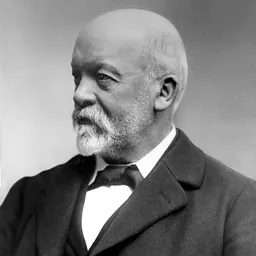
Lived 1874 – 1955 (aged 81). Fructuós Gelabert was a Spanish inventor, screenwriter and film director.
Fructuós Gelabert Badiella (1874–1955) was a Catalan inventor and screenwriter. He was also a film director, directing over 100 films.
Early life Gelabert was born in Gràcia, then an independent municipality near Barcelona, into a craftsman family. His father’s work in woodworking and his own mechanical aptitude contributed to his later interest in filmmaking and invention. After encountering Edison’s kinetoscope in 1895 and the Lumière brothers' cinematograph in 1896, Gelabert was inspired to begin working in cinema.
Career In 1897, Gelabert produced his first films, including "Salida de los trabajadores de la fábrica "La España Industrial" and "Salida del público de la iglesia parroquial de Santa María de Sants". That same year, he directed "Riña en un café", which is often recognized as the first narrative film produced in Spain.
Gelabert gained international attention with a documentary depicting King Alfonso XIII’s visit to Barcelona in 1898, which was sold to the French company Pathé marking Spain’s first film sold abroad. He also experimented with special effects in works such as "Choque de Transatlánticos" (1899) and developed technological innovations, including a projection lamp that enhanced image brightness.
In 1908, he established one of Barcelona’s first film studios. His 1910 historical drama "Guzmán el Bueno" was notable for its use of three-dimensional sets and achieved critical success.
After 1915, Gelabert’s career declined due to increasing competition in the film industry and personal financial struggles. He transitioned to technical roles and occasional collaborations with other filmmakers. He briefly returned to directing with "La Puntaire" (1928), but the rise of sound films rendered it commercially unsuccessful.
In his later years, Gelabert focused on inventions and continued to explore ideas for filmmaking, including early concepts for 3D cinema. Despite his contributions to Spanish cinema, he lived in poverty during his final years. A tribute to his work was organized in 1952, but broader recognition of his influence came posthumously.
Gelabert died on 27 February 1956 in Sants, Barcelona. His surviving works are preserved at the Filmoteca de Catalunya, and he is regarded as one of the foundational figures in Spanish cinema. Streets in Barcelona and other locations have been named in his honor.
Don’t just read it —
keep it.
Full-length biographies made to live with: read them, listen on the way to work, watch them tonight.
- E-book
- Audio
- Video
Instant download · yours to keep · every purchase keeps this site free
Important facts
Related people
Same field, nearest in time

Contemporaries
People whose lives overlapped Fructuós Gelabert's


Frequently asked questions
Who was Fructuós Gelabert?
screenwriter (1874–1955)
When was Fructuós Gelabert born?
Fructuós Gelabert was born on 15 January 1874 in Barcelona.
When did Fructuós Gelabert die?
Fructuós Gelabert died on 27 February 1955.
What was Fructuós Gelabert's occupation?
Fructuós Gelabert was an inventor, screenwriter and film director.
What nationality was Fructuós Gelabert?
Fructuós Gelabert was Spanish.
Sources & further reading
· Wikipedia: Fructuós Gelabert
Cite this page
APA: Biography.guide. (2026). Fructuós Gelabert. https://biography.guide/fructuos-gelabert/
MLA: "Fructuós Gelabert." Biography.guide, https://biography.guide/fructuos-gelabert/.
Chicago: "Fructuós Gelabert." Biography.guide. https://biography.guide/fructuos-gelabert/.
Data last updated: 2026-09-25 · Spot an error? Report a correction.
Page generated 2026-09-27 05:10 UTC