
Fritz Walter
German association football player
About Fritz Walter
Lived 1920 – 2002 (aged 81). Fritz Walter was a German association football player, association football coach and athlete.
Friedrich "Fritz" Walter (; 31 October 1920 – 17 June 2002) was a German footballer who spent his entire senior career at 1. FC Kaiserslautern. He usually played as an attacking midfielder or inside forward. In his time with the Germany and West Germany national teams, he appeared in 61 games and scored 33 goals, and was the captain of the team that won the 1954 FIFA World Cup. After his career, he was named honorary captain of the Germany national team. Walter held the record for the most assists provided in FIFA World Cup tournaments, recording either nine or ten assists. His record was eventually surpassed by Lionel Messi in 2026.
Life and career
Early club career Born on 31 October 1920, Walter was exposed to football early with his parents, Ludwig (1894–1976) and Dorothea Walter (née Kieburg; 1896–1978), working at the 1. FC Kaiserslautern club restaurant. By 1928 he had joined the Kaiserslautern youth academy, and he made his first team debut at 17, continuing an association with the club that would be his only professional club.
International pro teams had repeatedly offered him hefty sums, but with support from his wife always declined in order to stay at home, to play for his home town, the national team and "Chef" (German for "Boss") Herberger.
International debut Walter debuted with the Germany national team in 1940 under Sepp Herberger, and scored a hat-trick against Romania. Walter would later call the match in question as the most important of his life as it spared him and his brother from a gulag sentence.
Return to Germany Upon his return in 1945, Walter, who by now suffered from malaria, again played for Kaiserslautern, leading them to German championships in 1951 and 1953. Walter coached VfR Kaiserslautern during the 1948–49 season and helped them win the 1948–49 Westpfälzischen Amateurliga. Sepp Herberger recalled Walter to the national team in 1951, and he was named captain. during the semi-final against Sweden in the 1958 World Cup, suffering an injury which ended his international career, and he retired from football in 1959.
Later life and legacy Memorial for the 1. FC Kaiserslautern players in the 1954 FIFA World Cup Final. From left to right: Werner Liebrich, Walter, Werner Kohlmeyer, Horst Eckel and Ottmar Walter. The home stadium of 1. FC Kaiserslautern was renamed the Fritz-Walter-Stadion in 1985.
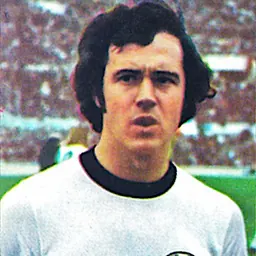
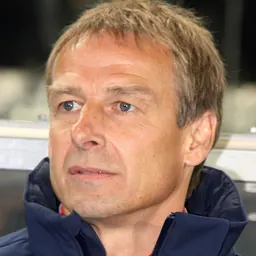
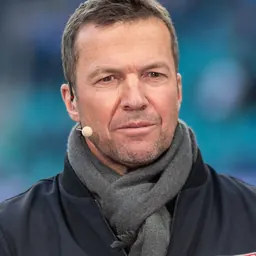
Fritz Walter was named an honorary captain of the German football squad in 1958. The other five are Uwe Seeler, Franz Beckenbauer, Lothar Matthäus, Bettina Wiegmann and Jürgen Klinsmann.
Walter died in Enkenbach-Alsenborn on 17 June 2002, aged 81. It was his dream to see the World Cup 2006 in "his" town Kaiserslautern as the town had not been selected in the smaller tournament of 1974, but it was denied with his death. But on the fourth anniversary of his death on 17 June 2006, the United States played Italy in Kaiserslautern and a minute of silence was observed in his memory. Today people may visit the "Fritz Walter Haus" in the town of Enkenbach-Alsenborn approx. 20 km east of Kaiserslautern (first exit from Kaiserslautern on Bundesautobahn 6 direction Mannheim).
In November 2003, to celebrate UEFA's 50th anniversary, the German Football Association (DFB) selected him as its Golden Player of the past 50 years (from 1954 to 2003).
During the eighties and nineties, there was another successful Bundesliga striker called "Fritz Walter", who mainly played for VfB Stuttgart. Although he had no relationship to the great Kaiserslautern captain, sports fans jokingly called him "Fritz Walter junior".
In 2005, the Fritz Walter Medal, a series of annual awards which were established in his honour, and which are given by the German Football Association to youth footballers in Germany, was first awarded.
Personal life
Walter's wife of five decades was Italia Walter (née Bortoluzzi; 1921–2001), a woman from Belluno, Italy.
It was popular knowledge in Germany that Walter played better the worse the weather was, which led to the term "Fritz-Walter-Wetter" (Fritz Walter weather) to describe rainy weather conditions. He had contracted malaria during the war, making it hard for him to play in hot weather; soggy, heavy ground also gave him an advantage due to his superior technique. The 1954 World Cup final was played in such conditions.
On 6 October 1956, Walter scored a spectacular goal in Leipzig in front of 100,000 East Germans during a friendly against Wismut Aue, when he hit the ball back-heel while diving forward.
Career statistics Club Source:
International Scores and results list Germany's goal tally first, score column indicates score after each Walter goal.
Honours
Club 1. FC Kaiserslautern German football championship: 1950–51, 1952–53
International West Germany FIFA World Cup: 1954 UEFA Jubilee Poll (2004): #68 Member of Germany's Sports Hall of Fame
Don’t just read it —
keep it.
Full-length biographies made to live with: read them, listen on the way to work, watch them tonight.
- E-book
- Audio
- Video
Instant download · yours to keep · every purchase keeps this site free
Important facts
People in Fritz Walter's life
Named in this biography and alive at the same time




Related people
Same field, nearest in time



Contemporaries
People whose lives overlapped Fritz Walter's






Frequently asked questions
Who was Fritz Walter?
German association football player (1920–2002)
When was Fritz Walter born?
Fritz Walter was born on 31 October 1920 in Kaiserslautern.
When did Fritz Walter die?
Fritz Walter died on 17 June 2002 in Enkenbach-Alsenborn.
What was Fritz Walter's occupation?
Fritz Walter was an association football player, association football coach and athlete.
What nationality was Fritz Walter?
Fritz Walter was German.
Sources & further reading
Cite this page
APA: Biography.guide. (2026). Fritz Walter. https://biography.guide/fritz-walter-association-football-player-1920/
MLA: "Fritz Walter." Biography.guide, https://biography.guide/fritz-walter-association-football-player-1920/.
Chicago: "Fritz Walter." Biography.guide. https://biography.guide/fritz-walter-association-football-player-1920/.
Data last updated: 2026-09-20 · Spot an error? Report a correction.
Page generated 2026-09-27 05:33 UTC