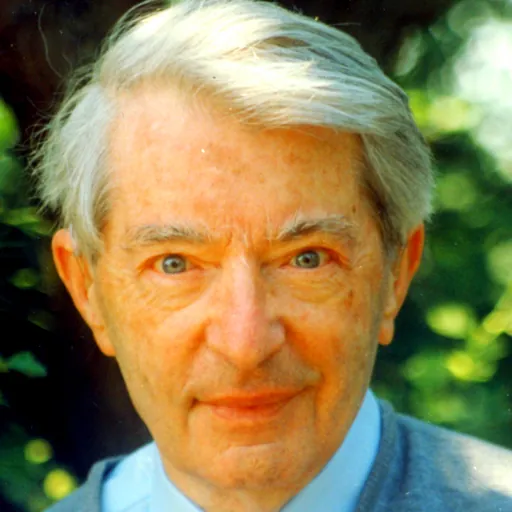
About Fritz Heine
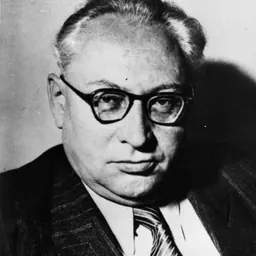
Lived 1904 – 2002 (aged 97). Fritz Heine was a German party official, publisher, resistance fighter, righteous Among the Nations and politician.
Fritz Heine (; 6 December 1904 – 5 May 2002) was a German politician (SPD). He also involved himself in political journalism and newspaper publishing.
Most of the twelve Nazi years he spent in political exile, based initially in Prague. Shortly after the fall of France and the establishment of a puppet state (Vichy France) in the southern half of the country he established himself in the "Hotel de Berne" in Marseille where, by the time he was himself forced to flee to Portugal in March 1941, it has been estimated that he rescued "at least 600 people" – refugees from Nazi Germany forced to flee for reasons of race and / or politics – by organising identity papers, visas, tickets and cash.
Life
Social democratic childhood Fritz Heine was born in Hanover, his parents' only child. His mother, always delicate, died from Consumption during the First World War when he was just twelve. who had, like his brothers, joined the Social Democratic Party ("Sozialdemokratische Partei Deutschlands" / SPD) in its early days. Socialist political ideas were therefore part of Fritz Heine's childhood. Initially he underwent a conventional Protestant upbringing, but when he was thirteen he rejected Protestantism. His father did not try to prevent this, although much later, looking back, Heine suggested that his act of teenage rebellion must have embarrassed his father whose work, as a builder of organs, necessarily involved churches and churchmen. By this time he had moved on from his work selling printing machines and was supporting himself as a journalist for a Hanover regional sports-newspaper. still, for historical reasons, till 1945 a multi-cultural city where German was widely spoken. They travelled armed, and each carrying several hundred Marks of party funds in cash, leaving the safe in the party headquarters empty except for worthless inflation-era bank notes. They believed they would be able to leave by other means: both were arrested and later killed by the Nazis. )
British occupation zone In February 1946 Heine was allowed to return permanently to the British occupation zone. The party hierarchy was initially informally established: in practice Erich Ollenhauer became deputy to the party leader, Kurt Schumacher, while Heine was put in charge of party publicity and propaganda, To the public Fritz Heine, as press chief, was the public face of the SPD. With Germany under occupation, relations with the occupying power were of crucial importance, and Heine, his English language skills honed by his years in London, became the "Contact man" with the United States Central Intelligence Agency (CIA) on behalf both of the SPD and of the German Trade Union Confederation ("Deutscher Gewerkschaftsbund" / DGB). Behind the scenes he was a powerful member of the party leadership team. Hans-Jochen Vogel, looking back many years later, asserted wryly that for many years almost nothing happened in the party if Fritz Heine declared himself opposed to it.
West Germany and national elections The Berlin siege of 1948/49 and the accompanying disagreements between western powers and the Soviet Union over the Currency reform of June 1948 forced western governments to recognise the reality of Germany's political (and increasingly social and economic) division: in May 1949 the British, United States and French occupation zones were merged and relaunched as the US-sponsored German Federal Republic (West Germany). After a decade and a half without democratic elections, the first West German general election was held in August 1949. Fritz Heine had been in London for the British general election in July 1945 and was confident that in Germany the SPD would be able to win free and fair national elections. His confidence was repeatedly confounded during the 1950s. The electoral battles were massively uneven for various reasons. The election plans of the SPD, drawn up under the leadership of Kurt Schumacher, had presupposed free elections across Germany, but with the launch of a separate West Germany a couple of months before the general election, the possibility of any free elections that included the Soviet occupation zone (after October 1949 relaunched as the German Democratic Republic) disappeared. Traditionally much of the SPD's strongest support had come from Berlin and various other major industrial cities in central Germany that were now excluded from the West German electoral process. Strongly pro-American, the canny former mayor of Cologne, Konrad Adenauer, was able to form a winning coalition of centrist and moderate right wing factions within and around the new Christian Democratic Union (CDU party). The Americans unambiguously backed the CDU, and much of the West German press was also uncompromisingly mistrustful of the SPD. The West German capital, Bonn, was close to Adenauer's political home base and natural CDU territory. The SPD was hugely outspent by the CDU in the election campaign, according to one source in a ratio of more than 100:1. Socialism, conflated in plenty of minds with the impact of the Soviet Union's foreign policy, was out of fashion in West Germany, while Fritz Heine was the hapless party election strategist who presided over electoral defeats for the SPD in 1949, 1953 and 1957. which was reflected in an annual income of around 140 Million Marks. With a wide palette of regionally based daily newspapers such as the Berlin Telegraf, the Hannoversche Presse and the Dortmund based Westfälische Rundschau, the party's newspaper division employed around 15,000 people. The party's media empire came to the 1950s with a great history that became more burdensome and less inflexible through the 1950s and the 1960s. Fritz Heine cannot be blamed for all the problems he inherited, and it is not clear that anyone else had the vision and ability to steer the business to a more nimble and durable future. But it is apparent that he was in charge during a period of decline from which, conspicuously, it failed to recover. He retired from the top job at "Konzentrations GmbH" in 1974, the year of his seventieth birthday.
Awards and honours (selection) Source:
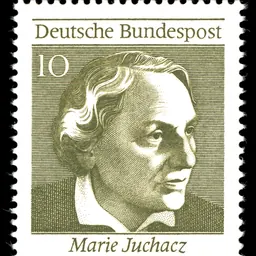
1971 Marie Juchacz Award 1986 Righteous Among the Nations 1990 Wenzel Jaksch prize 2002 Order of Merit of the Federal Republic of Germany with star
Personal Fritz Heine married Marianne Schreiber on 22 April 1961, by which time they had already been life partners for nearly twenty years, having met as political exiles employed in the "German section of the British Foreign Office" in London and lived together there during the Second World War. The marriage remained childless.
Don’t just read it —
keep it.
Full-length biographies made to live with: read them, listen on the way to work, watch them tonight.
- E-book
- Audio
- Video
Instant download · yours to keep · every purchase keeps this site free
Important facts
People in Fritz Heine's life
Named in this biography and alive at the same time



Related people
Same field, nearest in time



Contemporaries
People whose lives overlapped Fritz Heine's




Frequently asked questions
Who was Fritz Heine?
German publisher (1904–2002)
When was Fritz Heine born?
Fritz Heine was born on 6 December 1904 in Hanover.
When did Fritz Heine die?
Fritz Heine died on 5 May 2002 in Zülpich.
What was Fritz Heine's occupation?
Fritz Heine was a party official, publisher, resistance fighter, righteous Among the Nations and politician.
What nationality was Fritz Heine?
Fritz Heine was German.
Sources & further reading
Cite this page
APA: Biography.guide. (2026). Fritz Heine. https://biography.guide/fritz-heine/
MLA: "Fritz Heine." Biography.guide, https://biography.guide/fritz-heine/.
Chicago: "Fritz Heine." Biography.guide. https://biography.guide/fritz-heine/.
Data last updated: 2026-09-22 · Spot an error? Report a correction.
Portrait: Wikimedia Commons · author & licence
Page generated 2026-09-27 04:57 UTC