
Fritz Hartung
German historian of modern age
About Fritz Hartung
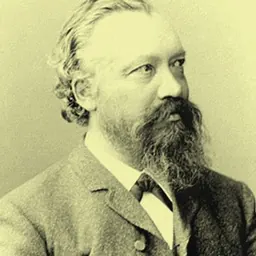
Lived 1883 – 1967 (aged 84). Fritz Hartung was a German historian of Modern Age, university teacher, jurist, historian and ministerialrat.
Fritz Hartung (12 January 1883 – 24 November 1967) was a political and constitutional historian of Germany.
Life Fritz Hartung was born in Saarmund, a short distance to the west of Potsdam. His father worked in the Prussian government service. However, he attended secondary school far to the west in Freiburg (1892–1900), and then in Berlin (1900–1901) where he passed his school final exams (Abitur). He went on to study history at Heidelberg and Berlin, with a particular focus on constitutional and legal history. After receiving his doctorate Hartung obtained a post as a research assistant at the Centre for Franconian History, In 1914 his book on constitutional history during the previous 4 centuries appeared. It became a much revisited core textbook: the seventh edition was published, posthumously, in 1969, and it enabled Hartung to be identified as one of the most important and influential German constitutional historians of the twentieth century. During the 1920s and 1930s further works on German history followed.
Régime change in 1933 was followed by a rapid transition to one-party dictatorship in Germany, Hartung was not one of those to oppose the abolition of parliamentary democracy, and there is no sign that in 1933 he foresaw Germany's future political direction of travel. He was one of many mainstream academics and professors who adapted themselves to the new political context without in any way becoming a cheer-leader for the toxic Nazi ideology. He produced a couple of books covering topics over which the Nazis obsessed: "Volk" ("Volk und Staat in der deutschen Geschichte", 1940) and "Reich" ("Das Reich und Europa", 1941). Between 1941 and 1943 he also published three written volumes from the academic papers left by Otto Hintze, who had died in 1940.
War ended in May 1945 with what remained of Germany divided into military zones of occupation. The Humboldt University where Hartung continued to work found itself in the eastern part of Berlin, administered as part of the Soviet occupation zone. Hartung himself tried hard to avoid choosing between the two versions of Germany emerging during the late 1940s, but after 1949, when the military occupation zones gave way to two newly created German states, sponsored respectively by the United States and the Soviet Union, it became harder to believe that the division of the two version of Germany was a temporary phenomenon, and during the 1950s the political divisions were increasingly matched by physical divisions: it became ever more difficult for Berliners to move between the two "halves" of the city. In 1948 Hartung "chose" to live in West Berlin, a decision that drew comment, both adulatory and critical, from fellow historians. He was urged to transfer his academic base to the newly founded Free University of Berlin by Friedrich Meinecke among others, but did not do so. He resigned from his functions at the German Academy of Sciences (in East Berlin) only in 1953, and remained a member of the academy till 1967. Meanwhile, having by the end of his life lived and worked under five completely different political regimes in successive versions of Germany, he reacted to the apparent return of democracy in West Germany with what one commentator later interpreted as "cautious optimism".
Don’t just read it —
keep it.
Full-length biographies made to live with: read them, listen on the way to work, watch them tonight.
- E-book
- Audio
- Video
Instant download · yours to keep · every purchase keeps this site free
Important facts
People in Fritz Hartung's life
Named in this biography and alive at the same time

Related people
Same field, nearest in time



Contemporaries
People whose lives overlapped Fritz Hartung's


Frequently asked questions
Who was Fritz Hartung?
German historian of modern age (1883-1967)
When was Fritz Hartung born?
Fritz Hartung was born on 12 January 1883 in Saarmund.
When did Fritz Hartung die?
Fritz Hartung died on 24 November 1967 in Berlin.
What was Fritz Hartung's occupation?
Fritz Hartung was a historian of Modern Age, university teacher, jurist, historian and ministerialrat.
What nationality was Fritz Hartung?
Fritz Hartung was German.
Sources & further reading
Cite this page
APA: Biography.guide. (2026). Fritz Hartung. https://biography.guide/fritz-hartung-historian-of-modern-age/
MLA: "Fritz Hartung." Biography.guide, https://biography.guide/fritz-hartung-historian-of-modern-age/.
Chicago: "Fritz Hartung." Biography.guide. https://biography.guide/fritz-hartung-historian-of-modern-age/.
Data last updated: 2026-09-20 · Spot an error? Report a correction.
Page generated 2026-09-27 05:19 UTC