
About Fritz Goldschmidt
Lived 1871 – 1940 (aged 68–69). Fritz Goldschmidt was an art collector.
Fritz Goldschmidt (19 December 1871 – 1944) was a German Jewish businessman and art collector, plundered and murdered in the Holocaust.
Life until 1933 Fritz Jonah Goldschmidt was born on 19 December 1871 in Breslau, Silesia, Germany. He co-founded the Koppenheim & Goldschmidt grain company in 1898 together Meyer Koppenheim (1866-1940). Goldschmidt was a commodities broker, an arbitration judge and temporary president of the Breslau Product Exchange. The Goldschmidts were important members of Wroclaw society, financing a Jewish hospital, raising funds for a local Jewish school and founding a Jewish museum together with other local Jewish art collectors. They collected art, and displayed many German modernists in their villa on Kommendeweg and often provided loans for exhibitions throughout Germany.
Goldschmidt married Thea Rivka Cohn (1888-1944), an art lover who, together with her husband, appreciated and collected Max Liebermann, Max Slevogt, Lovis Corinth, Wilhelm Trübner, Hans Purmann and of sculptures by August Gaul, as well as works by French artists: Lucien Andrion, Maurice de Vlamick, Eduard Vuillard and Maximilien Luce and. They also collected drawings and engravings. Many artworks had been purchased by the Goldschmidts in the Berliner Paul Cassirer Salon. The Goldschmidts loaned works to exhibitions, like the 1920 Silesian Association of Artists (Künstlerbund Schlesien).
Nazi era When Adolf Hitler came to power in Germany in 1933, the Goldschmidts were persecuted under Nazi anti-Jewish laws. Goldschmidt was forced to resign from his position as president of Schlesische Getreide-Kreditbank AG. In accordance with the Nazi race laws, his businesses were "aryanized", that is forceably transferred to non-Jewish owners.. The Goldschmidts' three sons were expelled from Germany and fled to safety in the United States, the United Kingdom and then in British-controlled Palestine.
Postwar In 2015 surviving family members made a restitution claim for a painting that Fritz and Thea Goldschmidt had owned prior to the Nazi regime, Tyrolean Woman with Cat” (“Tirolerin mit Katze”) by Lovis Corinth The painting appeared at the Im Kinsky auction house in Vienna on sale from an anonymous owner. The family, which was trying to locate the looted painting, asked Kinsky for information about the buyer, but the auction house refused. The family's effort was publicized by the Monuments Men Foundation which printed a card with information about the painting. is one of ten art objects looted from the Goldschmidts that is currently listed on the German Lost Art Foundation's Lostart database.
Don’t just read it —
keep it.
Full-length biographies made to live with: read them, listen on the way to work, watch them tonight.
- E-book
- Audio
- Video
Instant download · yours to keep · every purchase keeps this site free
Important facts
People in Fritz Goldschmidt's life
Named in this biography and alive at the same time

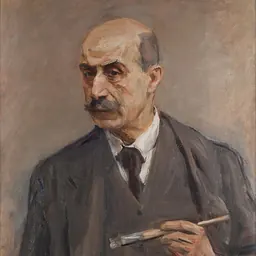
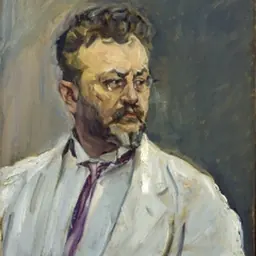




Related people
Same field, nearest in time


Contemporaries
People whose lives overlapped Fritz Goldschmidt's



Frequently asked questions
Who was Fritz Goldschmidt?
Art collector and holocaust victim (1871–1940s)
When was Fritz Goldschmidt born?
Fritz Goldschmidt was born on 19 December 1871.
When did Fritz Goldschmidt die?
Fritz Goldschmidt died in 1940.
What was Fritz Goldschmidt's occupation?
Fritz Goldschmidt was an art collector.
Sources & further reading
· Wikipedia: Fritz Goldschmidt
Cite this page
APA: Biography.guide. (2026). Fritz Goldschmidt. https://biography.guide/fritz-goldschmidt/
MLA: "Fritz Goldschmidt." Biography.guide, https://biography.guide/fritz-goldschmidt/.
Chicago: "Fritz Goldschmidt." Biography.guide. https://biography.guide/fritz-goldschmidt/.
Data last updated: 2026-09-20 · Spot an error? Report a correction.
Page generated 2026-09-27 04:58 UTC