
About Fritz Brase
Lived 1875 – 1940 (aged 65). Fritz Brase was a German composer, chapelmaster and musician.
Friedrich Wilhelm Anton Brase, known as Fritz Brase (; 4 May 1875 – 1 December 1940), was a German military bandmaster, conductor, and composer who was mainly active in Dublin, Ireland, as leader of the first Army School of Music in the Irish Free State.
Life Brase was the son of a miller born in Egestorf near Hanover, Germany. Brase studied at the Conservatory of Music at Leipzig where his teachers included Carl Reinecke, Hans Sitt, and Salomon Jadassohn. In 1923 he emigrated to Ireland, The family moved to accommodation in Beggars Bush Barracks and later bought their own house in the Dublin suburb of Sandymount.
In 1940, Brase died the day after he retired and was interred in Mount Jerome Cemetery, Dublin, when the No. 1 Irish Army Band played. His daughter Mona, who died on 2 November 2014, is also buried in Mount Jerome Cemetery.
A street in Münster is named Braseweg in his memory. In 1911, he was appointed conductor of the 1st (Emperor Alexander) Guards Grenadiers, "one of the most prestigious positions in the world of German military music". He also directed the Military Music School in Dublin. Having failed to find a potential Frenchman and wanting to avoid a British appointee for the army's school of music, their search for an "expert military musician" chose the German for the post.
Within just seven months of arriving in Ireland, Brase had been so productive that the first public performance of Brase's new army band took place in Dublin's Theatre Royal that October and by the following December had recorded its first two records with two more being issued in January 1925.
Until 1928, he created four military bands in cooperation with a compatriot who had emigrated with him, Captain Friedrich Christian Sauerzweig, with Brase focusing on the "Army No. 1 Band". With his band, Brase toured Ireland extensively between the mid-1920s and early 1930s, playing at many festive occasions, both indoors and in public spaces. He also initialised a regular series of band concerts for primary schools in Dublin which, over the years, were attended by thousands of Irish school children. allowing Adolf Mahr, another German immigree and director of the National Museum of Ireland, to assume the position. Bene again came to Dublin in 1935 to attend Brase's 60th birthday party in the family home in Sandymount.
Brase was an active participant in the elaborate events, such as Christmas parties, held by the small German colony that took place in Dublin's grand hotels, the Royal Hibernian Hotel and Gresham Hotels. At the 1937 event, Brase played piano to accompany the children's performance for the adults, as reported in both the Irish Independent and Irish Times. The latter report was likely written by its editor Robert Smylie, a German speaker, also an attendee. Irish March No. 3 (1923) Irish Fantasia No. 1 (1923; Dublin: McCullough [n. d.]) National March (1924) Irish Fantasia No. 2 (1924) Irish Fantasia No. 3 (1924) Irish Fantasia No. 4 (1925) Funeral March (1926) Irish Fantasia No. 5 (1927) Irish Fantasia No. 6 (1930) Der Gott, der Eisen wachsen liess (1933) Flieger-Escapaden (1935)
Orchestra Heimatlos (1902) Dramatische Ouvertüre (1902) Symphony in D major (1905) Westfalen (1912) Menuett, for salon orchestra (1921, arrangement of piano work) Paraná, for salon orchestra (1926) Irlandia, suite (1932) Episoden-Suite (1937) Irish Dance No. 1: The Londonderry Clog (published 1938) Irish Dance No. 2: The Frost is All Over (published 1938) Irische Lustspiel-Ouvertüre (1939; Berlin: Musikverlag Sanssouci, 1959; reprint 1982) Donegal. Rhapsody for orchestra No. 2 (1939; reprint Berlin: Musikverlag Sanssouci, 1995)
Piano Strebe vorwärts, Op. 1 Mazurka brilliante, Op. 2 (1894) Mazurka brilliante, Op. 4 (1895) Waltz, Op. 7 (1896) Capriccio, Op. 12 No. l (1898) Die Garde an der Somme (c.1915–16) Joska (1920) Menuett (1921) Pierette (1921) Waldmärchen (1921) Orchideen (1922) Herbst (1923) Little Moira, serenade (1925) Horse Show March (1926) Bi-centenary March 1731–1931 (London: Boosey and Hawkes, 1931), online Helden im Volksmund. Eine deutsche Rhapsodie (1933)
Other Several songs for voice and piano Some chamber music, such as Nymphentanz, Op. 9 (for violin and piano, 1898)
Selected recordings
Maientraum Kapelle des Kaiser Alexander Garde Grenadier-Regt. No. 1, Berlin, written and conducted by Brase. Fruhlingszauber Kapelle des Kaiser Alexander Garde Grenadier-Regt. No. 1, Berlin, conductor Brase Große Zeit, Neue Zeit 1912 Der Gott, der Eisen wachsen ließ Himmelstürmer Luftwaffe march General Mulcahy March Irish Fantasia No.1 1924 Serenade and Minuet No. 1 Army Band, Irish Free State, 1925 Irish National March Pathé News video Numerous orchestral arrangements of Irish folk music
Don’t just read it —
keep it.
Full-length biographies made to live with: read them, listen on the way to work, watch them tonight.
- E-book
- Audio
- Video
Instant download · yours to keep · every purchase keeps this site free
Important facts
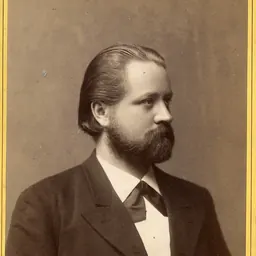
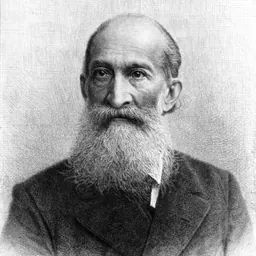
People in Fritz Brase's life
Named in this biography and alive at the same time



Related people
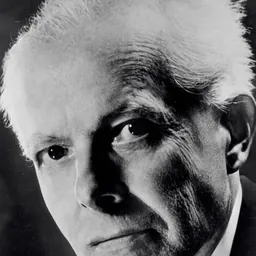
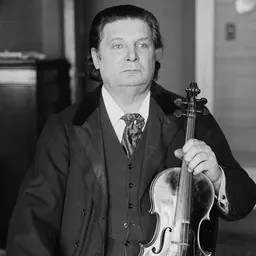
Same field, nearest in time


Contemporaries
People whose lives overlapped Fritz Brase's

Frequently asked questions
Who was Fritz Brase?
German composer
When was Fritz Brase born?
Fritz Brase was born on 4 May 1875 in Egestorf.
When did Fritz Brase die?
Fritz Brase died on 1 December 1940 in Dublin.
What was Fritz Brase's occupation?
Fritz Brase was a composer, chapelmaster and musician.
What nationality was Fritz Brase?
Fritz Brase was German.
Sources & further reading
Cite this page
APA: Biography.guide. (2026). Fritz Brase. https://biography.guide/fritz-brase/
MLA: "Fritz Brase." Biography.guide, https://biography.guide/fritz-brase/.
Chicago: "Fritz Brase." Biography.guide. https://biography.guide/fritz-brase/.
Data last updated: 2026-09-22 · Spot an error? Report a correction.
Page generated 2026-09-27 05:17 UTC