
About Frits Staal
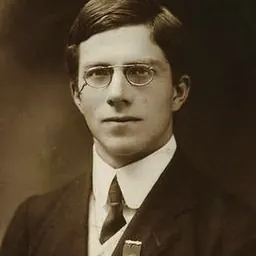
Lived 1930 – 2012 (aged 81). Frits Staal was a Dutch philosopher and university teacher.
Johan Frederik "Frits" Staal (3 November 1930 – 19 February 2012) was the department founder and Emeritus Professor of Philosophy and South/Southeast Asian Studies at the University of California, Berkeley. Staal specialized in the study of Vedic ritual and mantras, and the scientific exploration of ritual and mysticism. He was also a scholar of Greek and Indian logic and philosophy and Sanskrit grammar.
Biography Staal was born in Amsterdam, the son of the architect Jan Frederik Staal. In 1954, Staal earned his undergraduate degree from the University of Amsterdam focused in mathematics, physics, and philosophy. In 1957, he earned his doctorate from the University of Madras focused on Indian philosophy and Sanskrit. After earning his doctorate, he served as a lecturer in Sanskrit at the School of Oriental and African Studies, University of London from 1958 to 1962. From 1961 to 1962, he searched as an Assistant and Associate Professor of Indian Philosophy at the University of Pennsylvania.
Staal retired to Thailand, and died at his home in Chiangmai, aged 81, on February 19, 2012. The early methods allowed the construction of discrete, potentially infinite generative systems. Remarkably, these early linguistic systems were codified orally, though writing was then used to develop them in some way. The formal basis for Panini's methods involved the use of "auxiliary" markers, rediscovered in the 1930s by the logician Emil Post. Post's rewrite systems are now a standard approach for the description of computer languages.
In 1975, a consortium of scholars, led by Staal, documented the twelve-day performance, in Panjal village, Kerala, of the Vedic Agnicayana ritual, which is available as a documentary titled Altar of Fire. It was thought possible that this would be the last performance of the ritual, but it has since been revived.
In Rules without Meaning Staal controversially suggested that mantras "predate language in the development of man in a chronological sense". He pointed out that there is evidence that ritual existed before language, and argued that syntax was influenced by ritual.
His more recent study was concerned with Greek and Vedic geometry. He drew a parallel between geometry and linguistics, writing that, "Pāṇini is the Indian Euclid." Staal's point is that Pāṇini showed how to extend spoken Sanskrit to a formal metalanguage for the language itself.
Don’t just read it —
keep it.
Full-length biographies made to live with: read them, listen on the way to work, watch them tonight.
- E-book
- Audio
- Video
Instant download · yours to keep · every purchase keeps this site free
Important facts
People in Frits Staal's life
Named in this biography and alive at the same time

Related people
Same field, nearest in time




Contemporaries
People whose lives overlapped Frits Staal's


Frequently asked questions
Who was Frits Staal?
Dutch indologist (1930–2012)
When was Frits Staal born?
Frits Staal was born on 3 November 1930 in Amsterdam.
When did Frits Staal die?
Frits Staal died on 19 February 2012 in Chiang Mai.
What was Frits Staal's occupation?
Frits Staal was a philosopher and university teacher.
What nationality was Frits Staal?
Frits Staal was Dutch.
Sources & further reading
Cite this page
APA: Biography.guide. (2026). Frits Staal. https://biography.guide/frits-staal/
MLA: "Frits Staal." Biography.guide, https://biography.guide/frits-staal/.
Chicago: "Frits Staal." Biography.guide. https://biography.guide/frits-staal/.
Data last updated: 2026-09-20 · Spot an error? Report a correction.
Page generated 2026-09-27 05:09 UTC