
About Friedrich Wilhelm von Kleist
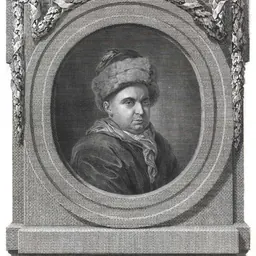
Lived 1724 – 1767 (aged 42). Friedrich Wilhelm von Kleist was a German military officer.
Friedrich Wilhelm Gottfried Arnd von Kleist (29 August 1724 – 28 August 1767) and appointed his youngest brother, Major General Hans Reimar von Kleist (1736–1806), as his heir. Many members of the Stavenow branch of the family, to which Kleist belonged, figured prominently in the military activities of Frederick William I and his son, Frederick II. The family had two major land owners, Andreas Joachim von Kleist and his son, Joachim Friedrich, who were both officers in the Prussian army, as were another eight of Andreas Joachim's 10 sons. In total, 58 officers with the name Kleist served in the Seven Years' War; twenty-three died.
Military career Like many Prussian youngsters, Kleist's military career emulated that of other junker sons. Many junkers owned immense estates, especially in the north-eastern part of Prussia, specifically, the provinces of Brandenburg, Pomerania, Silesia, West Prussia, East Prussia and Posen. The local government sent lists of young men aged between 12 and 18 to Berlin and the youngsters received orders to proceed to cadet academies (Kadettenhaus) or military academies in Berlin. Such service had been required since the ascension of Frederick William I, and firmly established the participation of the landed aristocracy in the Prussian military.
Kleist began his 20-year military career at the gendarmes in Berlin, on garrison duty. In 1756, at the onset of the Seven Years' War, Frederick II transferred him to Hussar Regiment Szekely.
In mid-April 1757, the regiment formed part of the army that invaded Bohemia. On 6 May, although in the region, the regiment did not take part to the Battle of Prague. Instead, it was deployed on the left bank of the Moldau near the Weissenberg as part of Field Marshal James Keith's corps. On 18 June, five squadrons of the regiment took part to the Battle of Kolin. They were deployed in the cavalry vanguard on the extreme left under General von Zieten. At the end of August, the regiment was part of the small Prussian army assembled at Dresden by Frederick II to head towards Thuringia and to offer battle to the Franco-Imperial army invading Saxony. On 14 September, when Frederick was forced to divide his army to contain the French in the region of Magdeburg and to secure the Prussian magazines in the area of Torgau, the regiment remained with Frederick at Erfurt to observe the Franco-Imperial army. On 15 September, the regiment was part of Seydlitz's force which occupied Gotha. He received the Order Pour le Mérite.
In early 1761, Kleist was appointed to lead a Freikorps, or an independent corps, with which he achieved some of his greatest successes. The Freikorps consisted of 22 squadrons of hussars and dragoons, including the so-called "Croatian Battalion", and a Fußjägerkorps (comparable to light infantry). With his Freikorps, he was dispatched again toward Erfurt, this time arriving on 24 February. The city's gates were closed and the citizens were on alert. Kleist appeared with 200 hussars, demanding entrance; another battalion arrived a short time later. Capitulation terms were arranged and the city paid 150,000 thalers to get rid of the invaders. Kleist took the money and pressed toward Gotha, then to Hunfeld and then to Fulda. The punitive and profitable expedition ended soon, though. As the Austrians began to consolidate their forces, the Prussians retired out of range. In 1762, Kleist was promoted to major general.
Kleist took full advantage of this order. He acquired hostages and shelled towns: Bamberg, Würzburg and Erlangen fell to him. Captives and contributions were sent to Leipzig, where Frederick was headquartered. In late November, Kleist and his hussars were chased out of Imperial territories, back to Leipzig.
Last years and death Kleist spent the remaining years of his life between Berlin and his estate near Liegnitz, where he died on 28 August 1768, one day short of his 43rd birthday. Frederick memorialized Kleist with a plaque on the obelisk in his castle grounds of Rheinsberg; in 1851, the King's great-great nephew, Frederick William III memorialized Kleist on the base of the Equestrian statue of Frederick the Great in Berlin, next to the cavalry figure of Duke Ferdinand von Braunschweig.
Don’t just read it —
keep it.
Full-length biographies made to live with: read them, listen on the way to work, watch them tonight.
- E-book
- Audio
- Video
Instant download · yours to keep · every purchase keeps this site free
Important facts
Related people
Same field, nearest in time


Contemporaries
People whose lives overlapped Friedrich Wilhelm von Kleist's



Frequently asked questions
Who was Friedrich Wilhelm von Kleist?
German officer
When was Friedrich Wilhelm von Kleist born?
Friedrich Wilhelm von Kleist was born on 29 August 1724 in Potsdam.
When did Friedrich Wilhelm von Kleist die?
Friedrich Wilhelm von Kleist died on 28 August 1767 in Legnica.
What was Friedrich Wilhelm von Kleist's occupation?
Friedrich Wilhelm von Kleist was a military officer.
What nationality was Friedrich Wilhelm von Kleist?
Friedrich Wilhelm von Kleist was German.
Sources & further reading
· Wikipedia: Friedrich Wilhelm von Kleist
· DBpedia: Frederick William von Kleist
Cite this page
APA: Biography.guide. (2026). Friedrich Wilhelm von Kleist. https://biography.guide/friedrich-wilhelm-von-kleist/
MLA: "Friedrich Wilhelm von Kleist." Biography.guide, https://biography.guide/friedrich-wilhelm-von-kleist/.
Chicago: "Friedrich Wilhelm von Kleist." Biography.guide. https://biography.guide/friedrich-wilhelm-von-kleist/.
Data last updated: 2026-09-20 · Spot an error? Report a correction.
Page generated 2026-09-27 05:22 UTC