
About Friedrich Olbricht
Lived 1888 – 1944 (aged 55). Friedrich Olbricht was a military personnel, military officer and resistance fighter.
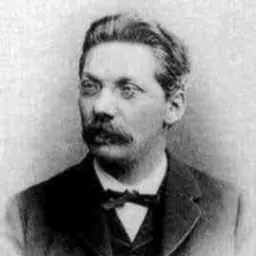
Friedrich Olbricht (4 October 1888 – 21 July 1944) was a German general during World War II. He is known for being one of the plotters involved in the 20 July Plot, an attempt to assassinate Adolf Hitler in 1944.
Born in Leisnig, Olbricht was a senior staff officer, with the rank of infantry general. He was secretly in contact with most of the leaders of the resistance. They briefed him on their various plots and he placed sympathetic officers in key positions. Olbricht quietly encouraged field commanders to support the resistance. By late 1943, his office was the centre of Resistance plotting, under Claus von Stauffenberg. Had the 20 July plot to assassinate Adolf Hitler been successful, Olbricht was positioned to assume the role of minister of war in a post-Nazi regime.
Early life Friedrich Olbricht was born on 4 October 1888 in Leisnig, Saxony, to Richard Olbricht, a mathematics professor and director of the Realschule (secondary school) in Bautzen.
Career Olbricht successfully passed the Abitur (university preparatory school exit examination) in 1907, subsequently accepting a commission as a Fähnrich (ensign) with Infantry Regiment 106 in Leipzig. He fought in World War I, was promoted to captain and chose to stay in the Treaty of Versailles-decimated military (the Reichswehr) after the war. The tale had been concocted as part of Hitler's plan to gain control of the armed forces—which he did.
On the day of the attempted coup, 20 July 1944, Olbricht and Colonel Albrecht Mertz von Quirnheim initiated Operation Valkyrie by mobilizing the Replacement Army. It eventually became clear the briefcase bomb had failed to kill Hitler however, so the plan to seize key sites in Berlin using units from the reserve army, began to falter. Many consider one of the factors which prevented the coup, was the failure of troops to gain control of communications into and out of Berlin. Hitler and his commanders in the Wolfsschanze were able to broadcast a speech after the coup, which led to the quick demise of the coup as a whole. As a result, the Nazi leadership was able to regain control, using its own loyal troops, within a few hours.
Arrest and execution
At 21:00, Olbricht was arrested at his headquarters in the Bendlerblock by soldiers from the Berlin garrison. Later that evening, Colonel-General Friedrich Fromm held a hastily arranged court martial, supposedly in an attempt to protect himself from being exposed as a silent conspirator. Olbricht, Quirnheim, Stauffenberg, and his aide Werner von Haeften were then taken outside to the courtyard and executed by firing squad, against Hitler's orders to take the would-be assassins alive (those who were captured alive received more painful and prolonged means of execution). Olbricht was the first of the four to be shot.
Personal Life He was married to Eva Koeppel, with whom he had a daughter and a son. His daughter Rosemarie Olbricht had married a man named Friedrich Georgi, who also served in the military.
Awards
Knight's Cross of the Iron Cross on 27 October 1939 as Generalleutnant and commander of 24. Infanterie-Division Grand Cross of the Order of the White Rose of Finland on 22 December 1941 as General der Infanterie
In popular culture Olbricht appears in dramatisations of the July 1944 plot, being played by Rolf Hoppe in the third Liberation film Direction of the Main Blow (1970), Wolfgang Büttner in The Plot to Assassinate Hitler (1955), Erik Frey in Jackboot Mutiny (1955) Michael Byrne in The Plot to Kill Hitler (1990), Rainer Bock in Stauffenberg (2004) and Bill Nighy in Valkyrie (2008).
Don’t just read it —
keep it.
Full-length biographies made to live with: read them, listen on the way to work, watch them tonight.
- E-book
- Audio
- Video
Instant download · yours to keep · every purchase keeps this site free
Important facts
People in Friedrich Olbricht's life
Named in this biography and alive at the same time





Related people
Same field, nearest in time



Contemporaries
People whose lives overlapped Friedrich Olbricht's
Frequently asked questions
Who was Friedrich Olbricht?
German general (1888–1944)
When was Friedrich Olbricht born?
Friedrich Olbricht was born on 4 October 1888 in Leisnig.
When did Friedrich Olbricht die?
Friedrich Olbricht died on 21 July 1944 in Berlin.
What was Friedrich Olbricht's occupation?
Friedrich Olbricht was a military personnel, military officer and resistance fighter.
What nationality was Friedrich Olbricht?
Friedrich Olbricht's recorded nationality: Nazi Germany.
Sources & further reading
· Wikipedia: Friedrich Olbricht
Cite this page
APA: Biography.guide. (2026). Friedrich Olbricht. https://biography.guide/friedrich-olbricht/
MLA: "Friedrich Olbricht." Biography.guide, https://biography.guide/friedrich-olbricht/.
Chicago: "Friedrich Olbricht." Biography.guide. https://biography.guide/friedrich-olbricht/.
Data last updated: 2026-09-26 · Spot an error? Report a correction.
Page generated 2026-09-27 05:16 UTC