
About Friedrich Kottler
Lived 1886 – 1965 (aged 78). Friedrich Kottler was an Austrian physicist and university teacher.
Friedrich Kottler (December 10, 1886 – May 11, 1965) was an Austrian theoretical physicist. He was a Privatdozent before he got a professorship in 1923 at the University of Vienna.
Life In 1938, after the Anschluss, he lost his professorship due to his Jewish ancestry. With the help of Albert Einstein and Wolfgang Pauli, he immigrated to America from his hometown of Vienna, Austria, settling in Rochester, New York, where he worked at the Eastman Kodak Research Laboratory. He died in Rochester, New York in 1965. Besides optics, Kottler's professional pursuits focused on the theory of relativity.
Contributions to relativity In (1912), he presented a general covariant formulation of Maxwell's equations, based on the absolute differential calculus, which is also valid within Albert Einstein's General Relativity, before that theory was even developed. In relation to this, Einstein & Marcel Grossmann gave credit to Kottler in 1913. In (1912, 1914a, 1914b, 1916a, 1916b, 1918, 1921) Kottler worked on the description of accelerations and rotations in flat Minkowski space, using four-dimensional Frenet-Serret formulas and the corresponding orthonormal tetrads, and formulated the proper reference frames for worldlines of constant curvatures given by Gustav Herglotz in 1909, in particular for hyperbolic motion (Kottler-Møller metric In (1918) he formulated the Kottler metric or Kottler spacetime (which has been described as "the only spherically symmetric solution of the Einstein vacuum field equations with a cosmological constant" and whose special cases include the de Sitter-Schwarzschild metric), as well as the Kottler-Whittaker metric for a homogeneous gravitational field in flat spacetime. In (1922a, 1922b) he argued that one can formulate Maxwell's equations and Newton's law of gravitation independently of any metric. In (1922c) he published the article "Gravitation und Relativitätstheorie" in Band 6 of Klein's encyclopedia. In (1924a, 1924b) he analyzed the history of special relativity, focusing on the contributions of Augustin-Jean Fresnel, Hendrik Lorentz, Henri Poincaré and Einstein.
Published works 1912: Über die Raumzeitlinien der Minkowski'schen Welt, Wiener Sitzungsberichte 2a, 121: 1659–1759. (English Wikisource translation: On the spacetime lines of a Minkowski world) 1914a: Relativitätsprinzip und beschleunigte Bewegung, Annalen der Physik 349 (13), 701-748 1914b: Fallende Bezugssysteme vom Standpunkte des Relativitätsprinzips, Annalen der Physik 349 (13), 701-748 1916a: Beschleunigungsrelative Bewegungen und die konforme Gruppe der Minkowski'schen Welt, Wiener Sitzungsberichte 2a, 125, 899-919 1916b: Über Einsteins Äquivalenzhypothese und die Gravitation, Annalen der Physik 355 (16), 955-972 1918: Über die physikalischen Grundlagen der Einsteinschen Relativitätstheorie, Annalen der Physik, 4. Folge, Bd.60, S.401-461 1921: Rotierende Bezugssysteme in einer Minkowskischen Welt, Physikalische Zeitschrift 22, 274-280 & 480-484 1922a: Newtonsches Gesetz und Metrik, Wiener Sitzungsberichte 2a, 131: 1-14. (English translation by David Delphenich: Newton's laws and metrics) 1922b: Maxwellsche Gleichungen und Metrik, Wiener Sitzungsberichte 2a, 131: 119-146 (English translation by David Delphenich: Maxwell’s equations and metrics) 1922c, Gravitation und Relativitätstheorie, Encyklopädie der mathematischen Wissenschaften mit Einschluss ihrer Anwendungen, 6.2.2, 159-237 1923, Zur Theorie der Beugung an schwarzen Schirmen (On the theory of diffraction at black screens), Annalen der Physik, 375 (6): 405–56. 1924a, Considerations de critique historique sur la theorie de la relativite. Partie 1: De Fresnel à Lorentz, Scientia, 36, pp. 231–242 1924b, Considerations de critique historique sur la theorie de la relativite. Partie 2: Henri Poincaré et Albert Einstein, Scientia, 36, pp. 301–316
Don’t just read it —
keep it.
Full-length biographies made to live with: read them, listen on the way to work, watch them tonight.
- E-book
- Audio
- Video
Instant download · yours to keep · every purchase keeps this site free
Important facts
People in Friedrich Kottler's life
Named in this biography and alive at the same time
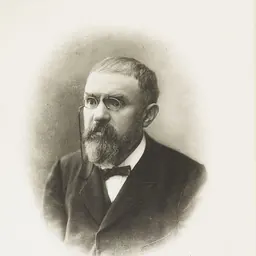
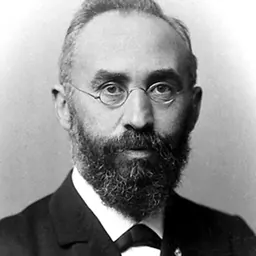

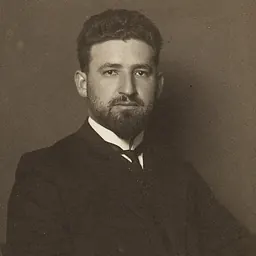
Related people
Same field, nearest in time


Contemporaries
People whose lives overlapped Friedrich Kottler's



Frequently asked questions
Who was Friedrich Kottler?
Austrian physicist (1886–1965)
When was Friedrich Kottler born?
Friedrich Kottler was born on 10 December 1886 in Vienna.
When did Friedrich Kottler die?
Friedrich Kottler died on 11 May 1965 in Rochester.
What was Friedrich Kottler's occupation?
Friedrich Kottler was a physicist and university teacher.
What nationality was Friedrich Kottler?
Friedrich Kottler was Austrian.
Sources & further reading
· Wikipedia: Friedrich Kottler
Cite this page
APA: Biography.guide. (2026). Friedrich Kottler. https://biography.guide/friedrich-kottler/
MLA: "Friedrich Kottler." Biography.guide, https://biography.guide/friedrich-kottler/.
Chicago: "Friedrich Kottler." Biography.guide. https://biography.guide/friedrich-kottler/.
Data last updated: 2026-09-20 · Spot an error? Report a correction.
Page generated 2026-09-27 05:15 UTC