
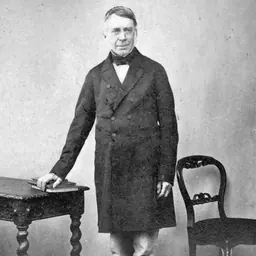
Friedrich Hermann Otto Finsch
German explorer and biologist
About Friedrich Hermann Otto Finsch
Lived 1839 – 1917 (aged 77). Friedrich Hermann Otto Finsch was a German biologist, explorer, ornithologist, merchant, ethnologist and naturalist.
Friedrich Hermann Otto Finsch (8 August 1839, Warmbrunn – 31 January 1917, Braunschweig) was a German ethnographer, naturalist and colonial explorer. He is known for a two-volume monograph on the parrots of the world which earned him a doctorate. He also wrote on the people of New Guinea and was involved in plans for German colonization in Southeast Asia. Several species of bird (such as Oenanthe finschii, Iole finschii, Psittacula finschii) are named after him as also the town of Finschhafen in Morobe Province, Papua New Guinea and a crater on the Moon.
Biography
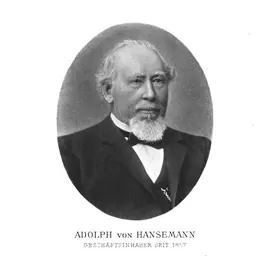
Finsch was born at Bad Warmbrunn in Silesia to Mortiz Finsch and Mathilde Leder. His father was in the glass trade and he too trained as a glass painter. An interest in birds led him to use his artistic skills for the purpose. Finsch went to Budapest in 1857 and studied at the Royal Hungarian University, earning money by preparing natural history specimens. He then spent two years in Russe, Bulgaria on an invitation from the Austrian Consul and gave private tutoring in German while exploring the birdlife of the region. He published his first paper in the Journal fur Ornithologie on the birds of Bulgaria. This experience helped him obtain a curatorial position at the Rijksmuseum van Natuurlijke Historie in Leiden (1862–1865) assisting Herman Schlegel. In 1864 he returned to Germany on the suggestion of Gustav Hartlaub to become curator of the museum in Bremen and became its director in 1876. After publishing the two volume monographs on the parrots of the world, Die Papageien, monographisch bearbeitet (1867–68), he obtained an honorary doctorate from the Friedrich Wilhelms University in Bonn. Apart from ornithology he also took an interest in ethnology. In 1876 he accompanied the zoologist Alfred Brehm on an expedition to Turkestan and northwest China. He returned to Germany in 1882 and began to promote the creation of German colonies in the Pacific along with the South Sea Plotters, an influential group led by a banker Adolph von Hansemann. In 1884 he returned aboard the steamer Samoa to New Guinea as Bismarck's Imperial Commissioner to explore potential harbours under the guise of scientists and negotiated for the north-eastern portion of that island, together with New Britain and New Ireland, to become a German protectorate.
Several species of birds bear his name, including the lilac-crowned parrot (Amazona finschi), Finsch's wheatear (Oenanthe finschii), Finsch's bulbul (Iole finschii), and the grey-headed parakeet (Psittacula finschii). A species of monitor lizard, Varanus finschi, is named after him, because he collected what would become the holotype for this species. The crater Finsch on the Moon is also named in his honor.
In 2008, following international treaties, some of the human remains that he had collected from Cape York and the Torres Straits that were held in the Charité Medical University in Berlin were repatriated. Additional remains have also been repatriated.
Published works Catalog der Ausstellung ethnographischer und naturwissenschaftlicher Sammlungen (Bremen: Diercksen und Wichlein, 1877). Anthropologische Ergebnisse einer Reise in der Südsee und dem malayischen Archipel in den Jahren 1879–1882 (Berlin: A. Asher & Co., 1884). Otto Finsch, Masks of Faces of Races of Men from the South Sea Islands and the Malay Archipelago, taken from Living Originals in the Years 1879–82 (Rochester, NY: Ward's Natural Sciences Establishment, 1888). Ethnologische Erfahrungen und Belegstücke aus der Südsee: Beschreibender Katalog einer Sammlung im K.K. naturhistorischen Hofmuseum in Wien (Wien: A. Holder, 1893). Die Papageien / monographisch bearbeitet von Otto Finsch Leiden: Brill, 1867–68. with Gustav Hartlaub, "Die Vögel der Palau-Gruppe. Über neue und weniger gekannte Vögel von den Viti-, Samoa- und Carolinen-Inseln." Journal des Museum Godeffroy, Heft 8, 1875 and Heft 12, 1876.
Don’t just read it —
keep it.
Full-length biographies made to live with: read them, listen on the way to work, watch them tonight.
- E-book
- Audio
- Video
Instant download · yours to keep · every purchase keeps this site free
Important facts
People in Friedrich Hermann Otto Finsch's life
Named in this biography and alive at the same time
Related people
Same field, nearest in time


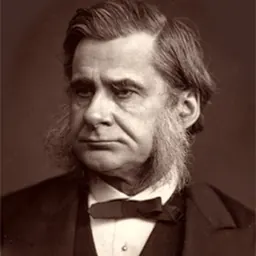
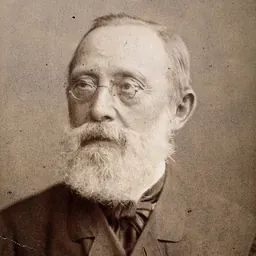
Contemporaries
People whose lives overlapped Friedrich Hermann Otto Finsch's

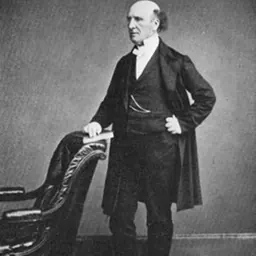
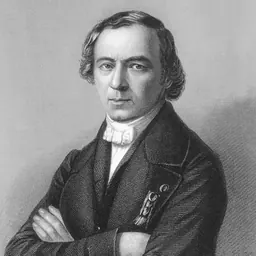

Frequently asked questions
Who was Friedrich Hermann Otto Finsch?
German explorer and biologist (1839-1917)
When was Friedrich Hermann Otto Finsch born?
Friedrich Hermann Otto Finsch was born on 8 August 1839 in Cieplice Śląskie-Zdrój.
When did Friedrich Hermann Otto Finsch die?
Friedrich Hermann Otto Finsch died on 31 January 1917 in Brunswick.
What was Friedrich Hermann Otto Finsch's occupation?
Friedrich Hermann Otto Finsch was a biologist, explorer, ornithologist, merchant, ethnologist and naturalist.
What nationality was Friedrich Hermann Otto Finsch?
Friedrich Hermann Otto Finsch was German.
Sources & further reading
· Wikipedia: Friedrich Hermann Otto Finsch
Cite this page
APA: Biography.guide. (2026). Friedrich Hermann Otto Finsch. https://biography.guide/friedrich-hermann-otto-finsch/
MLA: "Friedrich Hermann Otto Finsch." Biography.guide, https://biography.guide/friedrich-hermann-otto-finsch/.
Chicago: "Friedrich Hermann Otto Finsch." Biography.guide. https://biography.guide/friedrich-hermann-otto-finsch/.
Data last updated: 2026-09-27 · Spot an error? Report a correction.
Page generated 2026-09-27 05:16 UTC