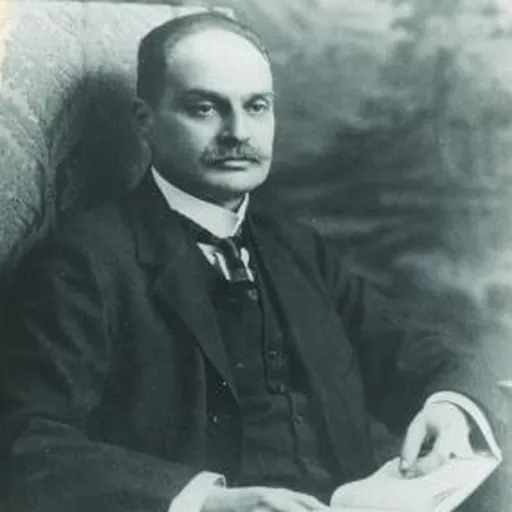
About Friedrich Hartogs
Lived 1874 – 1943 (aged 69). Friedrich Hartogs was a German mathematician and university teacher, known for Hartogs domain, Hartogs number and Hartogs's extension theorem.
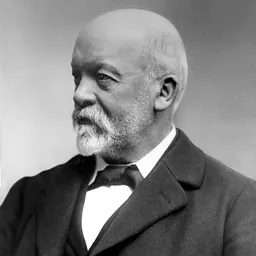
Friedrich Moritz "Fritz" Hartogs (20 May 1874 – 18 August 1943) was a German-Jewish mathematician, known for his work on set theory and foundational results on several complex variables.
Life
Hartogs was the son of the merchant Gustav Hartogs and his wife Elise Feist and grew up in Frankfurt am Main. He studied at the Königliche Technische Hochschule in Hanover, at the Technische Hochschule Charlottenburg, at the Friedrich Wilhelm University of Berlin, and at the Ludwig-Maximilians-Universität München, graduating with a doctorate in 1903 that was supervised by Alfred Pringsheim. He obtained his Habilitation in 1905 and was Privatdozent and from 1910 professor at the Ludwig-Maximilians-Universität München, until 1927 as extraordinary professor and afterward as ordinary professor. As a Jew, he suffered greatly under the Nazi regime: he was fired in 1935, was mistreated and briefly interned in Dachau concentration camp in 1938, and eventually committed suicide in 1943.
Work
Hartogs' main work was in several complex variables where he is known for Hartogs's theorem, Hartogs's lemma (also known as Hartogs's principle or Hartogs's extension theorem) and the concepts of holomorphic hull and domain of holomorphy.
In set theory, he contributed to the theory of well-orders and proved what is also known as Hartogs's theorem: for every set x there is a well-ordered set that cannot be injectively embedded in x. The smallest such set is known as the Hartogs number or Hartogs Aleph of x.
Don’t just read it —
keep it.
Full-length biographies made to live with: read them, listen on the way to work, watch them tonight.
- E-book
- Audio
- Video
Instant download · yours to keep · every purchase keeps this site free
Important facts
People in Friedrich Hartogs's life
Named in this biography and alive at the same time
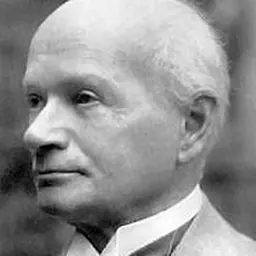
Related people
Same field, nearest in time
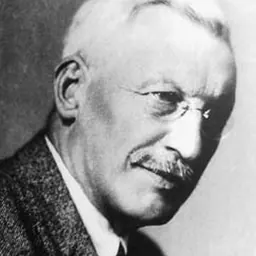

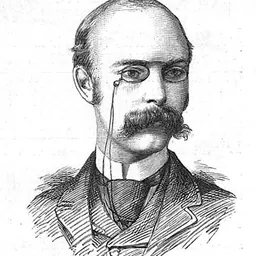

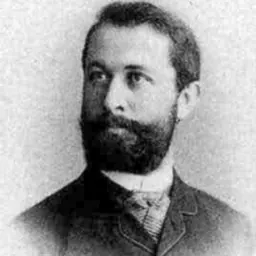
Contemporaries
People whose lives overlapped Friedrich Hartogs's
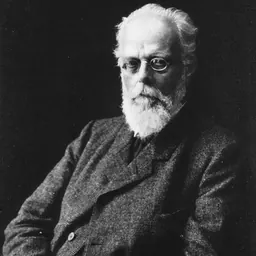
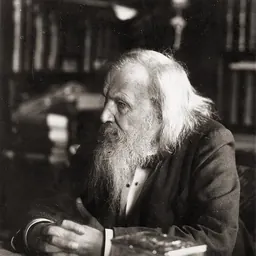
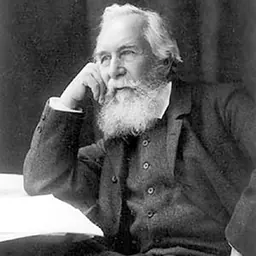

Frequently asked questions
Who was Friedrich Hartogs?
German mathematician (1874–1943)
When was Friedrich Hartogs born?
Friedrich Hartogs was born on 20 May 1874 in Brussels.
When did Friedrich Hartogs die?
Friedrich Hartogs died on 18 August 1943 in Munich.
What was Friedrich Hartogs's occupation?
Friedrich Hartogs was a mathematician and university teacher.
What was Friedrich Hartogs known for?
Friedrich Hartogs was known for Hartogs domain, Hartogs number, Hartogs's extension theorem, Hartogs's theorem and Hartogs–Rosenthal theorem.
What nationality was Friedrich Hartogs?
Friedrich Hartogs was German.
Sources & further reading
· Wikipedia: Friedrich Hartogs
Cite this page
APA: Biography.guide. (2026). Friedrich Hartogs. https://biography.guide/friedrich-hartogs/
MLA: "Friedrich Hartogs." Biography.guide, https://biography.guide/friedrich-hartogs/.
Chicago: "Friedrich Hartogs." Biography.guide. https://biography.guide/friedrich-hartogs/.
Data last updated: 2026-09-23 · Spot an error? Report a correction.
Portrait: Wikimedia Commons · author & licence
Page generated 2026-09-27 05:05 UTC