
About Friedrich Graetz
Lived 1842 – 1912 (aged 70). Friedrich Graetz was an illustrator and cartoonist, known for Puck (magazine).
Career Graetz studied art in Frankfurt am Main with Eduard von Steinle. In 1867 Graetz came to Vienna, spending time also in Budapest.
Vienna Graetz worked for the satirical weekly Kikeriki ("Cock-a-doodle-doo") in Vienna between 1872 and 1875, and for Der Floh ("The Flea"), also in Vienna, beginning in 1875. Both magazines were printed by the publishing house Johann Nepomuk Vernay.
Kikeriki was edited by Ottokar Franz Ebersberg, under the pseudonym O. F. Berg. In its early years, Kikeriki used humour to critique authority and call for social change. It has been suggested that over time humour in Kikeriki and other Viennese newspapers shifted, becoming less an appeal to improve city life, and more an attempt to cope with its stresses by "keeping up a cheerful spirit".
In Puck, as in the early Kikeriki, humor was intentionally used to press for both political and social change. Congress had passed the Chinese Exclusion Act in 1882, Graetz's cartoon has been used to examine recurring political debates across time.
Cholera was particularly feared for its high rate of mortality, Graetz's illustration "The Kind of 'Assisted Emigrant' We Can Not Afford to Admit" personifies cholera as a skeletal invader in the foreground of the cartoon, but does not demonize or blame immigrants. The deadly disease is opposed by an array of tiny figures: a boat representing the Board of Health, cannons loaded with carbolic acid, thymol and chloride of lime, and a frail line of human defenders. The building in the illustration has been identified as Castle Clinton, an immigrant processing center in the Battery Park area of New York City.
A flag entitled "Freedom of thought" flies above the conflict in Friedrich Graetz's cartoon "An appalling attempt to muzzle the watch-dog of science" (1883).
Graetz's cartoon "The Alchemist of the Past, and the Alchemist of the Present" targeted food adulteration practices by commercial chemists and hinted at the need for regulation, as a matter of public health. The Alchemist of the Past, as noted in the illustration, could not make gold out of anything, but the Alchemist of the Present profits by making things out of almost everything. In the cartoon "Dr. Cashdown Mixer, Analytical Chemist" is collecting payments from a number of well-dressed gentlemen, while above him on the wall are the results of some of his work, "Analysis Tea," "Analysis Coffee," and "Analysis Oilymargarine". "Coffee" is listed as consisting predominantly of chicory and beans, while "flour" consists almost entirely of plaster of paris and chalk.
Eugene Zimmerman recalls Graetz as "an elderly gentleman with short-cropped hair and abundant red whiskers."
Over time, Graetz drew fewer lithographs. Zimmermam became increasingly skilled, and was seen by Keppler and his partner Adolph Schwarzmann as a possible replacement. Keppler, however, felt uncomfortable about firing his friend. A few months later, Zimmerman left Puck as well. Georg Friedrich "Fritz" Grätz or Graetz (1875–1915) was also from Frankfurt am Main, and signed paintings as "Fritz Grätz".
A report of Friedrich Graetz's death credits him with publishing in Fliegende Blätter ("Flying Leaves", Munich, Germany). German artist Theodor Grätz (1859–1947) is known to have drawn cartoons for Fliegende Blätter, signing himself "Th. Grätz".
Sample signatures for the three artists are shown below:
By 1892 Graetz was again working in Vienna, where he drew for several magazines including Figaro, Der Floh ("The Flea") (1891–1913), ("New Incandescent Light" ).
Death Friedrich Graetz's death was reported by December 1912.
Don’t just read it —
keep it.
Full-length biographies made to live with: read them, listen on the way to work, watch them tonight.
- E-book
- Audio
- Video
Instant download · yours to keep · every purchase keeps this site free
Important facts
People in Friedrich Graetz's life
Named in this biography and alive at the same time


Related people
Same field, nearest in time

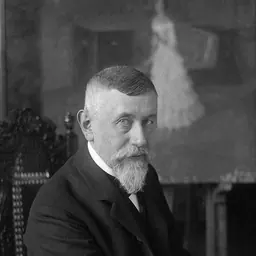
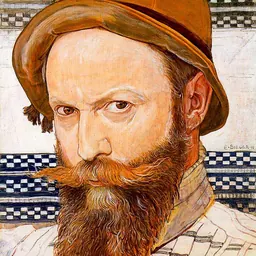
Contemporaries
People whose lives overlapped Friedrich Graetz's
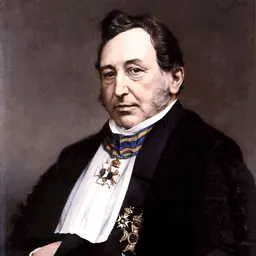
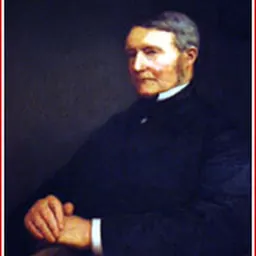
Frequently asked questions
Who was Friedrich Graetz?
Austrian cartoonist (1842–1912)
When was Friedrich Graetz born?
Friedrich Graetz was born on 3 April 1842 in Frankfurt.
When did Friedrich Graetz die?
Friedrich Graetz died on 28 November 1912 in Vienna.
What was Friedrich Graetz's occupation?
Friedrich Graetz was an illustrator and cartoonist.
What was Friedrich Graetz known for?
Friedrich Graetz was known for Puck (magazine).
Sources & further reading
Cite this page
APA: Biography.guide. (2026). Friedrich Graetz. https://biography.guide/friedrich-graetz/
MLA: "Friedrich Graetz." Biography.guide, https://biography.guide/friedrich-graetz/.
Chicago: "Friedrich Graetz." Biography.guide. https://biography.guide/friedrich-graetz/.
Data last updated: 2026-09-20 · Spot an error? Report a correction.
Page generated 2026-09-27 05:30 UTC