
About Fridtjuv Berg
Lived 1851 – 1916 (aged 64). Fridtjuv Berg was a Swedish politician and school teacher in the Swedish school system.
Johan Fridtjuv Berg (20 March 1851 – 29 February 1916) was a Swedish school teacher, author, and politician (liberal); he was minister of education and ecclesiastical affairs from 1905 to 1906 and 1911 to 1914 and Member of Parliament from 1891 to 1916. Berg was the son of educator and father of historian and artist .
Biography
Johan Fridtjuv Berg was born 20 March 1851 in Ödeshögs parish, Östergötland county, Sweden. Berg's father had been a principal at a school in Finspång since 1851. Berg succeeded him in 1878 and remained in the post until 1881. In 1883, Berg wrote the book ('The Folk School as a Basic School') in which he advocated a school system where there was only one type of school for all social classes. Berg was a Member of Parliament (Riksdag) in the second chamber for the city of Stockholm from 1891 to 1911 and for Stockholm's first constituency from 1912 to 1916. In parliament, he belonged to the ('Old Party of the Rural People') from 1891 to 1894, but in 1895 he helped to form the , which in 1900 merged into the Liberal Coalition Party . Having previously spoken out only on educational and general humanitarian issues, he began to take an active part in political struggles in 1905. After the dissolution of the Union between Norway and Sweden, he spoke out firmly against any violent intervention in the conflict between. As a result, he was opposed by the right and some right-liberals in the 1905 autumn elections.
When Karl Staaff formed a government on 7 November 1905, with the aim of reforming the electoral system based on majority representation, Berg became minister of education and ecclesiastical affairs. As prime minister, he succeeded in enacting a number of changes that were important for public education and general culture. He was responsible for the , which abolished the spellings for anlaut in standard Swedish spelling, for inlaut , for auslaut and for auslaut . He also pushed through changes to the representation of the public school teaching profession on local school boards and state grants to fiction writers. On May 29, 1906, the entire government resigned. Berg took a very active part in the political agitation of the summer and autumn of 1906, defending both in speech and in writing the general policy of the Staaff ministry and its electoral proposals. The Lindman voting proposal was opposed by Berg both in lectures in various parts of the country and in the parliamentary debates in the spring of 1907.
After the proposal for proportional representation was finally adopted by Parliament, he, like Staaff, took the view that the dispute between proportional representation and majority representation should be allowed to rest. On parliamentarism, defense and temperance, the three major issues of 1909–1911, Berg was fully in line with Staaff and, like Staaff, was a supporter of Second Chamber parliamentarism and of investigations into defense and the public position on the liquor trade. Berg's work as minister of education and ecclesiastical affairs was widely appreciated. He was one of the leaders in Swedish liberal education policy and school policy of his time. With the support of male teachers, he submitted a bill for different salary scales according to gender for publicly employed elementary school teachers.
The proposal went through in 1906.
Berg was also one of the founders of the .
In 1883 he married Vilhelmina Dorotea Kåberg (1858–1921), daughter of blacksmith Per Adolf Kåberg. His grave can be found in Norra begravningsplatsen.
Don’t just read it —
keep it.
Full-length biographies made to live with: read them, listen on the way to work, watch them tonight.
- E-book
- Audio
- Video
Instant download · yours to keep · every purchase keeps this site free
Important facts
People in Fridtjuv Berg's life
Named in this biography and alive at the same time

Related people
Same field, nearest in time



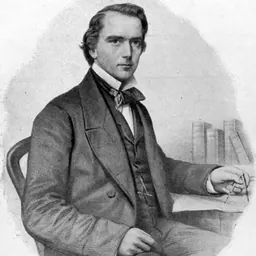


Contemporaries
People whose lives overlapped Fridtjuv Berg's


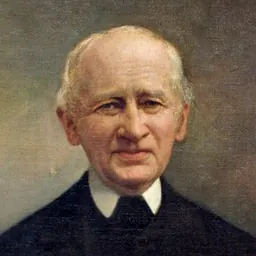
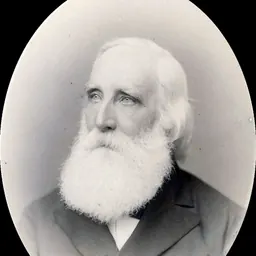
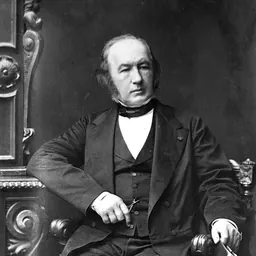

Frequently asked questions
Who was Fridtjuv Berg?
Swedish politician (1851–1916)
When was Fridtjuv Berg born?
Fridtjuv Berg was born on 20 March 1851 in Ödeshög.
When did Fridtjuv Berg die?
Fridtjuv Berg died on 29 February 1916 in Stockholm City, Kungsholm parish.
What was Fridtjuv Berg's occupation?
Fridtjuv Berg was a politician and school teacher in the Swedish school system.
What nationality was Fridtjuv Berg?
Fridtjuv Berg was Swedish.
Sources & further reading
Cite this page
APA: Biography.guide. (2026). Fridtjuv Berg. https://biography.guide/fridtjuv-berg/
MLA: "Fridtjuv Berg." Biography.guide, https://biography.guide/fridtjuv-berg/.
Chicago: "Fridtjuv Berg." Biography.guide. https://biography.guide/fridtjuv-berg/.
Data last updated: 2026-09-20 · Spot an error? Report a correction.
Page generated 2026-09-27 05:23 UTC