
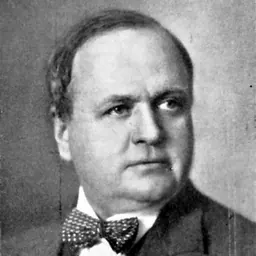
Frederick William Hasluck
Antiquarian, Historian, Archaeologist
About Frederick William Hasluck
Lived 1878 – 1920 (aged 42). Frederick William Hasluck was a British anthropologist, art historian and archaeologist.
Frederick William Hasluck (16 February 1878 – 22 February 1920) He then went to the British School at Athens and helped on excavations in Laconia, Greece namely in Geraki and Angelona, Cyzicus and Bithynia, finding much new material, including an inscription of Cn. Pompeius Magnus and unpublished local coins. His most notable find was a large Roman bridge in Mysia, hitherto unrecorded, the Aesepus Bridge. There he also investigated the sites of the Makestos Bridge, White Bridge and Constantine's Bridge. In 1906 he toured Asia Minor with Richard M. Dawkins.
In 1913, being Assistant Director (1911–15) and Librarian (1906–15) of the British School in Athens, Hasluck married Margaret Hardie. As a wedding present, Hardie chose a visit to Konya (ancient Iconium) from the options offered her by her husband, and the couple spent the spring of 1913 there together. Frederick had long been interested in the interplay of Christianity and Islam within the Turkish Empire, and he was gradually to make this a central part of his work. The Haslucks were based in Athens and, over the next four years, had the opportunity to travel widely together in the southwest Balkans.
Hasluck's work was cut short by a combination of factors, one of which was his becoming the target of Alan John Bayard Wace, an erstwhile colleague in Athens, who appears to have regarded Hasluck a potential rival. Returning to London, having prepared the ground by becoming part of the managing committee, Wace gained the post of Director of the School and, possibly motivated also by an animosity toward Mrs. Hasluck, asked London to sack Hasluck. This they did. The Haslucks stayed in Athens working at the British Legation and assisted British wartime intelligence operations. In 1916 Margaret accompanied her husband to Switzerland, where he entered a tuberculosis sanatorium. He died four years later on 22 February 1920.
Don’t just read it —
keep it.
Full-length biographies made to live with: read them, listen on the way to work, watch them tonight.
- E-book
- Audio
- Video
Instant download · yours to keep · every purchase keeps this site free
Important facts
People in Frederick William Hasluck's life
Named in this biography and alive at the same time

Related people
Same field, nearest in time



Contemporaries
People whose lives overlapped Frederick William Hasluck's





Frequently asked questions
Who was Frederick William Hasluck?
Antiquarian, Historian, Archaeologist (1878-1920)
When was Frederick William Hasluck born?
Frederick William Hasluck was born on 16 February 1878 in Southgate.
When did Frederick William Hasluck die?
Frederick William Hasluck died on 22 February 1920 in Leysin.
What was Frederick William Hasluck's occupation?
Frederick William Hasluck was an anthropologist, art historian and archaeologist.
What nationality was Frederick William Hasluck?
Frederick William Hasluck was British.
Sources & further reading
· Wikipedia: Frederick William Hasluck
· DBpedia: Frederick William Hasluck
Cite this page
APA: Biography.guide. (2026). Frederick William Hasluck. https://biography.guide/frederick-william-hasluck/
MLA: "Frederick William Hasluck." Biography.guide, https://biography.guide/frederick-william-hasluck/.
Chicago: "Frederick William Hasluck." Biography.guide. https://biography.guide/frederick-william-hasluck/.
Data last updated: 2026-09-20 · Spot an error? Report a correction.
Page generated 2026-09-27 05:06 UTC