
Frederick William, Duke of Brunswick-Wolfenbüttel
German officer (1771–1815), ruler of Brunswick (1806–1807; 1813–15)
About Frederick William, Duke of Brunswick-Wolfenbüttel
Lived 1771 – 1815 (aged 43). Frederick William, Duke of Brunswick-Wolfenbüttel was a military officer.
Frederick William, Duke of Brunswick-Wolfenbüttel (; 9 October 1771 – 16 June 1815), was a German prince and Duke of Brunswick-Lüneburg and Oels. Nicknamed "The Black Duke", he was a military officer who led the Black Brunswickers against French domination in Germany. He briefly ruled the state of Brunswick-Wolfenbüttel from 1806 to 1807 and again from 1813 to 1815. He was killed during the Battle of Quatre Bras, during the Waterloo campaign.
Life Prince Frederick William of Brunswick-Wolfenbüttel was born in Braunschweig as the fourth son of Charles William Ferdinand, Duke of Brunswick-Lüneburg (on the latter's 36th birthday), and Princess Augusta of Great Britain. He was the first cousin and brother-in-law (from 8 April 1795) of his friend George IV, Prince Regent of the United Kingdom (from 1811).
He joined the Prussian army in 1789 as a captain and participated in battles against Revolutionary France. In 1805, after his uncle, Frederick Augustus, Duke of Oels, had died childless, Frederick William inherited the Duchy of Oels, a small mediatized principality in Silesia subordinate to the King of Prussia.
In October 1806, Frederick William participated in the Battle of Jena-Auerstädt as a major general of the Prussian army, of which his father was the field marshal. His father died from a wound he received in this battle, and Frederick William inherited Brunswick-Wolfenbüttel, since his eldest brother had died childless two months earlier, and both the second and third brother had intellectual disabilities. After the defeat of Prussia in the Fourth Coalition, his state remained under the control of France, however, and was formally made a part of the short-lived Napoleonic Kingdom of Westphalia in 1807. Frederick William fled to his parents-in-law in Bruchsal in the Grand Duchy of Baden, which had remained a sovereign state with the dissolution of the Holy Roman Empire in 1806 by Francis II, where he lived for the next few years.
The Black Brunswickers
When the War of the Fifth Coalition broke out in 1809, Frederick William used this opportunity to create a corps of partisans with the support of the Austrian Empire. This corps was called the Black Brunswickers because they wore black uniforms in mourning for their occupied country. He financed the corps independently by mortgaging his principality in Oels, and made his way from Austrian Bohemia through the French-allied states of Saxony and Westphalia to the North Sea coast.
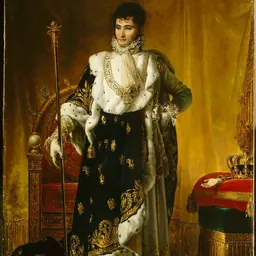
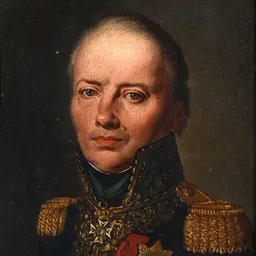
He was shocked by the armistice of Znaim signed on 12 July 1809 and decided to fight on. He and his corps began their remarkable fighting march towards the north German coast at Zwickau on 24 July. Entering the town of Halle in Westphalia on 26 July, the duke appropriated its civic funds. This prompted Jérôme Bonaparte, King of Westphalia, to order three generals, Jean-Jacques Reubell, Pierre Guillaume Gratien and Claude Ignace François Michaud, to gather their forces and destroy the Brunswickers. However, the Brunswickers surprised the Westphalians by a rapid advance and defeated them in the battle of Halberstadt on 29 and 30 July 1809. After reinforcing his troops from captured stocks and men, Frederick William pushed on to his former capital Braunschweig, which he reached on the evening of 31st July. Then he decided to go on to the coast. Although his path was successfully blocked by Reubell outside Brunswick at the battle of Ölper on 1 August, the Westphalians gave away their advantage by withdrawing under cover of darkness and allowing the Black Brunswickers to continue their march northward to Elsfleth, where they embarked on British ships, which took them to the Isle of Wight.
Upon arrival in Britain the troops of Frederick William were taken into British pay and the Duke was granted the rank of lieutenant general in the British Army. His corps of originally 2,300 soldiers was severely depleted in battles in Spain and Portugal during the Peninsular War. Renamed the Brunswick Oels Jäger and Brunswick Oels Hussar Regiments, they fought at Fuentes de Oñoro, Salamanca, Vitoria, the Pyrenees, Nivelle, the Nive, and Orthez.
Exile in Britain Belmont House (now Brunswick House) Vauxhall, home of the Duke of Brunswick in London. As the son of King George III's sister, Princess Augusta, Duchess of Brunswick, and brother of Caroline, Princess of Wales, Frederick William was intimately related to the British royal family. After departing the continent he settled in London between 1810 and 1813 where he set up his court-in-exile at Belmont House (later renamed as Brunswick House) in Vauxhall, just over the River Thames from St James's Palace. During his time in London he became famed at court for his taciturn and misanthropic disposition. He was a frequent visitor to St James's palace where he became a confirmed favourite of the Prince of Wales
The Duke fell at the head of his men, fighting alongside the Gordon Highlanders and holding the crucial crossroads at Quatre Bras.
The action that led to his death was described thus by an eyewitness:
"Duke Friedrich Wilhelm, who had ridden ahead, returned to our ranks and while smoking a short pipe, said: ‘Children, let us charge the weapons quickly!’ The first thing we saw as we came into the field of action was a regiment of Belgian Dragoons in the greatest disorder, who were retiring very hastily before the French! Now we knew that the war had begun, and advancing with the greatest courage we exchanged blows with the enemy....
The death of our beloved Duke was only confirmed the following day, although he had fallen close to our battalion (he had lost his horse before this and I had almost been ridden over by the horse he had received as a substitute). I had seen him on several occasions during the action, as he waited on our left flank with the Hussars. But we were no longer to witness his encouraging presence! The impression this loss had on our Brunswick legions was not as it was subsequently described. Each of us, be he an officer or a simple soldier, had enough to concern himself with, and we were unable to dwell upon this tragic event for any length of time, only the memory of our beloved Duke, Friedrich Wilhelm."
- Friedrich Cappel officer in the Brunswick Leib Battalion at Quatre Bras.
The manner of his death was described thus:
"Our Duke was killed by a ball which passed through his hand and his body. He was said to have been very angry, and was one of the foremost in the battle."
- Wilhelm Schütte, Surgeon with the Brunswick Corps, Quatre Bras.
Despite the death of the Duke the Brunswickers continued to serve in the allied forces, gaining distinction for their actions in the victory at Waterloo, two days later.
Ancestors
Don’t just read it —
keep it.
Full-length biographies made to live with: read them, listen on the way to work, watch them tonight.
- E-book
- Audio
- Video
Instant download · yours to keep · every purchase keeps this site free
Important facts
Family & relationships
People in Frederick William, Duke of Brunswick-Wolfenbüttel's life
Named in this biography and alive at the same time

Related people
Same field, nearest in time

Contemporaries
People whose lives overlapped Frederick William, Duke of Brunswick-Wolfenbüttel's




Frequently asked questions
Who was Frederick William, Duke of Brunswick-Wolfenbüttel?
German officer (1771–1815), ruler of Brunswick (1806–1807; 1813–15)
When was Frederick William, Duke of Brunswick-Wolfenbüttel born?
Frederick William, Duke of Brunswick-Wolfenbüttel was born on 9 October 1771 in Brunswick.
When did Frederick William, Duke of Brunswick-Wolfenbüttel die?
Frederick William, Duke of Brunswick-Wolfenbüttel died on 16 June 1815 in Quatre Bras.
What was Frederick William, Duke of Brunswick-Wolfenbüttel's occupation?
Frederick William, Duke of Brunswick-Wolfenbüttel was a military officer.
What nationality was Frederick William, Duke of Brunswick-Wolfenbüttel?
Frederick William, Duke of Brunswick-Wolfenbüttel's recorded nationality: Duchy of Brunswick.
Sources & further reading
· Wikipedia: Frederick William, Duke of Brunswick-Wolfenbüttel
· DBpedia: Frederick William, Duke of Brunswick-Wolfenbüttel
Cite this page
APA: Biography.guide. (2026). Frederick William, Duke of Brunswick-Wolfenbüttel. https://biography.guide/frederick-william-duke-of-brunswick-wolfenbuttel/
MLA: "Frederick William, Duke of Brunswick-Wolfenbüttel." Biography.guide, https://biography.guide/frederick-william-duke-of-brunswick-wolfenbuttel/.
Chicago: "Frederick William, Duke of Brunswick-Wolfenbüttel." Biography.guide. https://biography.guide/frederick-william-duke-of-brunswick-wolfenbuttel/.
Data last updated: 2026-10-02 · Spot an error? Report a correction.
Portrait: Wikimedia Commons · author & licence
Page generated 2026-10-05 02:10 UTC