
About Frederick Whyte
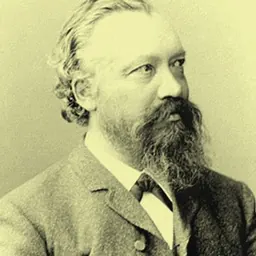
Lived 1883 – 1970 (aged 86–87). Frederick Whyte was a British journalist, politician and writer.
Sir Alexander Frederick Whyte (30 September 1883 – 30 July 1970) was a British civil servant, Liberal Party politician, writer, and journalist.
From 1920 to 1925, he served as the first president of the new Central Legislative Assembly of British India.
Early life and career Alexander Frederick Whyte was born on 30 September 1883, the second of eight children, and eldest son born to the Reverend Alexander Whyte DD, and Jane Elizabeth Barbour, who married in 1881.
Whyte attended Edinburgh Academy and read modern languages at Jena University and at Edinburgh University, graduating with a first class degree. During this time he was President of Edinburgh University Union, and after graduation was warden of the Edinburgh University Settlement in 1907–8.
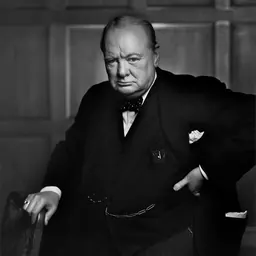
Political career He entered Parliament as the Member of Parliament (MP) for Perth (1910–1918), during which time he had been parliamentary private secretary (1910–1915) to Winston Churchill, who was Home Secretary (1910–1911), and then First Lord of the Admiralty (1911–15) at the time.
During the First World War, Whyte was a lieutenant in the Royal Naval Volunteer Reserve on special service (1914–17).
He was appointed the first president of the Central Legislative Assembly in India (1920–25). He then took on ambassadorial roles; as political advisor to the National Government of China (1929–32), director general of the English-Speaking Union (1938), and head of the American division of the Ministry of Information (1939–40).
Post Politics He was also involved in journalism, as the founder and editor of The New Europe (1917–1920), a well-known weekly read by political leaders and students, and was the author of numerous books discussing the politics and economics of the Orient.
Aside from these political roles, Sir Frederick was Chairman of the Indian Red Cross Society (1923) and Reindeer Council of the United Kingdom, as well as being a member of the Athenaeum Club, founded in Liverpool in the late 18th century for the exchange of ideas.
It is unclear what involvement in public life Sir Frederick played following 1940. He was no longer at the Ministry of Information, but there is reference to him as chairman of the recently founded Reindeer Council of the United Kingdom in the Nature of November 1949, following proposals to introduce reindeer to Britain.
Further correspondence suggests that as late as 1958, Sir Frederick still had some association with the Indian Red Cross and St. John Ambulance Association and Brigade. A passenger list of that year reveals that Sir Alexander and Lady Fairweather Whyte set sail from Tenerife to England by first class, and Sir Alexander is described as a director.
In 1927, Sir Frederick sat for the photographer Walter Stoneman (1876–1958), and the bromide print along with two negatives remain part of the National Portrait Gallery’s collection.
Personal life Alexander Frederick married Margaret Emily Fairweather, the eldest daughter of the Reverend W. Fairweather DD of Kirkcaldy, in 1912, with whom he had three children: Joan Elizabeth Fairweather Anne Mortimer Alexander Hamilton
Sir Ernest Burdon (1881–1957), a fellow member of the Indian Civil Service, was Sir Frederick Whyte's brother-in-law on account of Sir Ernest's second marriage, to Mary Isabella, daughter of Rev W. Fairweather, in 1922.
Publications India, a federation? (Government of India Press, 1926) China and foreign powers (H. Milford, Oxford University Press, 1927) China and foreign powers (Oxford University Press, 1928) The unfinished task (Houghton Mifflin company, 1933) A British view of Pacific affairs in 1936 (Royal Institute of International Affairs, 1936) World Outlook (1939) India, a bird's eye view (The Royal Institute of International Affairs, 1942) India (The Royal Institute of International affairs, Oxford University Press, 1942) Japan's purpose in Asia and the Pacific (The Royal Institute of International Affairs, Oxford University Press, 1942) India (The Royal Institute of International Affairs, 1944) The rise and fall of Japan (The Royal Institute of International Affairs, 1945) The Pattern of Pacific Security A Report by a Chatham House Study Group (Norman Bentwich, G E Hubbard et al.. A Chatham House Study Group, 1946)
Don’t just read it —
keep it.
Full-length biographies made to live with: read them, listen on the way to work, watch them tonight.
- E-book
- Audio
- Video
Instant download · yours to keep · every purchase keeps this site free
Important facts
People in Frederick Whyte's life
Named in this biography and alive at the same time





Related people
Same field, nearest in time


Contemporaries
People whose lives overlapped Frederick Whyte's


Frequently asked questions
Who was Frederick Whyte?
British politician (1883-1970)
When was Frederick Whyte born?
Frederick Whyte was born in 1883.
When did Frederick Whyte die?
Frederick Whyte died in 1970.
What was Frederick Whyte's occupation?
Frederick Whyte was a journalist, politician and writer.
What nationality was Frederick Whyte?
Frederick Whyte was British.
Sources & further reading
Cite this page
APA: Biography.guide. (2026). Frederick Whyte. https://biography.guide/frederick-whyte/
MLA: "Frederick Whyte." Biography.guide, https://biography.guide/frederick-whyte/.
Chicago: "Frederick Whyte." Biography.guide. https://biography.guide/frederick-whyte/.
Data last updated: 2026-09-20 · Spot an error? Report a correction.
Page generated 2026-09-27 05:30 UTC