
About Frederick Keel
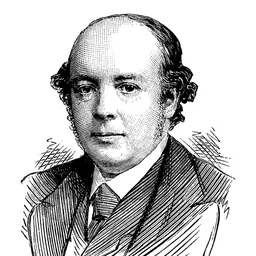
Lived 1871 – 1954 (aged 82–83). Frederick Keel was a British singer, singer-songwriter, composer, musicologist and music educator.
James Frederick Keel (8 May 18719 August 1954) was an English composer of art songs, baritone singer and academic. Keel was a successful recitalist and a professor of singing at the Royal Academy of Music. He combined scholarly and artistic interest in English songs and their history. His free settings of Elizabethan and Jacobean lyrics helped pioneer the revival of interest in the genre. He was also an active member of the English folksong movement. During World War I, Keel was held in the civilian internment camp at Ruhleben in Germany, where he played an active role in the camp's musical life, giving many recitals to help boost the morale of his fellow detainees. Keel was one of the few singer-songwriters of English art songs of his day. Among his better-known compositions are settings of Salt-Water Ballads by the poet John Masefield, including "Trade Winds", the popularity of which has given Keel a reputation for being a "one-song composer".
Biography
Early life, education and singing career Frederick Keel was born in London on 8 May 1871, the eldest son of James Frederick and Mary Anne Keel. He attended Wells Cathedral School. After teaching in several preparatory schools, in 1895 he enrolled at the Royal Academy of Music (RAM) where he studied singing with Frederick King and Frederick Walker, and composition with Frederick Corder. Keel further pursued his training as a singer with Federico Blasco in Milan in 1896, before moving to Munich the following year to complete his studies with Eugen Gura. Keel's London debut was at the Queen's Hall in 1898. His pleasant baritone voice and singing style made him a popular recitalist in the pre-war years.
Folk Song Society While in Munich that Keel became fascinated by folk music, an interest which blossomed on his return to England where he was able to meet fellow enthusiasts such as Lucy Broadwood, J A Fuller Maitland and, eventually, Cecil Sharp. In 1948, long after standing down, Keel published a brief history of the society, charting events since its inception in 1898. which he regularly drew on in his recitals. his collecting activity seems to have been largely confined to a clutch of folk songs from Hindhead and Haslemere in Surrey, identified and notated in 1913 with the collaboration of fellow society members Clive Carey and Iolo Aneurin Williams.
Elizabethan love songs Keel's interest in traditional and early music was both historical and artistic. Acquaintance with A H Bullen's anthologies of Elizabethan lyrics sparked a lasting musical and literary interest. Keel's arrangements were based on compositions by John Dowland, Thomas Campion, Thomas Morley, Philip Rosseter and Tobias Hume, among others. His initiative was to be roundly criticised by fellow art song composer and early music enthusiast Philip Heseltine (Peter Warlock), who deplored Keel's use of the piano and disregard for the original tablature. Nevertheless, Keel's composerly transcriptions helped popularise an area of early music which, at the time, was seldom performed.
Keel complemented his arrangement work with an essay titled Music in the Time of Queen Elizabeth in which he succinctly outlined his understanding of the social, literary and musicological context of Elizabethan vocal and instrumental music, focusing mainly on the songs and dances. This 60 page booklet was privately printed in a limited edition in 1914 by the Sette of Odd Volumes, an elite bibliophile dining club dedicated to mutual admiration, of which he would later become President ("His Oddship"). Keel, who at the time was "Singer and Secretary to Ye Sette", had presented Music in the Time of Queen Elizabeth as an after dinner address illustrated by a few of his own settings. However, he composed only a relatively small body of original work. Indeed, the popular success of "Trade Winds" has given Keel a reputation for being a "one-song composer". Noting Keel's preference for minor keys, another contemporary critic remarked on the "lively gait" of his melodies which made them sound as bright as in the major. Keel's unsigned obituary in The Times spoke of his compositions as being "graceful and melodious rather than robust or profound". Currently, Three Salt Water Ballads can be heard on a recording sung by Bryn Terfel with piano accompaniment by Malcolm Martineau. "Trade Winds" can also be heard on CD, as sung by Jonathan Lemalu accompanied by Roger Vignoles.
Notes and references
Don’t just read it —
keep it.
Full-length biographies made to live with: read them, listen on the way to work, watch them tonight.
- E-book
- Audio
- Video
Instant download · yours to keep · every purchase keeps this site free
Important facts
People in Frederick Keel's life
Named in this biography and alive at the same time





Related people
Same field, nearest in time



Contemporaries
People whose lives overlapped Frederick Keel's


Frequently asked questions
Who was Frederick Keel?
British singer-songwriter
When was Frederick Keel born?
Frederick Keel was born on 8 May 1871.
When did Frederick Keel die?
Frederick Keel died in 1954.
What was Frederick Keel's occupation?
Frederick Keel was a singer, singer-songwriter, composer, musicologist and music educator.
What nationality was Frederick Keel?
Frederick Keel was British.
Sources & further reading
Cite this page
APA: Biography.guide. (2026). Frederick Keel. https://biography.guide/frederick-keel/
MLA: "Frederick Keel." Biography.guide, https://biography.guide/frederick-keel/.
Chicago: "Frederick Keel." Biography.guide. https://biography.guide/frederick-keel/.
Data last updated: 2026-09-20 · Spot an error? Report a correction.
Page generated 2026-09-27 05:21 UTC