
Frederick James Halliday
British civil servant and Lieutenant-Governor of Bengal
About Frederick James Halliday
Lived 1806 – 1901 (aged 94). Frederick James Halliday was a civil servant.
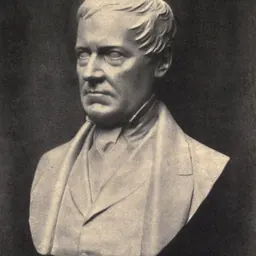
Sir Frederick James Halliday (25 December 1806 – 22 October 1901) was a British civil servant and the first Lieutenant-Governor of Bengal.
Early life and career Frederick James Halliday was born on 25 December 1806 at Ewell, Surrey. According to the Oxford Dictionary of National Biography, he was educated at Rugby School. This is also the opinion of a historian of St. Paul's, Michael McDonnell, who notes that Halliday was sent to Rugby to be under the influence of its head master, John Sleath, and moved to St. Paul's as a consequence of Sleath being appointed as High Master there. Subsequently, he attended the East India College in Haileybury, before joining the Bengal civil service in 1824. His first office in the civil service was as an assistant working for the supreme court in 1825.
Halliday had become secretary to the Board of Revenue by 1836 and was appointed Home Secretary for the Government of India in 1849. He took a period of leave in England between July 1852 and November 1853, although he was frequently called upon to provide information to Parliament during that time. Prior to that time the region had been overseen by the governor-general, and by a deputy-governor when the former was away. The deputies were appointed more on the basis of seniority than of merit. It had been recognised for some time that continued territorial acquisitions, which involved disparate populations and regions, both necessitated different administrative approaches and were causing the governor-general to be more frequently away from the area. The Marquess of Dalhousie, who was governor-general between 1847 and 1856, took the opportunity presented by the renewal of the East India Company's charter to reorganise affairs. It was anticipated that the appointment of Halliday would result in significant improvements to the administration of Bengal, and this proved to be the case because he had gained considerable administrative experience by this time.
1838 illustration by William Prinsep of Belvedere House, Calcutta. This became Halliday's official residence as lieutenant-governor from 1854.
Among his achievements was the building of numerous roads that linked various towns. He also enabled much progress in the construction of the East Indian Railway. Both of these were seen by Halliday as necessities, for he recognised that speedy and accurate communication was a prerequisite for efficient administration. He introduced the Calcutta Municipal Act, enacted reforms of the police service (including better pay), tightened supervision of the inefficient justice system and increased the number of its officials. Arrangements were also introduced to limit civil disturbances and disruption by, for example, creating a force of military police. Although Bengal was on the periphery of events relating to the Indian rebellion of 1857, and Halliday was commended for his successes in dealing with civil unrest,
Aside from his administrative reforms, Halliday was also active in pursuit of social change. While serving as a magistrate in Hooghly district in 1829, he had witnessed the last legal sati (ritual burning of a widow) in Bengal, and as lieutenant-governor he sought to enforce the anti-sati legislation that had been enacted soon after. He was also involved in enabling the Widow Remarriage Act to facilitate the remarriage of Hindu widows, Indeed, Vidyasagar enjoyed a close relationship to Halliday during the 1850s, and this helped achieve changes in other social policy spheres, such as education. Halliday was an enthusiastic supporter of the despatch on education formulated by Charles Wood in 1854, and as a consequence various measures were implemented. These included the establishment of director of public instruction for the region and the incorporation of the University of Calcutta.
Subsequent life In 1860 Halliday was appointed a Knight Commander of the Order of the Bath.
He died, aged 94, on 22 October 1901 and is buried in Brompton Cemetery, London.
Don’t just read it —
keep it.
Full-length biographies made to live with: read them, listen on the way to work, watch them tonight.
- E-book
- Audio
- Video
Instant download · yours to keep · every purchase keeps this site free
Important facts
People in Frederick James Halliday's life
Named in this biography and alive at the same time




Related people
Same field, nearest in time

Contemporaries
People whose lives overlapped Frederick James Halliday's






Frequently asked questions
Who was Frederick James Halliday?
British civil servant and Lieutenant-Governor of Bengal
When was Frederick James Halliday born?
Frederick James Halliday was born on 25 December 1806.
When did Frederick James Halliday die?
Frederick James Halliday died on 22 October 1901.
What was Frederick James Halliday's occupation?
Frederick James Halliday was a civil servant.
Sources & further reading
· Wikipedia: Frederick James Halliday
· DBpedia: Frederick James Halliday
Cite this page
APA: Biography.guide. (2026). Frederick James Halliday. https://biography.guide/frederick-james-halliday/
MLA: "Frederick James Halliday." Biography.guide, https://biography.guide/frederick-james-halliday/.
Chicago: "Frederick James Halliday." Biography.guide. https://biography.guide/frederick-james-halliday/.
Data last updated: 2026-09-24 · Spot an error? Report a correction.
Page generated 2026-09-27 05:03 UTC