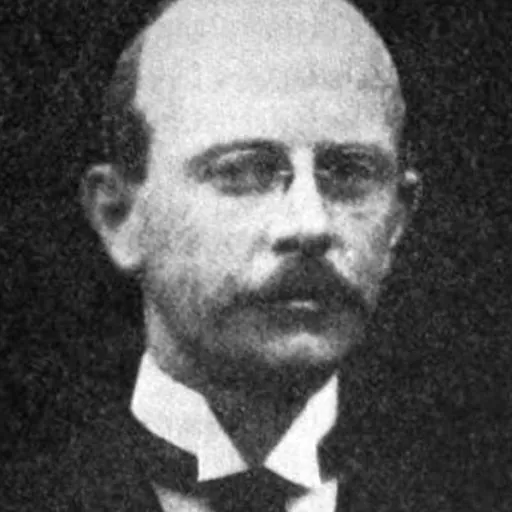
About Frederick E. Olmsted
Lived 1872 – 1925 (aged 52). Frederick E. Olmsted was an American forester and author.
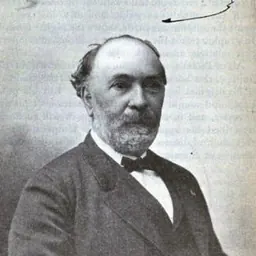
Frederick Erskine Olmsted, also known as Fritz Olmsted, (November 8, 1872 – February 19, 1925) was an American forester and one of the founders of American forestry. Through his work with the United States Forest Service, Olmsted helped establish the national forest system in the United States and helped train the next generation of Forest Service agents and college professors. He also worked as a consulting forester with practices in Boston and California.
Early life and education Olmsted was born in Hartford, Connecticut, on November 8, 1872. He was the son of Lucy Sawyer Hollister (born 1848) and Albert Harry Olmsted (1842–1929), a banker. His father was a half-brother of acclaimed landscape designer Frederick Law Olmsted and uncle to Frederick Law Olmsted Jr. and John Charles Olmsted. He then attended Yale University where he studied civil engineering, graduating from the Sheffield Scientific School with a Bachelor of Philosophy (Ph.B.) in 1894.
After working for two years and receiving an introduction to forestry at the Biltmore Forest School, Olmsted returned to college, attending graduate school at Harvard University in 1897 and 1898. In the fall of 1897, he took courses at the University of Cambridge and Arnold Arboretum. In November 1899, at the suggestion of Brandis, he studied practical forestry in the foothills of the Himalayas in India where most of the forests were under state control.
Career
Banking After graduating from Yale, Olmsted worked for a year at George P. Bissell & Company, his father's bank in Hartford, Connecticut. Although George P. Bissell & Company was the oldest private banking house in New England, the firm went into a receivership in 1896. Olmsted became a "boundary boy" for the Division of Forestry, locating the boundaries of the governmental forest reserves. This process laid the foundation for the modern national forest system. He had been told there was not a way for the government to accept this gift.
In 1909, Olmsted served on a three-person committee to develop a plan for California's highway trees. However, in January 1910, President William Howard Taft fired and replaced Pinchot as head of the Forest Service following the Pinchot–Ballinger controversy. Olmsted was stunned by the loss of his mentor. He said he wanted to return to the forest and leave the administrative offices behind; he may also have missed working with Pinchot.
Harvard University In the spring semester of 1913, Olmsted taught forestry at Harvard University. It was estimated that it would take 50 to 100 years before the campus trees were restored. His plan called for the construction of trails and fire breaks, as well as the addition of a warden and a telephone system. Clearing the land to create the firebreaks cost thirteen cents per square yard or $116 per mile. He also supervised the association's rangers for three years as its head patrolman, before stepping down in March 1917.
During World War I, Olmsted again worked for the Forest Service. His offices were in the new University Reality Company building on the corner of University Avenue and Bryant Street. As a consultant, he also created topographic maps and logging plans, appraised timber, estimated timber yields, and developed systems to prevent fires. Olmsted wanted Congress to pass the Capper Bill, giving the U.S. Forest Service the ability to regulate forest devastation.
Around the same time, the Diamond Match Company hired Olmsted "to introduce and supervise conservative cutting on its California holdings".
Personal life Olmsted married Florence Starbuck DuBois on September 13, 1909.
Olmsted was a member of the Century Club in Washington, D.C., serving on its board of governors and as chairman of the committee of literature and art. He was also a non-resident member of the Cosmos Club. In addition, he was a member of Park Congregational Church in Hartford, Connecticut. He was cremated at Cypress Hill Crematorium in San Francisco and buried in Cedar Hill Cemetery in Hartford, Connecticut.
Selected publications
"A Working Plan for Forest Lands near Pine Bluff, Arkansas". U.S. Department of Agriculture, Bureau of Forestry Bulletin No. 32, 1902. "Tests on the Physical Properties of Timber".Yearbook of the United States Department of Agriculture, 1902 Report on a Preliminary Examination of the Forest of the U.S. Military Academy, West Point, NY, 1903, Forestry of the U.S.M.S. Reservation: Letter from Mr. Gifford Pinchot; Report by Mr. F. E. Olmstead, Bureau of Forestry. West Point, NY: U.S.M.A. Press 1903. Use of the National Forest Reserves: Regulations and Instructions. Washington, D.C.: Forest Service, U.S. Department of Agriculture, 1905. The Use of National Forests. Washington, D.C.: Forest Service, U.S. States Department of Agriculture, June 14, 1907. "Forest Conditions of California and Suggestions for their Improvement." Transactions of the Commonwealth Club of California, vol. 4, 1909, pp. 78–82. "Fire and the Forest – The Theory of 'Light Burning'". Sierra Club Bulletin, January 1911, pp. 42–47 "How Forestry Uses Fire: Practical Work on the California National Forests." Sunset vol. 27, September 1911, pp. 276–81, Light Burning in California Forests. U.S. Department of Agriculture, Forestry Service. Washington, D.C.: U.S. Printing Office, 1911, Mt. Tamalpais and Vicinity (Map). California: Mount Tamalpais Fire Association, 1915. "The Lumberman's Duty Toward Forestry.'" Proceedings of the Society of American Foresters. vol. 1, no. 1, January 1916. pp. 79–83. "Activities of the Society of American Foresters." Journal of Forestry vol. 17, 1917. pp. 663–665. Map of Proposed Humboldt Redwoods State Park. California, 1929,
Don’t just read it —
keep it.
Full-length biographies made to live with: read them, listen on the way to work, watch them tonight.
- E-book
- Audio
- Video
Instant download · yours to keep · every purchase keeps this site free
Important facts
People in Frederick E. Olmsted's life
Named in this biography and alive at the same time






Related people
Same field, nearest in time


Contemporaries
People whose lives overlapped Frederick E. Olmsted's
Frequently asked questions
Who was Frederick E. Olmsted?
American forester (1872–1925)
When was Frederick E. Olmsted born?
Frederick E. Olmsted was born on 8 November 1872.
When did Frederick E. Olmsted die?
Frederick E. Olmsted died on 8 February 1925.
What was Frederick E. Olmsted's occupation?
Frederick E. Olmsted was a forester and author.
What nationality was Frederick E. Olmsted?
Frederick E. Olmsted was American.
Sources & further reading
· Wikipedia: Frederick E. Olmsted
· DBpedia: Frederick E. Olmsted
Cite this page
APA: Biography.guide. (2026). Frederick E. Olmsted. https://biography.guide/frederick-e-olmsted-forester/
MLA: "Frederick E. Olmsted." Biography.guide, https://biography.guide/frederick-e-olmsted-forester/.
Chicago: "Frederick E. Olmsted." Biography.guide. https://biography.guide/frederick-e-olmsted-forester/.
Data last updated: 2026-09-22 · Spot an error? Report a correction.
Portrait: Wikimedia Commons · author & licence
Page generated 2026-09-27 05:04 UTC