
Frederick Charles Weiss
German-American neo-Nazi
About Frederick Charles Weiss
Lived 1885 – 1968 (aged 82). Frederick Charles Weiss was a German and American political activist, real estate agent, lawyer and publisher.
Frederick Charles Weiss (July 31, 1885 – March 1, 1968) was a German neo-Nazi activist who became a naturalized American citizen. He was the founder of publishing house Le Blanc, through which he published numerous antisemitic pamphlets, and helped establish and finance the National Renaissance Party (NRP), the first postwar neo-Nazi group in the United States, which he led from behind the scenes. In the 1950s, his writings began to reflect a geopolitical perspective favorable to the Soviet Union, which he viewed as a potential ally for Germany.
Biography
Background Frederick Charles Ferdinand Weiss was born in Pforzheim (Baden-Württemberg) on July 31, 1885, the son of a wealthy German industrialist who lost his fortune by 1918.
Political affiliations
Relations with the American far right In the summer of 1951, through Hans-Ulrich Rudel, Fred Weiss met H. Keith Thompson in New York, who was then acting as an agent for the Sozialistische Reichspartei and the German-language Argentine neo-Nazi newspaper Der Weg. The two men developed a close professional relationship and met regularly. Together, they maintained close ties with the Wiking-Jugend through their publishing house, Le Blanc.
In November 1951, Fred Weiss met Francis Parker Yockey for the first time in New York. In June 1952, Weiss sheltered Yockey on his farm while he was fleeing the U.S. State Department's security services. Weiss helped finance the publication of Der Feind Europas, a book by Yockey published clandestinely in Germany in the fall of 1953. In 1955, according to notes from the anti-fascist organization Non-Sectarian Anti-Nazi League, Weiss reportedly helped organize Yockey's departure to the Eastern Bloc.
Weiss also maintained ties with several other figures in the American far right, including Conde McGinley of the newspaper Common Sense, Frank Britton of The American Nationalist, and Lyrl Van Hyning of the newspaper Women's Voice. Articles prepared by his German collaborators were regularly published in these media outlets before being republished in magazines such as Der Weg, presented as reports from the United States.
Relations with the European far right In the 1950s, he also maintained close ties with German far-right circles. He provided monthly funding of 1,000 Deutsche Mark to the newspaper Der Reichsruf, which later became the official organ of the German Imperial Party. According to West German authorities, he corresponded after the war with several Nazi figures, notably Werner Naumann, Ernst Achenbach, and General Heinz Guderian.
His correspondents also included Einar Åberg, president of the Anti-Jewish Action League of Sweden; Arnold Leese, leader of the Imperial Fascist League; the Grand Mufti of Jerusalem; and the three former Nazis who founded the Sozialistische Reichspartei: Otto Ernst Remer, Hans-Ulrich Rudel, and Gerhard Krüger. During the 1950s, Weiss offered financial support to Rudel. According to the testimony of a double agent who provided information to the Non-Sectarian Anti-Nazi League while being a member of the National Renaissance Party, Weiss allegedly financed Rudel's return to West Germany so that he could participate in the 1953 federal election.
In the 1950s, Fred Weiss also collaborated with NATINFORM, a European nationalist group. He was asked financial support by Peter Huxley-Blythe, the editor-in-chief of NATINFORM's newsletter World Survey. Weiss and his associate H. Keith Thompson disseminated NATINFORM's propaganda, particularly their writings criticizing Otto John, then head of the Federal Office for the Protection of the Constitution.
Ideological positions In Quo Vadis, America (1946), Weiss defined postwar politics as a struggle between "Orient vs. Occident", or, to use Spenglerian terminology, "Magian vs. Faustian culture." He warned against a supposed "Magian Jewish consensus," which he described as "landless, timeless and boundless" and which supposedly aimed to create a "Classless, Stateless, World Chaos". In The Untouchables (1950) and Russia (1955–1956), he developed his theory on the struggle between Orient and Occident by distinguishing between a Western communism controlled by Jews (Trotskyism) and a Eurasian form of communism (Stalinism), which he considered to reflect the true soul of Russia.
In the 1950s, he published several articles in support of the Soviet Union, arguing that an alliance with the East would be more advantageous for Germany than one with the West. In Russia (1955–1956), he predicted the transformation of Joseph Stalin and Nikita Khrushchev's Bolshevik doctrine into an openly nationalist movement and portrayed the USSR as the principal enemy of the so-called "international Jewry". He then published The Great Question (1957), in which he portrayed the USSR as having resolved the "Jewish question" and commented on the launch of Sputnik, which he described as "a Russian sword of Damocles in the form of a satellite hanging over our heads (with no possibility of retaliation)"; he subsequently published Will He Bury Us? (1958), which continued his critique of far-right conspiracy theories regarding alleged Jewish control of the USSR. In these writings, he celebrated Soviet technological advances, predicting the transformation of Western Siberia and Turkestan into a "true climatic and vegetative paradise" capable of feeding an additional 150 million people.
In Germania delenda est? (1947), he criticized the Nazi racial theory of blood, arguing that the Thirty Years' War had so altered the "Nordic" genetic type that, by the time the United States entered the war, "the balance of 'pure' Nordic blood was certainly tilted against the Axis".
Don’t just read it —
keep it.
Full-length biographies made to live with: read them, listen on the way to work, watch them tonight.
- E-book
- Audio
- Video
Instant download · yours to keep · every purchase keeps this site free
Important facts
People in Frederick Charles Weiss's life
Named in this biography and alive at the same time







Related people
Same field, nearest in time

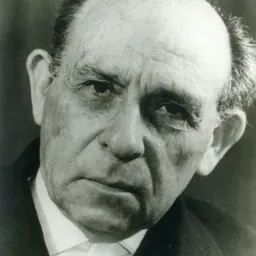
Contemporaries
People whose lives overlapped Frederick Charles Weiss's

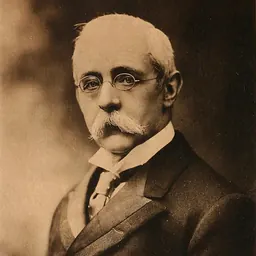
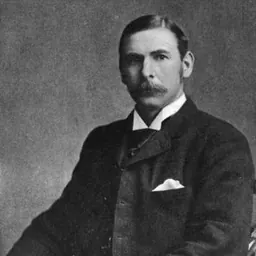


Frequently asked questions
Who was Frederick Charles Weiss?
German-American neo-Nazi
When was Frederick Charles Weiss born?
Frederick Charles Weiss was born on 31 July 1885 in Pforzheim.
When did Frederick Charles Weiss die?
Frederick Charles Weiss died on 1 March 1968.
What was Frederick Charles Weiss's occupation?
Frederick Charles Weiss was a political activist, real estate agent, lawyer and publisher.
What nationality was Frederick Charles Weiss?
Frederick Charles Weiss was German and American.
Sources & further reading
· Wikipedia: Frederick Charles Weiss
· DBpedia: Frederick Charles Weiss
Cite this page
APA: Biography.guide. (2026). Frederick Charles Weiss. https://biography.guide/frederick-charles-weiss/
MLA: "Frederick Charles Weiss." Biography.guide, https://biography.guide/frederick-charles-weiss/.
Chicago: "Frederick Charles Weiss." Biography.guide. https://biography.guide/frederick-charles-weiss/.
Data last updated: 2026-09-20 · Spot an error? Report a correction.
Page generated 2026-09-27 05:21 UTC