
About Frederick Cavendish-Bentinck
Lived 1781 – 1828 (aged 46). Frederick Cavendish-Bentinck was a British politician and soldier.
Military career Entering the British army in 1797 as an Ensign in the 32rd Regiment of Foot Bentinck then purchased promotion to Lieutenant and subsequently Captain in the 24th Light Dragoons . Placed on half-pay Bentinck was attached to the combined Russian and Austrian army in Italy during the War of the Second Coalition during which period he participated in the battles of Novi (1799) and Marengo (1800) as well as being present at the Siege of Alexandria (1801).
Bentinck returned to full duty with the British army as a Captain in the 52nd Foot (the 24th Light Dragoons having been disbanded). In March 1804 he purchased a promotion to Major in the 45th Foot and a month later purchased promotion to Lieutenant colonel in the 7th Foot. The following year he exchanged his lieutenant colonelcy of the 7th Foot for an appointment as a company commander in the 1st Foot Guards. With the Guards Bentinck served in Sicily, was present at the Battle of Corunna (where his elder brother Lord William Bentinck commanded a brigade in the same division) and took part in the Walcheren Campaign before returning to Spain and Portugal for the remainder of the Peninsular War. Additionally in 1819 he was appointed Captain-commandant of the Mansfield troop of Volunteer Cavalry. Bentinck's final military appointment was the ceremonial role of Colonel of the Regiment of the 58th Foot. At the 1818 and 1820 general elections Cavendish-Bentinck was again returned unopposed for Weobley.
In 1824 Cavendish-Bentinck vacated his seat at Weobley at the request of the Marquess of Bath and was invited by the Duke of Wellington to become MP for Queenborough on the Isle of Sheppey in Kent. Despite its status as a rotten borough and being much controlled by the Board of Ordnance Queenborough did have independently minded voters and at the 1826 general election Cavendish-Bentinck was voted out of office.
A return to political life was considered through his wife's family, mostly her father William Lowther, 1st Earl of Lonsdale who considered Cavendish-Bentenick for seats at Carlisle and Cockermouth, the latter was considered a pocket borough in Lonsdale's control. However Cavendish-Bentinck fell ill and he made no return to politics.
Cavendish-Bentinck was an infrequent attender in the House of Commons but generally voted Tory along the wishes of his sponsors. He appears never to have spoken in Parliament and Hansard has no contributions by him recorded.
Personal life Cavendish-Bentinck married Lady Mary Lowther, second daughter of William Lowther, 1st Earl of Lonsdale on 16 September 1820 and they had one son, George Cavendish-Bentinck born 9 July 1821. In 1826 Cavendish-Bentinck became ill with a rectal fissure and on medical advice travelled to Italy to recover but died in Rome on 10 February 1828.
Don’t just read it —
keep it.
Full-length biographies made to live with: read them, listen on the way to work, watch them tonight.
- E-book
- Audio
- Video
Instant download · yours to keep · every purchase keeps this site free
Important facts
Family & relationships
People in Frederick Cavendish-Bentinck's life
Named in this biography and alive at the same time
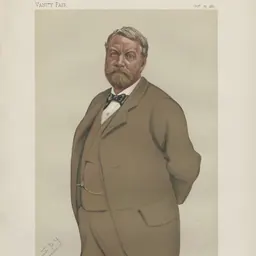
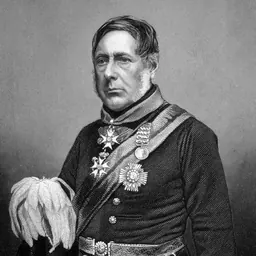
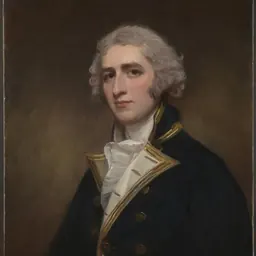
Related people
Same field, nearest in time

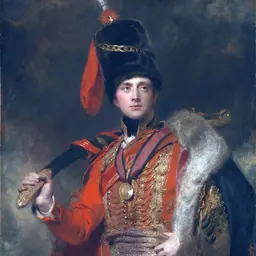


Contemporaries
People whose lives overlapped Frederick Cavendish-Bentinck's


Frequently asked questions
Who was Frederick Cavendish-Bentinck?
British soldier and Member of Parliament (1781-1828)
When was Frederick Cavendish-Bentinck born?
Frederick Cavendish-Bentinck was born on 2 November 1781.
When did Frederick Cavendish-Bentinck die?
Frederick Cavendish-Bentinck died on 10 February 1828 in Rome.
What was Frederick Cavendish-Bentinck's occupation?
Frederick Cavendish-Bentinck was a politician and soldier.
What nationality was Frederick Cavendish-Bentinck?
Frederick Cavendish-Bentinck was British.
Sources & further reading
· Wikipedia: Frederick Cavendish-Bentinck
· DBpedia: Lord Frederick Bentinck
Cite this page
APA: Biography.guide. (2026). Frederick Cavendish-Bentinck. https://biography.guide/frederick-cavendish-bentinck/
MLA: "Frederick Cavendish-Bentinck." Biography.guide, https://biography.guide/frederick-cavendish-bentinck/.
Chicago: "Frederick Cavendish-Bentinck." Biography.guide. https://biography.guide/frederick-cavendish-bentinck/.
Data last updated: 2026-09-20 · Spot an error? Report a correction.
Page generated 2026-09-27 05:04 UTC